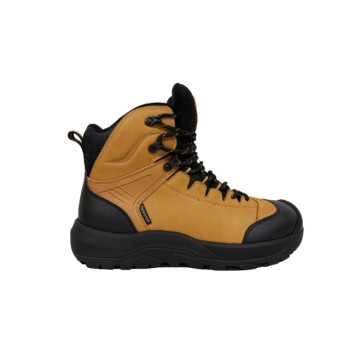
Proper winter footwear is defined by a specific set of features. Your ideal choice combines a firm, supportive structure, effective waterproofing, adequate insulation for warmth, and an anti-slip outsole for reliable traction. A secure fit, typically achieved with lacing, that provides enough room for toe movement without heel rubbing is also essential for both comfort and function.
Choosing the right winter footwear is not about finding a single 'best' boot, but about matching the right system of support, warmth, and traction to your specific activities and weather conditions. This choice is fundamental to your safety, health, and comfort.
The Foundation: Structure and Support
The core purpose of a winter boot, beyond warmth, is to provide a stable platform on unstable ground. This begins with its fundamental structure.
Why a Firm Structure is Non-Negotiable
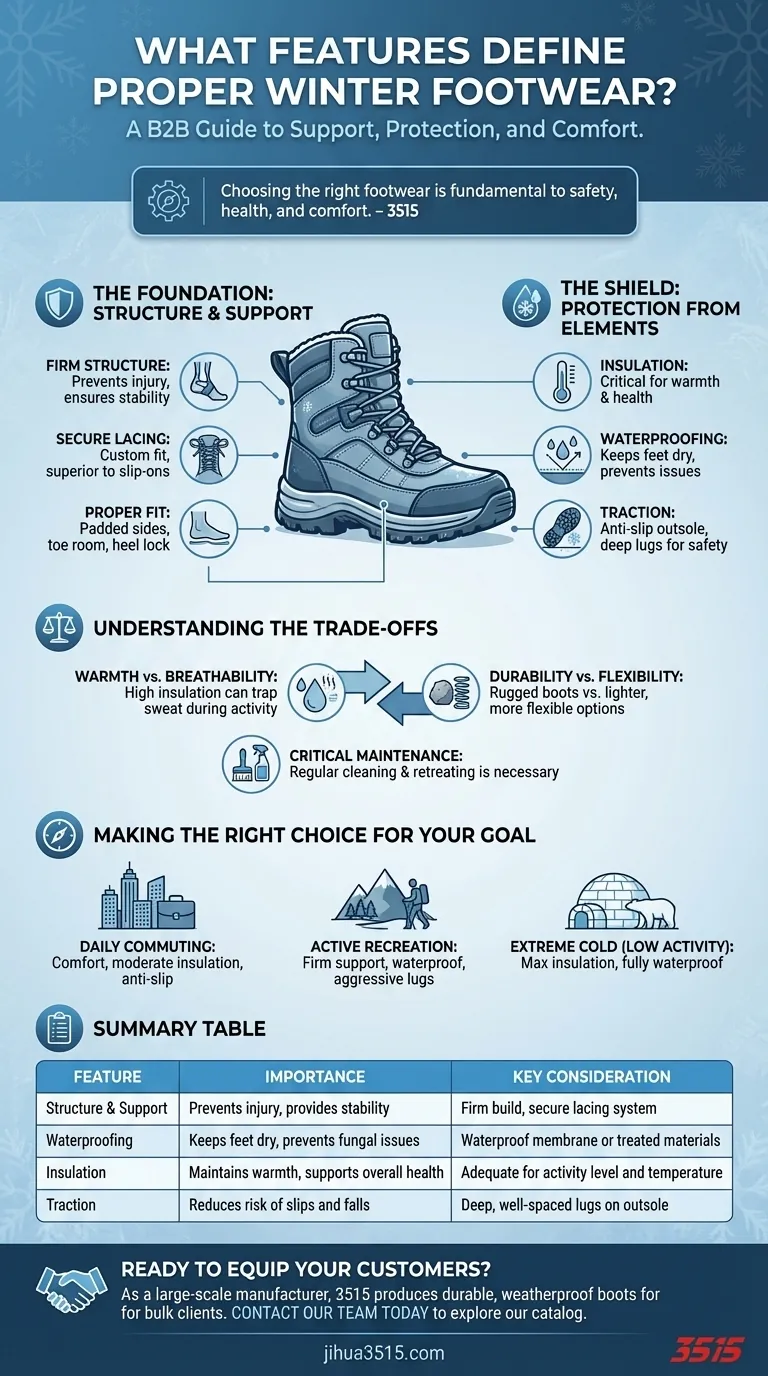
A boot with a firm structure and proper support is your first line of defense against injury. It helps prevent common issues like ankle sprains, fractures, plantar fasciitis, and tendonitis by keeping your foot in a secure, neutral position.
The Role of Lacing
Lacing allows you to customize the fit around your specific foot and ankle shape. This provides superior stability compared to slip-on styles, securing your heel and preventing excessive movement inside the boot that can lead to instability or blisters.
Padded Sides and Proper Fit
Padded sides add comfort and a layer of insulation. A correct fit means having enough room to wiggle your toes, which promotes circulation, while ensuring your heel is locked in place to prevent rubbing and blisters.
The Shield: Protection from the Elements
Your footwear is the primary barrier between you and the harsh realities of winter weather. Its ability to manage cold and moisture is critical.
Insulation for Critical Warmth
Keeping your feet warm is vital for maintaining your body's overall temperature and health. Cold feet can compromise your immune system and lead to significant discomfort, making proper insulation a key feature.
Waterproofing for Dryness and Health
Dry feet are warm feet. A waterproof membrane or treated material prevents snow and slush from soaking through, which is crucial for maintaining warmth. It also helps prevent the development of fungal infections that thrive in damp environments.
The Importance of Traction
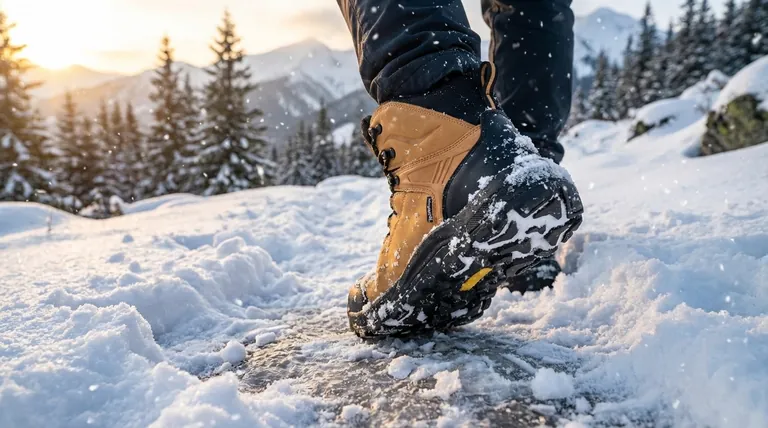
An anti-slip outsole is perhaps the most important safety feature. Deep, well-spaced lugs provide grip on icy and snowy surfaces, significantly reducing your risk of a fall and subsequent injury.
Understanding the Trade-offs
No single boot is perfect for every situation. Being aware of the inherent compromises is key to making an intelligent choice.
Warmth vs. Breathability
Highly insulated boots are excellent for extreme cold or periods of inactivity. However, during strenuous activity, they can trap sweat, leaving your feet damp and paradoxically making them feel colder once you stop moving.
Durability vs. Flexibility
Rugged, heavy-duty boots offer maximum protection and longevity but can feel stiff and cumbersome. Lighter, more flexible boots are more comfortable for walking but may not provide the same level of support or withstand harsh conditions as well.
The Critical Role of Maintenance
Even the best waterproof boots can fail without proper care. Membranes and treated materials degrade over time, and regular cleaning and re-application of waterproofing treatments are necessary to maintain their protective qualities.
Making the Right Choice for Your Goal
Select your footwear based on its intended use.
- If your primary focus is daily commuting and urban wear: Prioritize a comfortable fit, moderate insulation, and an effective anti-slip sole for icy pavement.
- If your primary focus is active recreation like winter hiking: Choose a boot with a firm, supportive structure, excellent waterproofing, and an aggressive lug pattern for deep snow and uneven terrain.
- If your primary focus is enduring extreme cold with low activity: Your top priority should be the boot's temperature rating and maximum insulation, with a fully waterproof design.
Ultimately, investing in the right winter footwear is a direct investment in your well-being throughout the season.
Summary Table:
| Feature | Importance | Key Consideration |
|---|---|---|
| Structure & Support | Prevents injury, provides stability | Firm build, secure lacing system |
| Waterproofing | Keeps feet dry, prevents fungal issues | Waterproof membrane or treated materials |
| Insulation | Maintains warmth, supports overall health | Adequate for activity level and temperature |
| Traction | Reduces risk of slips and falls on ice/snow | Deep, well-spaced lugs on the outsole |
Ready to equip your customers with high-quality winter footwear?
As a large-scale manufacturer, 3515 produces a comprehensive range of durable, supportive, and weatherproof boots and shoes for distributors, brand owners, and bulk clients. Our production capabilities encompass all types of winter footwear designed for safety and comfort in harsh conditions.
Let's discuss your specific needs. Contact our team today to explore our catalog and find the perfect winter footwear solutions for your market.
Visual Guide
Related Products
- Premium Insulated Safety Boots and Shoes for Wholesale & Bulk Orders
- Durable Waterproof Rain Boots | Custom Manufacturer for Wholesale & Brands
- Factory Direct Wholesale Rain Boots Durable Waterproof & Fully Customizable
- Wholesale Durable Camouflage Canvas Shoes with High-Traction Cleated Rubber Sole
- Durable Rubber Sole Outdoor Shoes Wholesale & Custom Manufacturing
People Also Ask
- What are the recommended insulation ratings for mild winter conditions? A Guide for Active & Stationary Workers
- How does insulation thickness correlate with temperature ranges? A Guide to Choosing the Right Warmth
- What insulation level is needed for severe cold and stationary work? 1200g or Higher is Essential
- What safety advantages do insulated boots offer beyond warmth? Dielectric Protection & Superior Grip
- How does fleece lining contribute to the warmth of insulated boots? Trapping Air for Superior Cold Protection