
In short, it's a combination of height, material, and construction. Garden boots are suitable for warmer weather due to their shorter height, which allows for better airflow compared to taller boots. Their flexible materials and removable insoles also enhance comfort and help manage moisture on hot days.
The core challenge in warm-weather garden footwear isn't just about keeping water out, but letting heat and moisture escape. Garden boots are designed to strike this balance, prioritizing airflow and flexibility where taller, more insulated boots cannot.
Why Standard Boots Fail in the Heat
When working outdoors in the warmth, your footwear needs to solve two problems: protecting you from mud and moisture, and preventing your feet from overheating.
The Overheating Problem
Standard work boots or rain boots are often heavily insulated. This is excellent for cold, but it traps heat and sweat in warm weather, leading to significant discomfort.
The Lack of Flexibility
Taller, more rigid boots can restrict movement. Gardening often involves kneeling, squatting, and frequent movement, which requires a more flexible and forgiving boot.
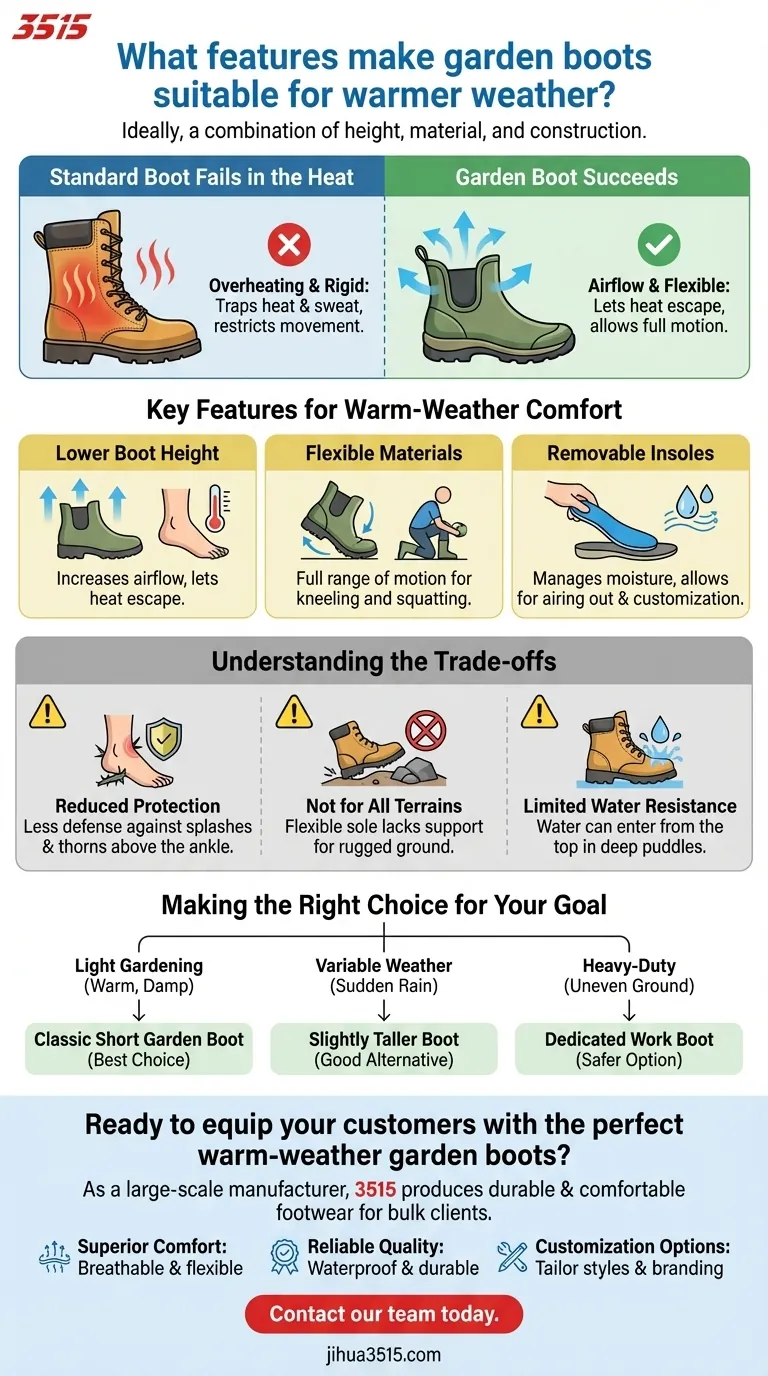
Key Features for Warm-Weather Comfort
The design of a garden boot directly addresses the challenges of working in the heat. Certain features are intentionally included to maximize comfort when temperatures rise.
Lower Boot Height
The most obvious feature is the shorter shaft height, typically ending around the ankle or mid-calf. This design choice is critical for ventilation, as it allows body heat to escape far more easily than a knee-high boot would.
Flexible Materials
Garden boots are almost always made from rubber or similar flexible, waterproof compounds. This allows for a full range of motion, making tasks like crouching and weeding much more comfortable without the boot digging into your leg.
Removable Insoles
Many garden boots include removable insoles. This feature is crucial for warm weather because it allows you to air out the insoles between uses, which helps manage moisture and prevent odor buildup. It also allows for customization with more breathable or supportive inserts.
Understanding the Trade-offs
While ideal for many conditions, the features that make garden boots great for warm weather also create limitations.
Reduced Protection
The shorter height that improves airflow also means less protection. It offers little defense against splashes above the ankle or from thorns and brush higher up the leg.
Not for All Terrains
The flexible soles are comfortable for soft garden soil but may not provide enough support or protection for rugged, rocky, or uneven terrain. Their primary design focus is comfort in a controlled garden environment, not all-purpose outdoor work.
Limited Water Resistance
While the boot itself is waterproof, its low profile makes it easy for water to get in from the top during heavy downpours or when walking through deep puddles.
Making the Right Choice for Your Goal
Selecting the right footwear depends entirely on your specific outdoor tasks and environment.
- If your primary focus is light gardening in warm, damp conditions: The classic short garden boot is your best choice for its superior comfort and airflow.
- If your primary focus is working in variable weather with sudden rain: You might consider a slightly taller, more robust boot that still prioritizes flexibility.
- If your primary focus is heavy-duty work on uneven ground: A dedicated work boot with slip-resistant soles and more ankle support is a safer and more effective option.
Ultimately, the right boot allows you to focus on your work, not on your feet.
Summary Table:
| Feature | Benefit for Warm Weather |
|---|---|
| Lower Boot Height | Increases airflow, allowing body heat to escape. |
| Flexible Materials | Provides a full range of motion for kneeling and squatting. |
| Removable Insoles | Helps manage moisture and allows for airing out between uses. |
Ready to equip your customers with the perfect warm-weather garden boots?
As a large-scale manufacturer, 3515 produces a comprehensive range of durable and comfortable footwear for distributors, brand owners, and bulk clients. Our production capabilities encompass all types of shoes and boots, including specialized garden footwear designed for optimal performance in warm conditions.
Partner with us to offer your customers:
- Superior Comfort: Boots engineered for breathability and flexibility.
- Reliable Quality: Durable, waterproof construction built to last.
- Customization Options: Tailor styles, materials, and branding to meet your market's needs.
Contact our team today to discuss your product requirements and how we can help you grow your business with high-quality garden footwear.
Visual Guide
Related Products
- Durable Rubber Sole Outdoor Shoes Wholesale & Custom Manufacturing
- Factory Direct Wholesale Rain Boots Durable Waterproof & Fully Customizable
- Durable Waterproof Rain Boots | Custom Manufacturer for Wholesale & Brands
- Wholesale Waterproof Tactical Boots Custom Suede & High-Traction Soles
- Wholesale High-Traction Camo Boots - Custom Manufacturer for Brands
People Also Ask
- What is the function of the sole in outdoor shoes? Find the Perfect Grip and Support
- What role do outdoor shoes and sneakers play in navigating external terrains? Engineered Stability for Every Surface
- How is AI utilized in the design of outdoor and safety footwear? Harnessing Big Data for Market-Driven Shoe Innovation
- Why is durability important when selecting outdoor shoes? A Guide to Safety & Long-Term Value
- What are the key components of outdoor shoes that affect comfort and sturdiness? A Guide to Durable, High-Performance Footwear


















