
Tactical work boots designed for cold weather integrate a system of features focused on insulation, waterproofing, and breathability. This combination ensures your feet remain warm by trapping heat, dry by blocking external moisture, and comfortable by allowing internal sweat vapor to escape.
The effectiveness of a tactical boot in cold weather isn't just about adding insulation. It's about a three-part system: keeping external moisture out (waterproofing), letting internal moisture escape (breathability), and maintaining a stable grip on hazardous surfaces.
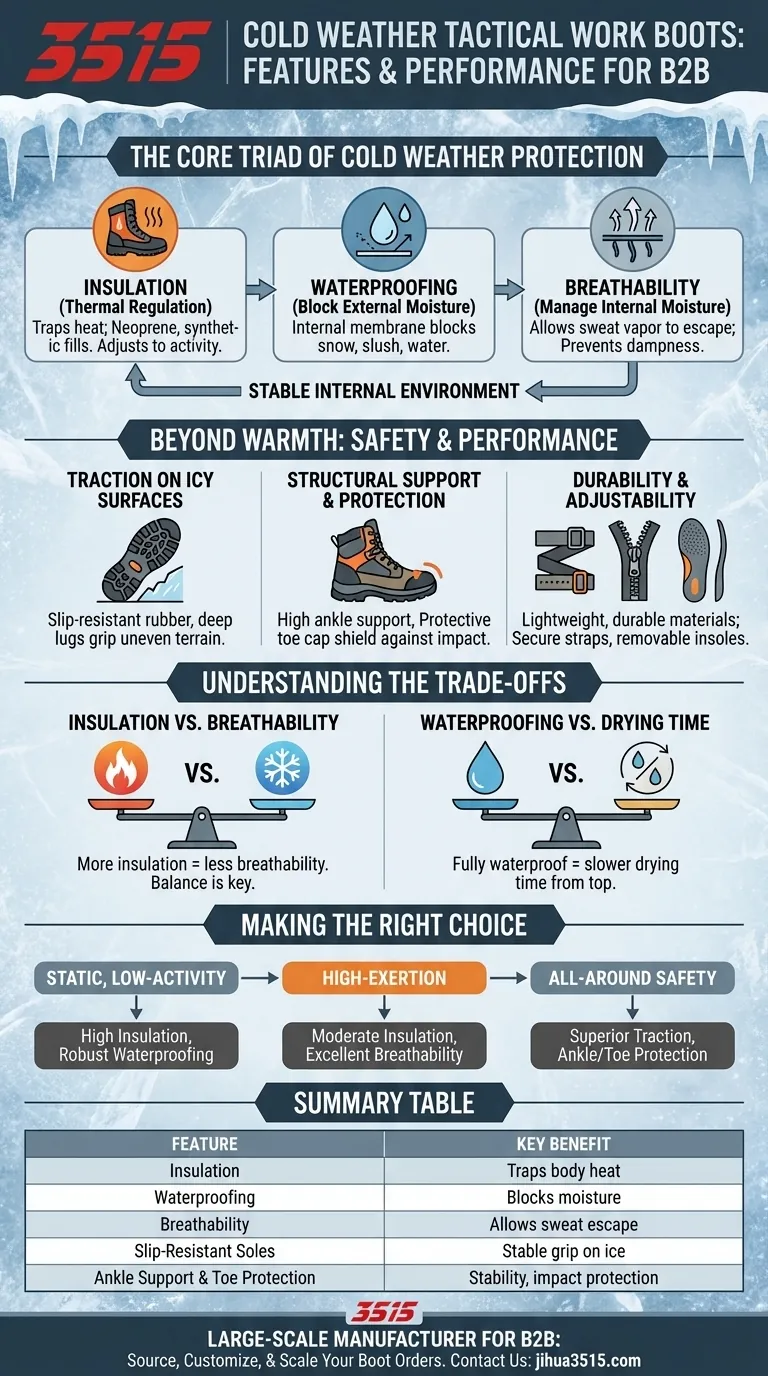
The Core Triad of Cold Weather Protection
To be effective in the cold, a boot must manage temperature and moisture from both the outside and the inside. These three features work together to create a stable internal environment.
Insulation for Thermal Regulation
Insulation is the primary feature for retaining heat. Materials like neoprene linings or other synthetic fills create pockets of air that slow the transfer of heat from your foot to the cold environment.
Some models feature removable liners, allowing you to adjust the level of insulation based on temperature and activity level.
Waterproofing to Block External Moisture
Keeping feet dry is critical to staying warm. Tactical boots utilize waterproof materials and often include an internal membrane that prevents water, snow, and slush from penetrating the boot.
This external barrier is your first line of defense against the elements, ensuring the insulation layer doesn't become saturated and useless.
Breathability to Manage Internal Moisture
A boot that can't breathe will trap sweat. This moisture makes the insulation damp from the inside, rapidly cooling your feet regardless of how well-insulated the boot is.
High-performance boots use breathable membranes that allow smaller water vapor molecules (sweat) to escape while blocking larger liquid water molecules from entering.
Beyond Warmth: Features for Safety and Performance
Cold weather brings unique hazards. Tactical boots incorporate features designed to ensure safety and functionality in these challenging conditions.
Traction on Icy and Wet Surfaces
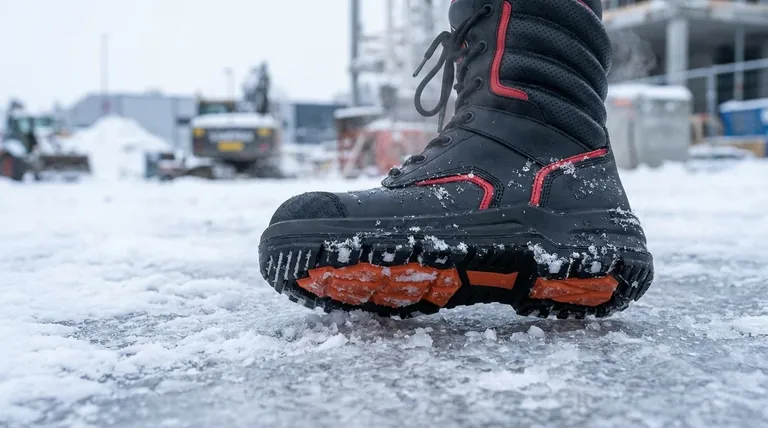
Standard boot soles can become rigid and slick on icy ground. Cold-weather tactical boots feature slip-resistant outsoles made from rubber compounds that remain flexible in low temperatures.
These soles have deep, aggressive lugs designed to grip uneven and slippery terrain, which is essential for maintaining stability.
Structural Support and Protection
Tactical boots provide high ankle support, which is crucial for stability when navigating rough or snow-covered ground.
They also frequently include a protective toe cap. This feature shields your feet from the impact of falling objects or debris, a risk that exists in any work environment.
Durability and Adjustability
These boots are constructed from lightweight, durable, and stain-resistant materials designed to withstand harsh use.
Features like secure straps over zippers prevent them from failing or catching, while removable foam insoles allow for a customizable fit and support level.
Understanding the Trade-offs
No single boot is perfect for every condition. Understanding the inherent compromises is key to choosing the right tool for the job.
Insulation vs. Breathability
The more insulation a boot has, the warmer it will be, but this often comes at the cost of breathability.
For high-exertion activities where you'll be sweating, an overly insulated boot can be counterproductive, leading to damp feet. A balance is essential.
Waterproofing vs. Drying Time
While a fully waterproof membrane is excellent at keeping water out, it can also slow down the drying time if the boot does get filled with water from the top.
Boots that are highly water-resistant but not fully waterproof may dry faster but offer less protection in deep snow or slush.
Making the Right Choice for Your Goal
Select your boot based on the specific demands of your environment and activity level.
- If your primary focus is warmth in static, low-activity conditions: Prioritize boots with higher levels of insulation and a robust, fully waterproof membrane.
- If your primary focus is performance during high-exertion activities: Look for a balance of moderate insulation with excellent breathability and moisture-wicking properties.
- If your primary focus is all-around safety in variable conditions: Emphasize superior traction on icy surfaces and features like a protective toe cap and strong ankle support.
Ultimately, the right tactical boot provides a comprehensive environmental shield, not just a barrier against the cold.
Summary Table:
| Feature | Key Benefit |
|---|---|
| Insulation | Traps body heat to keep feet warm in freezing temperatures. |
| Waterproofing | Blocks external moisture from snow, slush, and rain. |
| Breathability | Allows sweat vapor to escape, preventing dampness and cold. |
| Slip-Resistant Soles | Provides stable grip on icy and wet surfaces for safety. |
| Ankle Support & Toe Protection | Ensures stability and protects against impacts and debris. |
Need reliable tactical boots for your team or brand?
As a large-scale manufacturer, 3515 produces a comprehensive range of durable footwear for distributors, brand owners, and bulk clients. Our production capabilities encompass all types of tactical, work, and safety boots designed to meet specific environmental demands.
We can help you:
- Source or customize boots with the exact cold-weather features you need.
- Ensure consistent quality and durability for demanding work environments.
- Benefit from scalable production and competitive pricing for bulk orders.
Let's discuss your specific requirements → Contact Our Team Today
Visual Guide
Related Products
- Durable Leather Tactical Boots Wholesale & Custom Manufacturing for Brands
- High-Traction Suede Tactical Boots Wholesale & Custom Manufacturing
- Durable Leather High-Ankle Tactical Boots for Wholesale & Custom Manufacturing
- Wholesale Lightweight Tactical Boots with Dial Closure OEM & Bulk Orders
- Wholesale Tactical Boots High-Traction & Reflective for Bulk & Brand Orders
People Also Ask
- What specialized protections do tactical boots offer? Maximize Endurance with High-Performance Footwear
- What features should law enforcement officers look for in tactical boots? Essential Guide for Safety & Performance
- Importance of Professional Tactical Boots in Loess Gully Regions: Ensure Safety and Precision for Field Monitoring
- What is rucking, and why are tactical boots suitable for it? Discover the Ultimate Footwear for Heavy Loads
- What makes the traction of tactical boots superior? Unlock the Science of Unbeatable Grip
















