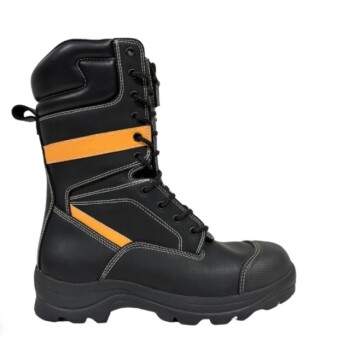
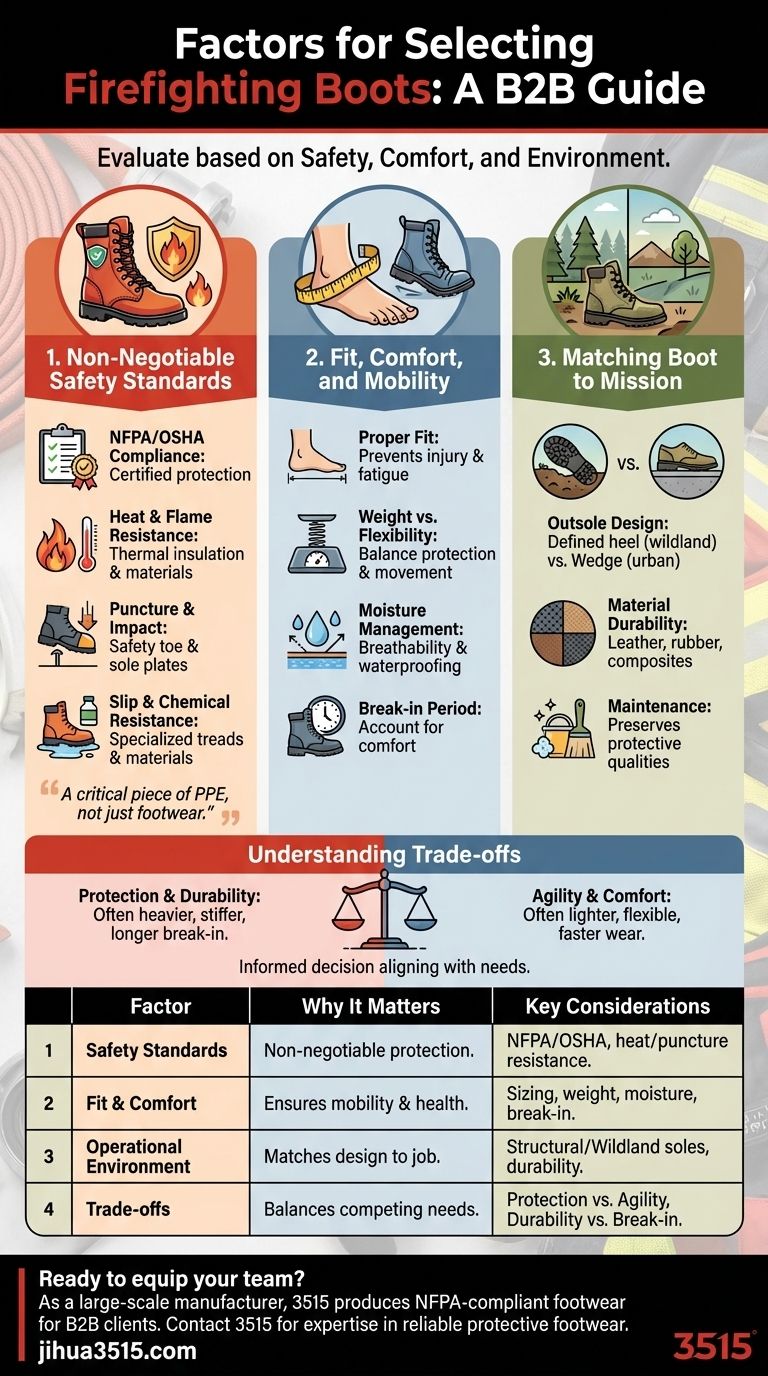
To select the right firefighting boots, you must evaluate them based on three core areas: their compliance with safety certifications like NFPA and OSHA, their fit and comfort for long-duration wear, and their suitability for your specific operational environment, whether that's wildland terrain or urban structures. These factors determine not only your safety but also your effectiveness and health over a long career.
A firefighting boot is not merely footwear; it is a critical piece of personal protective equipment. The ideal choice is a carefully considered balance between non-negotiable protection, the functional mobility required for the job, and the long-term comfort that prevents fatigue and injury.
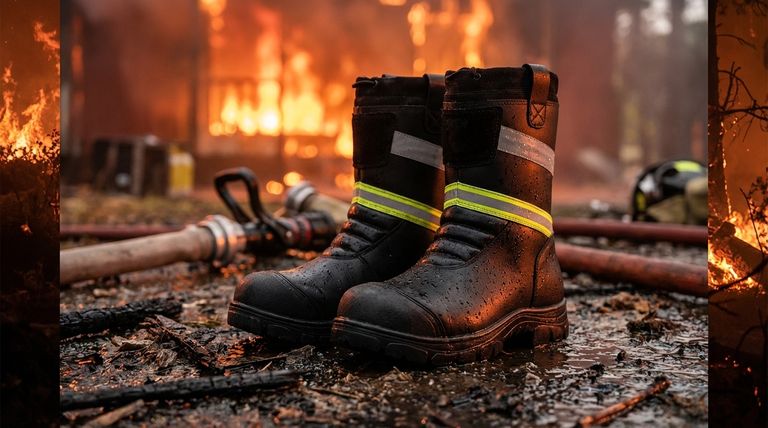
The Foundation: Non-Negotiable Safety Standards
Before considering any other feature, a boot must meet the required safety benchmarks for your role. This is the first and most important filter in your selection process.
Meeting Certification Requirements
Compliance is not optional. Boots must meet the standards set by governing bodies like the National Fire Protection Association (NFPA) or the Occupational Safety and Health Administration (OSHA). These certifications ensure the boot has been tested and proven to withstand specific hazards.
Heat and Flame Resistance
For structural firefighters especially, the ability to resist extreme heat is paramount. Materials must be inherently flame-resistant and provide thermal insulation to protect your feet from burns.
Puncture and Impact Protection
The fireground is an unpredictable environment filled with sharp objects and falling debris. Look for boots with puncture-resistant sole plates and reinforced safety toes (steel, composite, or alloy) to protect against crushing impacts. Some roles may also require metatarsal guards for added protection.
Slip and Chemical Resistance
Effective traction is critical on wet, oily, or uneven surfaces. The outsole material, typically specialized rubber or polyurethane, and its tread design are key. The boot must also be able to resist degradation from chemicals, oils, and other hazardous fluids.
Beyond the Spec Sheet: Fit, Comfort, and Mobility
A boot that meets every safety standard is useless if it's too uncomfortable or cumbersome to work in. Performance and long-term health depend directly on how the boot works with your body.
The Critical Importance of Proper Fit
A poor fit leads to blisters, fatigue, and even long-term foot problems. Ensure you are measured correctly, account for the type of socks you will wear, and understand that many heavy-duty boots require a break-in period.
Weight vs. Flexibility
There is a direct relationship between a boot's weight and its level of protection. A heavier, more rigid boot may offer more protection but can reduce mobility and increase fatigue over a long shift. You must find the right balance for your typical tasks.
Moisture Management and Foot Health
Your feet will sweat. A good boot should offer a degree of waterproofing from the outside while still allowing moisture to escape from the inside. This breathability is vital for preventing blisters and maintaining foot health.
Matching the Boot to the Mission
The right boot is highly dependent on your primary work environment. A boot designed for wildland firefighting is poorly suited for a structural fire, and vice versa.
Understanding Outsole Design
The sole of the boot is your connection to the ground. Boots with a defined heel outsole provide superior traction on mud, dirt, and uneven terrain, making them ideal for wildland firefighting.
In contrast, a wedge outsole offers a larger surface area, providing excellent slip resistance on flat, wet surfaces like concrete or steel, common in urban and industrial settings.
Material Durability and Maintenance
The boot's upper is typically made from leather, rubber, or a combination of modern composites. High-quality materials and construction contribute to a longer service life. Proper cleaning and maintenance are essential to preserving the boot's protective qualities and longevity.
Understanding the Trade-offs
Every boot design involves compromises. Recognizing these trade-offs is key to making an informed decision that aligns with your specific needs.
Protection vs. Agility
The most protective boots are often the heaviest and most rigid. This can make it harder to climb ladders, navigate tight spaces, or feel the ground beneath your feet, potentially slowing you down.
Durability vs. Break-in Time
Stiffer, thicker leather or rubber compounds offer incredible durability but often come with a significant break-in period. More flexible, comfortable boots may wear out faster under demanding conditions.
Initial Cost vs. Long-Term Value
While budget is always a factor, the cheapest boot is rarely the best value. Investing in a well-constructed boot from a reputable brand often means better long-term performance, greater comfort, and a longer service life, reducing replacement costs over time.
How to Select the Right Boot for Your Role
Filter your choices based on your primary operational environment and the most common hazards you face.
- If your primary focus is structural firefighting: Prioritize boots with the highest NFPA certification for heat resistance, toe protection, and puncture resistance.
- If your primary focus is wildland firefighting: Emphasize a lighter weight for reduced fatigue, an aggressive heel outsole for terrain, and long-term comfort for extended wear.
- If you work in a mixed urban or industrial environment: Look for a balance of robust slip-resistance on flat surfaces, like a wedge sole, and all-around impact and puncture protection.
Ultimately, choosing the right boot is a critical professional decision that directly impacts your safety and ability to perform your job effectively.
Summary Table:
| Key Selection Factor | Why It Matters | Key Considerations |
|---|---|---|
| Safety Standards | Non-negotiable protection from hazards. | NFPA/OSHA certification, heat/flame resistance, puncture/slip protection. |
| Fit & Comfort | Ensures mobility and prevents long-term injury. | Proper sizing, weight vs. flexibility, moisture management, break-in period. |
| Operational Environment | Matches boot design to specific job demands. | Structural (urban) vs. Wildland (terrain) soles, material durability, maintenance. |
| Trade-offs | Balances competing needs for optimal performance. | Protection vs. agility, durability vs. break-in, initial cost vs. long-term value. |
Ready to equip your team with high-performance firefighting boots?
As a large-scale manufacturer, 3515 produces a comprehensive range of NFPA-compliant footwear for distributors, brand owners, and bulk clients. Our production capabilities encompass all types of safety boots and boots, engineered for durability, comfort, and superior protection in any environment.
Contact 3515 today to discuss your specific needs and benefit from our expertise in manufacturing reliable protective footwear for firefighting professionals.
Visual Guide
Related Products
- High Performance Fire-Retardant Waterproof Safety Boots
- Premium Flame-Retardant Waterproof Safety Boots and Shoes
- Wholesale Lightweight Tactical Boots Custom Manufacturer for Desert & Combat Use
- Durable Military Combat Boots with Water Drainage for Wholesale & OEM
- High-Traction Suede Tactical Boots Wholesale & Custom Manufacturing
People Also Ask
- Why are waterproof safety boots recommended for certain work environments? Essential Protection for Wet & Hazardous Jobs
- What roles do 3D vision systems and industrial robots play in the manufacturing of fire safety boots? Smart Automation
- What is the difference between waterproof, water-resistant, and water-repellent boots? Choose the Right Protection for Your Feet
- What are the primary benefits of incorporating waterproof technology into professional and outdoor boots? Boost Value
- What is the difference between waterproof and water-resistant boots? Choose the Right Footwear for Any Condition