
When choosing snake boots for warm climates, your primary considerations must be breathability, overall weight, and the specific materials used in construction. Unlike standard boots, the goal here is to achieve critical snakebite protection without causing your feet to overheat, which can lead to significant discomfort and fatigue.
The core challenge is balancing non-negotiable safety with the practical demands of heat and humidity. Your ideal boot prioritizes maximum airflow and minimal weight without ever compromising its primary protective function.
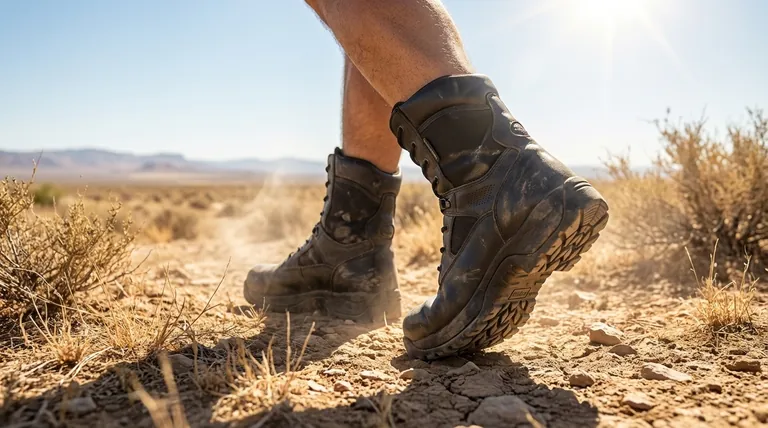
Key Factors for Comfort and Safety
Prioritizing Breathability
In hot environments, your body's primary cooling mechanism is sweating. Boots that trap this moisture create a swamp-like internal climate, leading to blisters and discomfort.
Look for boots that incorporate breathable materials like Cordura fabric panels or feature non-waterproof designs. These allow sweat vapor to escape, keeping your feet drier and cooler.
The Impact of Boot Weight
Every ounce on your feet feels significantly heavier over a long day in the heat. Heavy, bulky boots demand more energy with every step, accelerating fatigue.
Lightweight snake boots are specifically engineered to reduce this burden, making them far more suitable for trekking or hunting in warm weather.
Material Selection
The materials dictate the boot's breathability, weight, and durability. Full-grain leather is exceptionally durable but can be heavy and hot.
Synthetic materials like Cordura or nylon are often lighter and more breathable, making them a superior choice for warm climates, though they may offer a different feel and level of stiffness than traditional leather.
Understanding the Critical Trade-offs
Making an informed choice requires acknowledging that every feature comes with a corresponding compromise. Understanding these trade-offs is the mark of a savvy user.
Breathability vs. Waterproofing
This is the most significant trade-off for warm-climate boots. A fully waterproof membrane (like Gore-Tex) is excellent at keeping water out, but it inherently limits how much sweat vapor can escape.
For many hot and humid environments where you might encounter occasional morning dew or a small stream, a water-resistant boot is often a better compromise than a fully waterproof one. It offers some protection from moisture while allowing for much greater breathability.
Protection vs. Flexibility and Weight
While all snake boots must meet a certain standard of protection, the design can vary. Stiffer, more heavily armored boots may provide a greater sense of security in exceptionally dense brush.
However, this added stiffness and material often translate to increased weight and reduced flexibility. This makes the boot hotter to wear and more cumbersome for long-distance walking on trails or open terrain.
Making the Right Choice for Your Goal
Select your boot by aligning its features with the primary demands of your activity.
- If your primary focus is upland hunting or long-distance hiking: Prioritize the lightest and most breathable option available, even if it means sacrificing full waterproofing for simple water resistance.
- If your primary focus is working on property with dense underbrush: Consider a boot with more durable materials and a slightly stiffer construction for maximum protection, accepting a minor trade-off in weight.
- If your primary focus is occasional use in mixed, humid conditions: A balanced boot featuring a hybrid of leather and synthetic fabric panels will offer the most versatility.
Ultimately, selecting the right warm-climate snake boot is about matching its design to the specific demands of your environment and activity.
Summary Table:
| Key Factor | Why It Matters in Warm Climates | Ideal Feature |
|---|---|---|
| Breathability | Prevents overheating and moisture buildup, reducing blisters. | Cordura/nylon panels, non-waterproof designs. |
| Weight | Lighter boots reduce fatigue during long treks in heat. | Synthetic materials, minimalist construction. |
| Material | Impacts breathability, weight, and durability balance. | Hybrid designs (leather + synthetic fabrics). |
| Waterproofing | A trade-off; full waterproofing reduces breathability. | Water-resistant is often better than waterproof for humidity. |
Need Durable, Breathable Snake Boots in Bulk? Partner with 3515.
As a large-scale manufacturer, we produce a comprehensive range of safety footwear for distributors, brand owners, and bulk clients. Our expertise allows us to craft snake boots that perfectly balance essential protection with the breathability and lightweight comfort required for warm climates.
We help you:
- Source with Confidence: Get high-quality boots built with the right materials for heat and humidity.
- Customize for Your Market: Tailor designs to meet the specific needs of your customers' activities, from long-distance hiking to dense brush work.
- Scale Your Supply: Rely on our extensive production capabilities for all types of shoes and boots to fulfill large orders efficiently.
Let's discuss how we can become your trusted manufacturing partner. Contact our team today for a consultation!
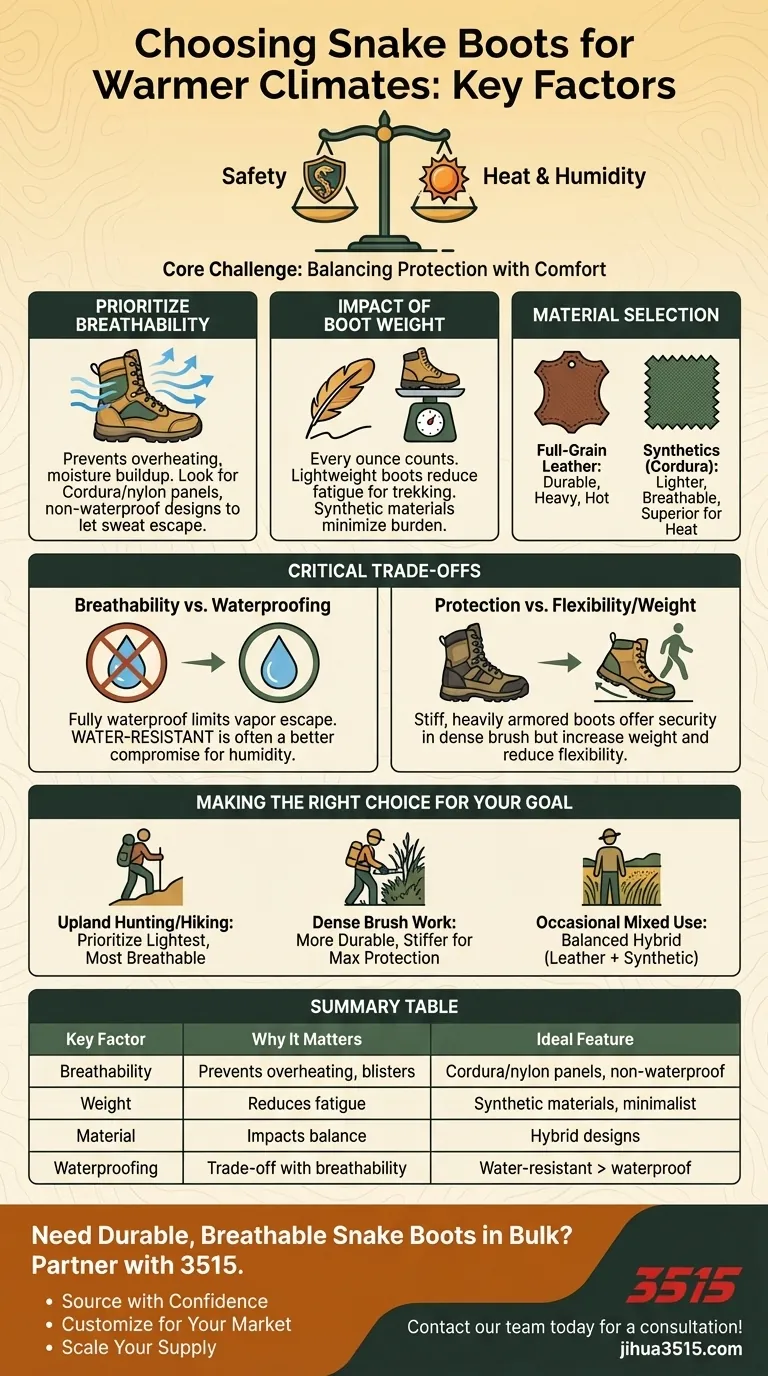
Visual Guide
Related Products
- Wholesale High-Traction Camo Boots - Custom Manufacturer for Brands
- Durable Leather Tactical Boots Wholesale & Custom Manufacturing for Brands
- Durable Leather High-Ankle Tactical Boots for Wholesale & Custom Manufacturing
- High-Traction Suede Tactical Boots Wholesale & Custom Manufacturing
- Durable High-Ankle Tactical Boots Wholesale Manufacturer for Custom & Bulk Orders
People Also Ask
- What are the key features of the new line of camo boots? Built for Extreme Cold & Rugged Terrain
- Are camo boots necessary for hunting success? Prioritize Performance Over Pattern
- What is the technical logic behind using closed-eye testing for tactical boots? Unlocking Peak Footwear Stability
- How does the Rank Score Test identify the primary causes of premature failure in tactical and work boots? Key Insights
- What shoes to wear for a security job? Durable, Protective Footwear for Long Shifts



















