
When selecting snake boots, the primary factors extend beyond simple bite protection. The ideal choice is a synthesis of proven protective materials, all-day comfort for your specific activity, overall weight and flexibility, and resilience against environmental conditions like water. A proper fit is non-negotiable, as it directly impacts both safety and your willingness to wear the boots consistently.
The best snake boot is not simply the one with the highest protection rating, but the one that strikes a perfect balance between impenetrable safety for your environment and the practical comfort required for your specific activity.
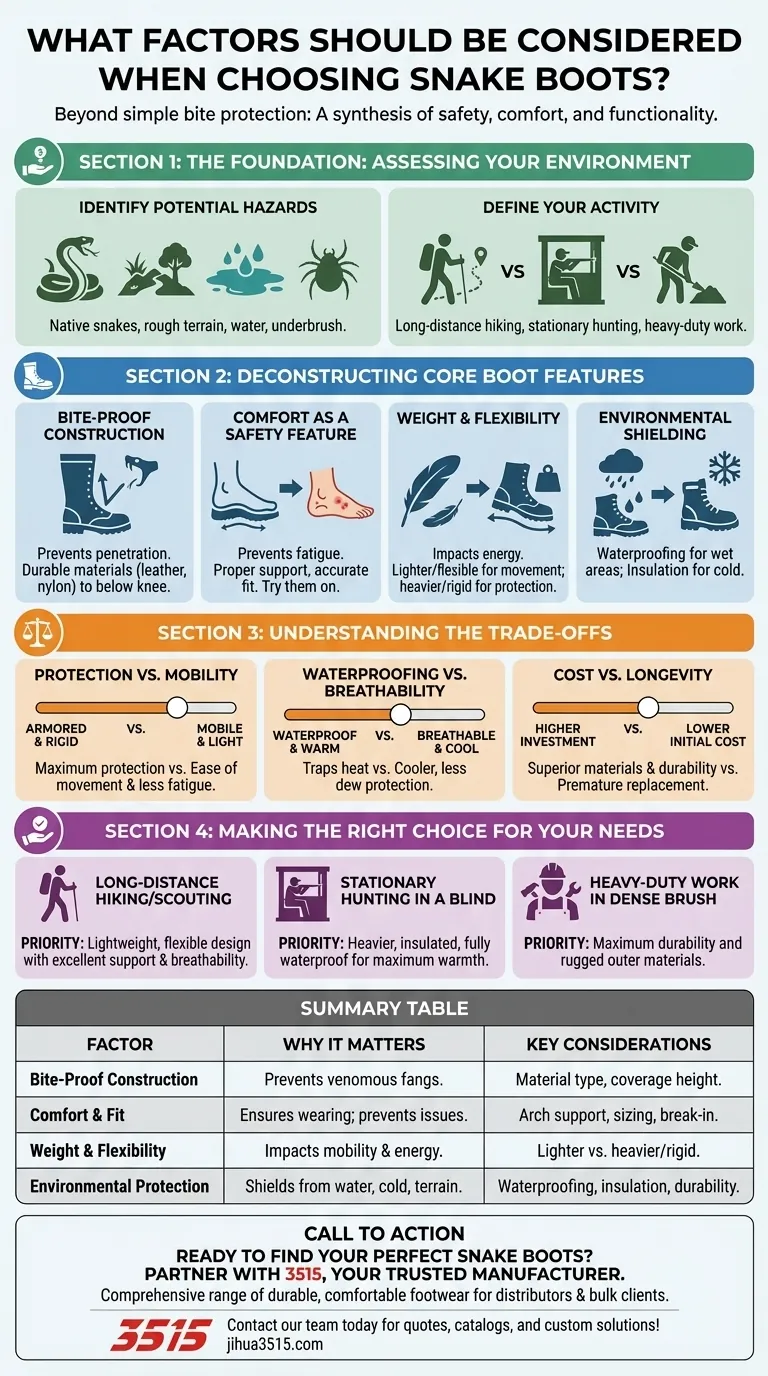
The Foundation: Assessing Your Environment
Before evaluating specific features, you must first analyze the context in which you'll be wearing the boots. This assessment, a core principle of selecting any Personal Protective Equipment (PPE), ensures your choice is fit for purpose.
Identify Potential Hazards
Your environment dictates the level of protection you need. Consider the types of snakes native to your area, but also think about secondary risks like rough terrain, standing water, or tick-infested underbrush.
Define Your Activity
How you move through that environment is critical. Long-distance hiking demands different features than stationary hunting in a blind or doing heavy labor in a fixed area. This will determine your tolerance for weight and your need for flexibility.
Deconstructing the Core Boot Features
With a clear understanding of your needs, you can now assess the specific attributes of a snake boot.
The Non-Negotiable: Bite-Proof Construction
The primary function of a snake boot is to prevent a bite from penetrating through to your skin. They are typically made from durable materials like thick leather, rugged nylon, or other snake-resistant synthetic fabrics that extend from the foot to just below the knee.
Comfort as a Safety Feature
An ill-fitting or uncomfortable boot is a liability. It can cause blisters and foot fatigue, but more importantly, if a boot is too uncomfortable, you may choose not to wear it, completely negating its protective value.
Look for features like proper arch support and ensure you try the boots on to confirm an accurate fit, as sizing can vary between manufacturers.
The Role of Weight and Flexibility
The weight of the boot directly impacts fatigue over long distances. Heavier, more rigid boots may offer a sense of maximum protection but can become cumbersome on a long trek.
Lighter, more flexible boots are often better for navigating uneven ground and require less energy to wear, making them ideal for those who cover a lot of ground.
Environmental Shielding
Many snake boots offer additional features to handle environmental conditions. Waterproofing is essential for keeping your feet dry in wet or marshy areas, while insulation is critical for staying warm during cold-weather activities.
Understanding the Trade-offs
Choosing the perfect snake boot involves balancing competing factors. Understanding these trade-offs is key to making an informed decision.
Protection vs. Mobility
The most heavily armored boots are often the most rigid and heavy. This can provide peace of mind but may hinder mobility and increase fatigue. You must decide on the right balance for your activity level.
Waterproofing vs. Breathability
A fully waterproof membrane is excellent at keeping water out, but it can also trap sweat and heat, leading to discomfort in warm climates. More breathable boots will be cooler but offer less protection from morning dew or unexpected downpours.
Cost vs. Longevity
Higher-priced boots often use superior materials, more advanced construction techniques, and offer a better overall fit. While the initial investment is greater, they frequently provide better long-term durability and comfort, preventing the need for a premature replacement.
Making the Right Choice for Your Needs
Your final decision should be guided by your primary activity.
- If your primary focus is long-distance hiking or scouting: Prioritize a lightweight, flexible design with excellent arch support and breathability to minimize fatigue.
- If your primary focus is stationary hunting in a blind: Heavier, insulated, and fully waterproof boots are an excellent choice for maximizing warmth and comfort.
- If your primary focus is heavy-duty work in dense brush: Emphasize maximum durability and rugged outer materials, even at the cost of some weight and flexibility.
Your ideal snake boot is the one that provides confident protection without becoming a barrier to your activity.
Summary Table:
| Factor | Why It Matters | Key Considerations |
|---|---|---|
| Bite-Proof Construction | Prevents venomous snake fangs from penetrating. | Material type (leather, nylon), coverage height. |
| Comfort & Fit | Ensures you'll wear them; prevents blisters and fatigue. | Proper arch support, accurate sizing, break-in period. |
| Weight & Flexibility | Impacts mobility and energy expenditure over distance. | Lighter for hiking; heavier may offer more rigidity. |
| Environmental Protection | Shields feet from water, cold, and rough terrain. | Waterproofing, insulation level, overall durability. |
Ready to Find Your Perfect Snake Boots? Partner with 3515, Your Trusted Manufacturer.
As a large-scale manufacturer, 3515 produces a comprehensive range of durable and comfortable footwear for distributors, brand owners, and bulk clients. Our production capabilities encompass all types of safety and outdoor boots, including specialized snake boots designed for optimal protection and performance.
We can help you provide your customers with boots that strike the perfect balance of safety and comfort. Let's discuss your specific needs and how our manufacturing expertise can benefit your business.
Contact our team today for quotes, catalogs, and custom manufacturing solutions!
Visual Guide
Related Products
- Wholesale High-Traction Camo Boots - Custom Manufacturer for Brands
- Durable Leather Tactical Boots Wholesale & Custom Manufacturing for Brands
- Durable Leather High-Ankle Tactical Boots for Wholesale & Custom Manufacturing
- High-Traction Suede Tactical Boots Wholesale & Custom Manufacturing
- Durable High-Ankle Tactical Boots Wholesale Manufacturer for Custom & Bulk Orders
People Also Ask
- What are the key features of the new line of camo boots? Built for Extreme Cold & Rugged Terrain
- Are camo boots necessary for hunting success? Prioritize Performance Over Pattern
- How does the Rank Score Test identify the primary causes of premature failure in tactical and work boots? Key Insights
- What is the technical logic behind using closed-eye testing for tactical boots? Unlocking Peak Footwear Stability
- What shoes to wear for a security job? Durable, Protective Footwear for Long Shifts



















