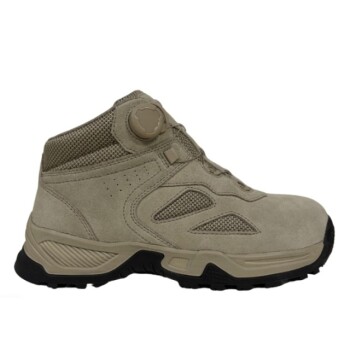
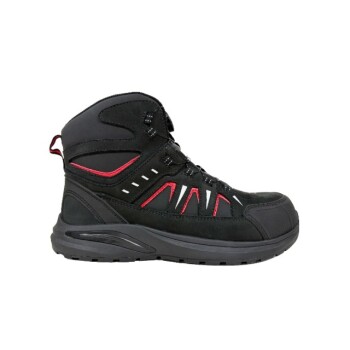
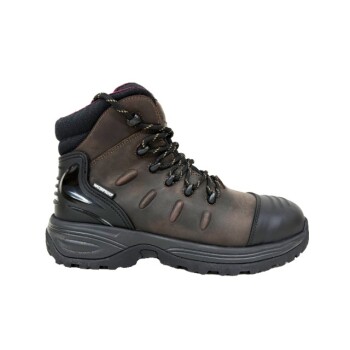
Industrial safety boots possess a distinct duality regarding wearer health. They serve as essential protective equipment against environmental hazards, yet their heavy construction can simultaneously act as a physical barrier for individuals attempting to return to work during foot health recovery.
While safety boots are critical for preventing injury, their rigid design often creates substantial obstacles for workers in the pathological recovery phase of rehabilitation.
The Protective Function
Shielding Against Hazards
The primary role of industrial footwear is non-negotiable: protection. These boots are engineered to shield workers from traumatic industrial injuries.
Managing Environmental Risks
Beyond impact protection, they defend against broader environmental hazards. This includes protection from punctures, slips, chemical exposure, and extreme temperatures found in heavy industry settings.
The Impact on Recovery and Rehabilitation
The Barrier to Re-entry
For individuals in the pathological recovery phase of foot health, standard safety gear creates a conflict. The very features that provide safety—rigidity and weight—can actively hinder a worker's return to duty.
Issues with Heavy Construction
Traditional safety boots utilize heavy construction materials to ensure durability. For a recovering foot, this weight adds strain that can impede rehabilitation activities and prolong the healing process.
Understanding the Design Trade-offs
Protection vs. Adaptability
There is an inherent friction between maximum protection and user comfort. To achieve the highest safety ratings, manufacturers often sacrifice the flexibility and lightness required for a recovering foot.
The Innovation Gap
Current industrial footwear designs often lack the adaptability needed for transitional health phases. This forces a binary choice between safety compliance and the therapeutic needs of the user.
Making the Right Choice for Your Workforce
To manage this duality effectively, safety managers and manufacturers must evaluate footwear based on the user's current health status.
- If your primary focus is Standard Prevention: Prioritize boots with maximum protective ratings to shield healthy workers from environmental and impact hazards.
- If your primary focus is Return-to-Work: Seek out specialized footwear that balances necessary safety standards with enhanced adaptability and lighter weight to support rehabilitation.
True safety management requires recognizing that the right boot for a healthy worker may be the wrong boot for a recovering one.
Summary Table:
| Feature Category | Protective Benefit | Impact on Recovery Phase |
|---|---|---|
| Material Weight | Shields against heavy impacts | Increases strain on recovering joints |
| Rigidity/Support | Prevents punctures & twists | Limits natural foot movement and healing |
| Hazard Shielding | Resists chemicals & heat | Non-breathable, may irritate sensitive tissue |
| Durability | Long-lasting industrial use | Less adaptable to swelling or orthopedic aids |
Optimize Your Workforce Safety with 3515
As a large-scale manufacturer serving distributors and brand owners, 3515 offers comprehensive production capabilities for all footwear types. We understand the complex duality between maximum protection and wearer health. Whether you require our flagship Safety Shoes series or specialized tactical and training footwear, we provide the technical expertise to balance rigid safety compliance with ergonomic adaptability.
Our value to you:
- Bulk Versatility: From work boots to dress and formal shoes for professional uniforms.
- Expert Engineering: Tailored designs that reduce fatigue without compromising safety standards.
- Scalable Solutions: Dependable supply chain support for global distributors.
Ready to elevate your footwear portfolio? Contact us today to discuss your bulk requirements and custom production needs.
References
- Sue Skidmore, Cristina Vasilica. Where do you stand?: an exploration of perspectives toward feet, foot health, and footwear using innovative digital methods. DOI: 10.1186/s13047-023-00621-3
This article is also based on technical information from 3515 Knowledge Base .
Related Products
- Premium Waterproof High-Cut Industrial Safety Boots for Wholesale and Bulk Orders
- Puncture-Resistant Velcro Safety Boots for Wholesale & Custom Manufacturing
- Premium Wholesale Waterproof Safety Boots High Performance Protection for Industrial Markets
- Customizable Anti-Smash Safety Boots for Wholesale & Private Label Manufacturing
- Premium Wholesale Wheat Nubuck Safety Boot with Rapid Lacing System
People Also Ask
- Why are oil-resistant and anti-slip properties critical for industrial safety boots? Expert Outsole Engineering Guide
- What are the primary protective functions of industrial safety boots in oil palm plantations? Master Rough Terrain Safety
- What protective functions do industrial-grade safety boots provide in construction and mining? Maximize Worker Safety
- Why is professional industrial-grade safety footwear a suitable carrier for diabetic rehabilitation insoles?
- How do industrial safety boots assist maintenance personnel working on high-level palm oil factory structures?