
In short, heavy-duty boots are a form of personal protective equipment designed for your feet. While the term "Heavy-Duty Boots" also refers to an item in the Pokémon video games that protects against entry hazards, in the real world their function is to provide critical protection, support, and durability in demanding physical environments. They are engineered to shield you from workplace dangers and withstand conditions that would quickly destroy standard footwear.
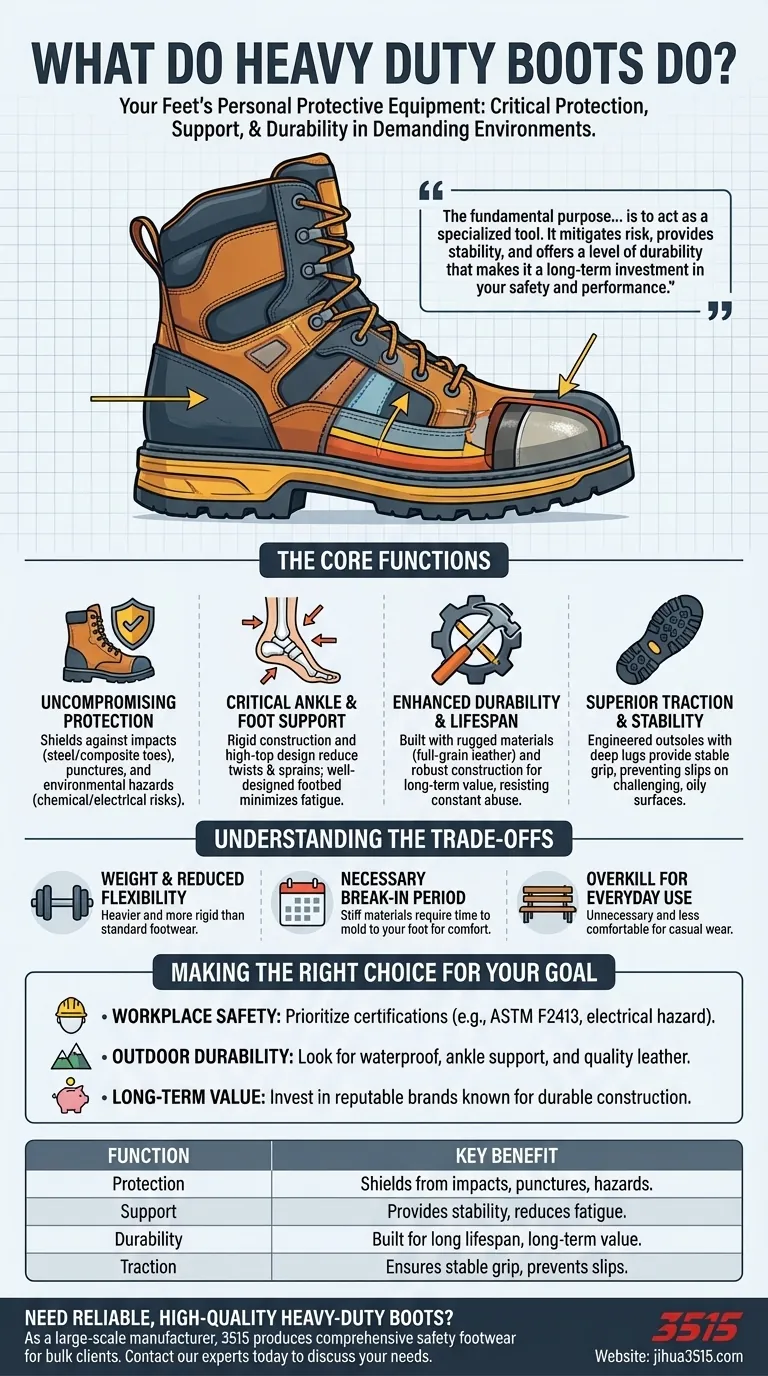
The fundamental purpose of a heavy-duty boot is not just to cover your foot, but to act as a specialized tool. It mitigates risk, provides stability, and offers a level of durability that makes it a long-term investment in your safety and performance.

The Core Functions of a Heavy-Duty Boot
A heavy-duty boot goes far beyond the capabilities of a standard shoe. Its design is a balance of several key functions, each contributing to performance and safety.
Uncompromising Protection
The primary role of these boots is to prevent injury. This protection comes in many forms, from steel or composite toes that shield against impacts to puncture-resistant plates in the sole that stop nails and other sharp objects.
They also protect you from environmental hazards, ensuring your feet stay dry, warm, and safe from chemical or electrical risks.
Critical Ankle and Foot Support
Jobs and activities that require heavy-duty boots often involve long hours on your feet, walking on uneven terrain, and carrying heavy loads.
The rigid construction and high-top design provide excellent ankle support, drastically reducing the risk of twists and sprains. A well-designed footbed also provides arch support to minimize fatigue.
Enhanced Durability and Lifespan
These boots are built with high-quality, rugged materials like full-grain leather and feature robust construction methods like Goodyear welting.
This focus on durability means they can withstand constant abuse, from construction sites to rugged trails. While the initial cost is higher, their extended lifespan often results in long-term savings compared to replacing cheaper boots frequently.
Superior Traction and Stability
The outsoles on heavy-duty boots are specifically engineered for the environment they will be used in.
They feature deep, aggressive lugs and are often made from compounds that are oil- and slip-resistant. This provides a stable platform and reliable grip on challenging surfaces, preventing slips and falls.
Understanding the Trade-offs
While essential for demanding tasks, heavy-duty boots are specialized equipment and come with considerations that make them unsuitable for casual wear.
Weight and Reduced Flexibility
Protection and durability come at the cost of weight. Heavy-duty boots are significantly heavier and more rigid than sneakers or casual boots, which can feel cumbersome during periods of inactivity.
Necessary Break-in Period
Due to their stiff materials and robust construction, most high-quality heavy-duty boots require a "break-in" period. They may feel uncomfortable at first until the leather molds to the shape of your foot.
Overkill for Everyday Use
Wearing a certified safety boot for a walk in the park is unnecessary. Their weight, stiffness, and specialized features provide no benefit in a casual environment and will likely be less comfortable than standard footwear.
Making the Right Choice for Your Goal
Selecting the correct boot requires matching its features to your specific needs. The best boot is the one that provides the exact protection and support your environment demands.
- If your primary focus is workplace safety: Prioritize boots with the specific safety certifications your job requires, such as steel toes (ASTM F2413), electrical hazard protection, or slip-resistant soles.
- If your primary focus is outdoor durability: Look for waterproof membranes, high-quality leather construction, and excellent ankle support to handle uneven and unpredictable terrain.
- If your primary focus is long-term value: Invest in boots from a reputable brand known for durable construction methods, as these will far outlast less expensive alternatives.
Ultimately, choosing the right heavy-duty boot is a crucial decision for your safety, comfort, and effectiveness on the job.
Summary Table:
| Function | Key Benefit |
|---|---|
| Protection | Shields feet from impacts, punctures, and environmental hazards. |
| Support | Provides ankle stability and arch support to reduce fatigue and injury risk. |
| Durability | Built with rugged materials for a long lifespan, offering long-term value. |
| Traction | Engineered outsoles ensure a stable grip and prevent slips on challenging surfaces. |
Need reliable, high-quality heavy-duty boots for your team or brand?
As a large-scale manufacturer, 3515 produces a comprehensive range of safety and work footwear for distributors, brand owners, and bulk clients. Our production capabilities encompass all types of durable boots designed to meet stringent safety standards and withstand the toughest conditions.
We can help you source or customize the perfect footwear solution to ensure safety, comfort, and performance.
Contact our experts today to discuss your specific needs and receive a competitive quote.
Visual Guide
Related Products
- High-Traction Suede Tactical Boots Wholesale & Custom Manufacturing
- Wholesale Tactical Boots High-Traction & Reflective for Bulk & Brand Orders
- Durable Military Combat Boots with Water Drainage for Wholesale & OEM
- Durable Leather Tactical Boots Wholesale & Custom Manufacturing for Brands
- Wholesale Waterproof Tactical Boots Custom Suede & High-Traction Soles
People Also Ask
- Why is sequential analysis utilized to evaluate tactical boots? Master Dynamic Boot Development and Ergonomic Performance
- How does the material of tactical boots affect their performance? Choose the Right Material for Your Mission
- How do tactical boots differ from regular boots? Performance, Durability & Design Explained
- How do military uniforms and tactical boots impact the prediction of thermal risk? Essential Safety Insights
- What are the benefits of integrating FES and sEMG into tactical boots? Safety, Reliability & Field-Ready Performance

















