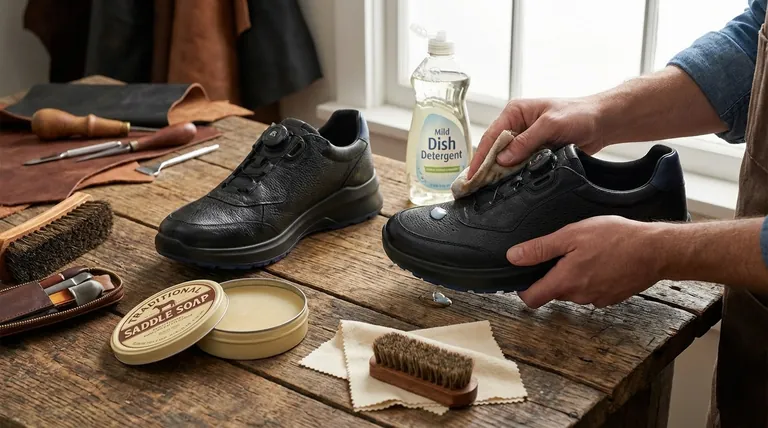
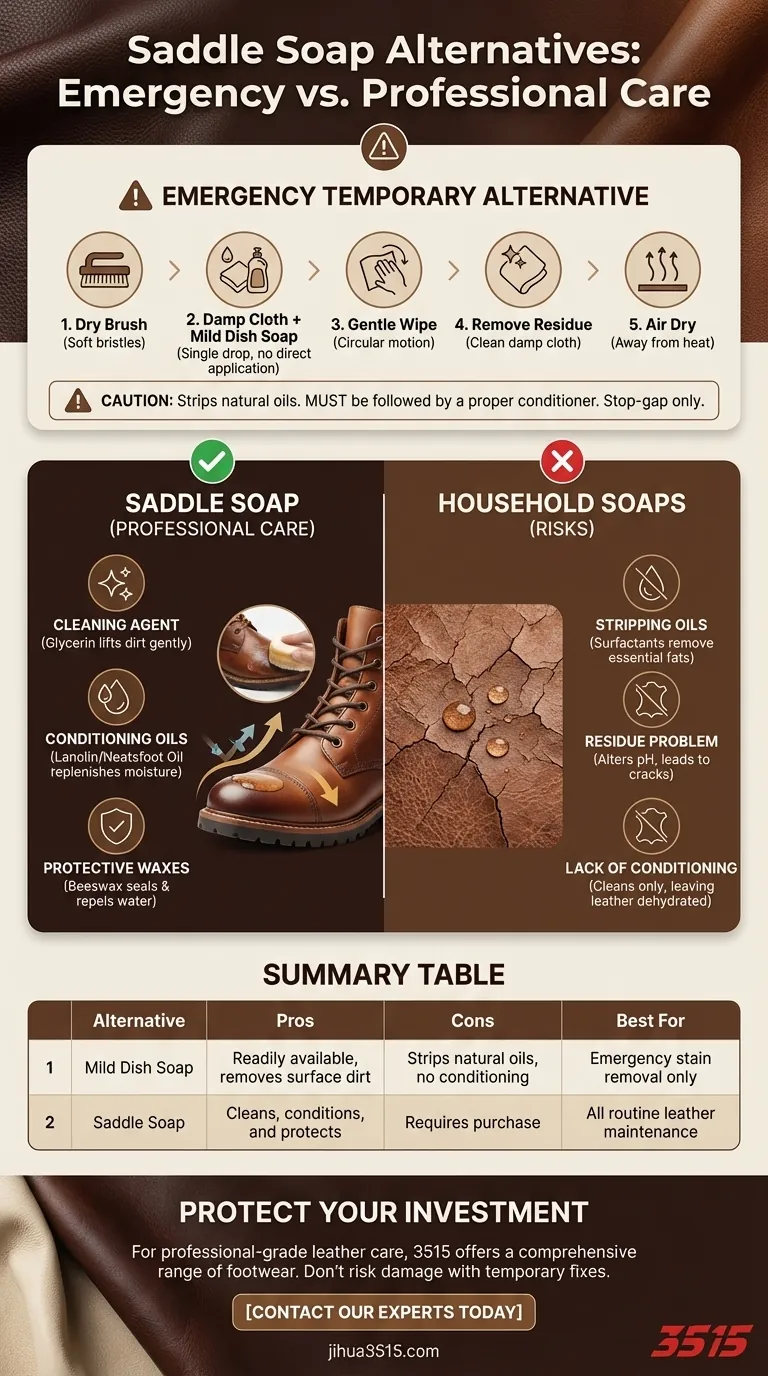
In an emergency, you can use a small amount of mild dish detergent on a damp cloth as a temporary substitute for saddle soap. This method is strictly for removing surface dirt and must be followed by wiping the leather with a separate clean, damp cloth to remove all soap residue, as any remaining detergent will strip the leather's natural oils.
The core principle is that a temporary cleaner should remove surface dirt with minimal chemical impact. However, unlike saddle soap, these alternatives do not replenish the oils and conditioners essential for long-term leather health, making them a stop-gap measure, not a true replacement.
Why Saddle Soap is Unique
Saddle soap is more than just a cleaner; it's a dedicated leather care product designed to perform multiple functions in one step. Understanding its role helps clarify why simple soap is a poor long-term substitute.
The Cleaning Agent
Saddle soap contains a mild soap, often including glycerin, that effectively lifts dirt, grime, and old waxes from the leather's pores without being overly harsh.
The Conditioning Oils
This is the critical difference. Saddle soap is formulated with conditioning agents like lanolin or neatsfoot oil. As you clean, these oils penetrate the leather, replenishing moisture lost over time and through use.
The Protective Waxes
Many saddle soaps also include a wax component, such as beeswax. This leaves a thin, breathable protective layer on the surface that helps repel water and seals in the conditioning oils.
The Problem with Household Soaps
Using common soaps, especially dish detergent, presents a significant risk to your leather goods if used improperly or for an extended period.
Stripping Natural Oils
Detergents are surfactants designed to break down and wash away grease and oil. While effective for dishes, this action is highly damaging to leather, as it strips the essential natural oils that keep the material flexible and strong.
The Residue Problem
Household soaps can leave behind a residue that alters the leather's pH balance. This residue can attract more dirt and, over time, can cause the leather fibers to become brittle and prone to cracking.
Lack of Conditioning
This is the most significant shortcoming. A detergent-based cleaner only performs one function: removing dirt. It does not add back any of the vital moisture or conditioners, leaving the leather clean but vulnerable and dehydrated.
A Safer Temporary Cleaning Process
If you have no other option and must clean your leather item, follow this process precisely to minimize potential damage.
Step 1: Dry Brushing
First, use a soft-bristled brush to remove any loose surface dirt and dust. This prevents you from grinding abrasive particles into the leather during the wet cleaning phase.
Step 2: The Cleaning Solution
Dampen a soft, lint-free cloth with water, wringing it out until it is only slightly damp. Apply a single drop of mild, non-abrasive dish soap to the cloth, not directly to the leather.
Step 3: Gentle Wiping
Gently wipe the soiled area in a circular motion. Do not scrub aggressively. Your goal is only to lift the surface grime.
Step 4: Removing the Residue
Immediately take a second clean cloth, dampen it with only water, and wipe the area again to remove any soap residue. This step is critical to prevent the detergent from continuing to act on the leather.
Step 5: Air Drying
Allow the leather to air dry completely, away from direct heat or sunlight. Applying heat can cause the leather to shrink and crack.
Making the Right Choice for Your Leather
Using a proper leather care product is always the best course of action. This temporary method should only be used when immediate cleaning is necessary to prevent a stain from setting.
- If you need a quick fix for a spill: A single drop of mild dish soap on a damp cloth is a viable emergency option, but you must follow up with a proper leather conditioner once it is dry.
- If you are performing routine maintenance: Wait until you can acquire true saddle soap or a dedicated leather cleaner and conditioner to avoid causing long-term, cumulative damage.
Ultimately, proper leather care is an investment in the longevity and appearance of your goods.
Summary Table:
| Alternative | Pros | Cons | Best For |
|---|---|---|---|
| Mild Dish Soap | Readily available, removes surface dirt | Strips natural oils, no conditioning | Emergency stain removal only |
| Saddle Soap | Cleans, conditions, and protects leather | Requires purchase | All routine leather maintenance |
Protect Your Investment with Professional-Grade Leather Care
As a large-scale manufacturer, 3515 produces a comprehensive range of footwear for distributors, brand owners, and bulk clients. Our production capabilities encompass all types of shoes and boots, and we understand that proper cleaning and conditioning are essential for product longevity.
Don't risk damaging your leather goods with temporary fixes. For professional-grade saddle soap and leather conditioners that clean, nourish, and protect, contact our experts today to discuss your needs and ensure the long-term health of your leather products.
Visual Guide
Related Products
- Lightweight Breathable Sneakers with Wet-Traction Grip for Wholesale & Private Label
- Wholesale Durable Camouflage Canvas Shoes with High-Traction Cleated Rubber Sole
- Wholesale Durable Safety Boots Manufacturer Customizable Steel Toe Work Boots
- Durable Rubber Sole Outdoor Shoes Wholesale & Custom Manufacturing
- Durable Leather Moc Toe Work Boots for Wholesale & Custom Manufacturing
People Also Ask
- Why are breathable sneakers necessary for tropical commuting? Stay Cool and Dry in High Humidity
- What role do lightweight training shoes play in urban traffic? Boost Agility and Reaction for Safer City Navigation
- How do lightweight shoes provide support? The Science of Efficient Cushioning & Stability
- How do lightweight shoes contribute to healthier feet? Reduce Fatigue & Prevent Foot Problems
- What are the style advantages of lightweight shoes? Sleek, Versatile & Modern Comfort