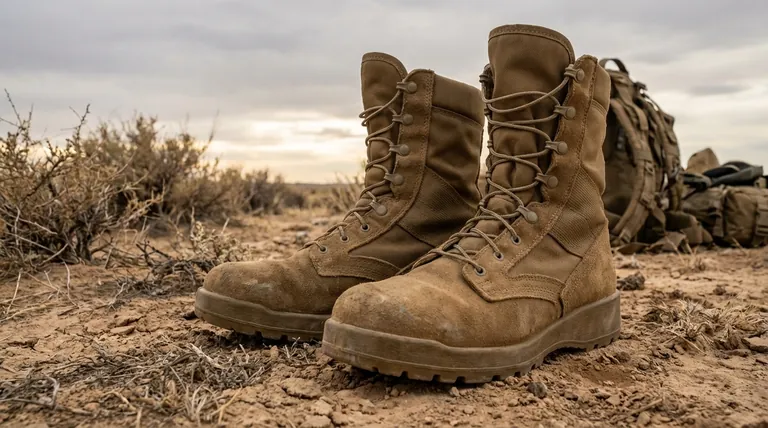
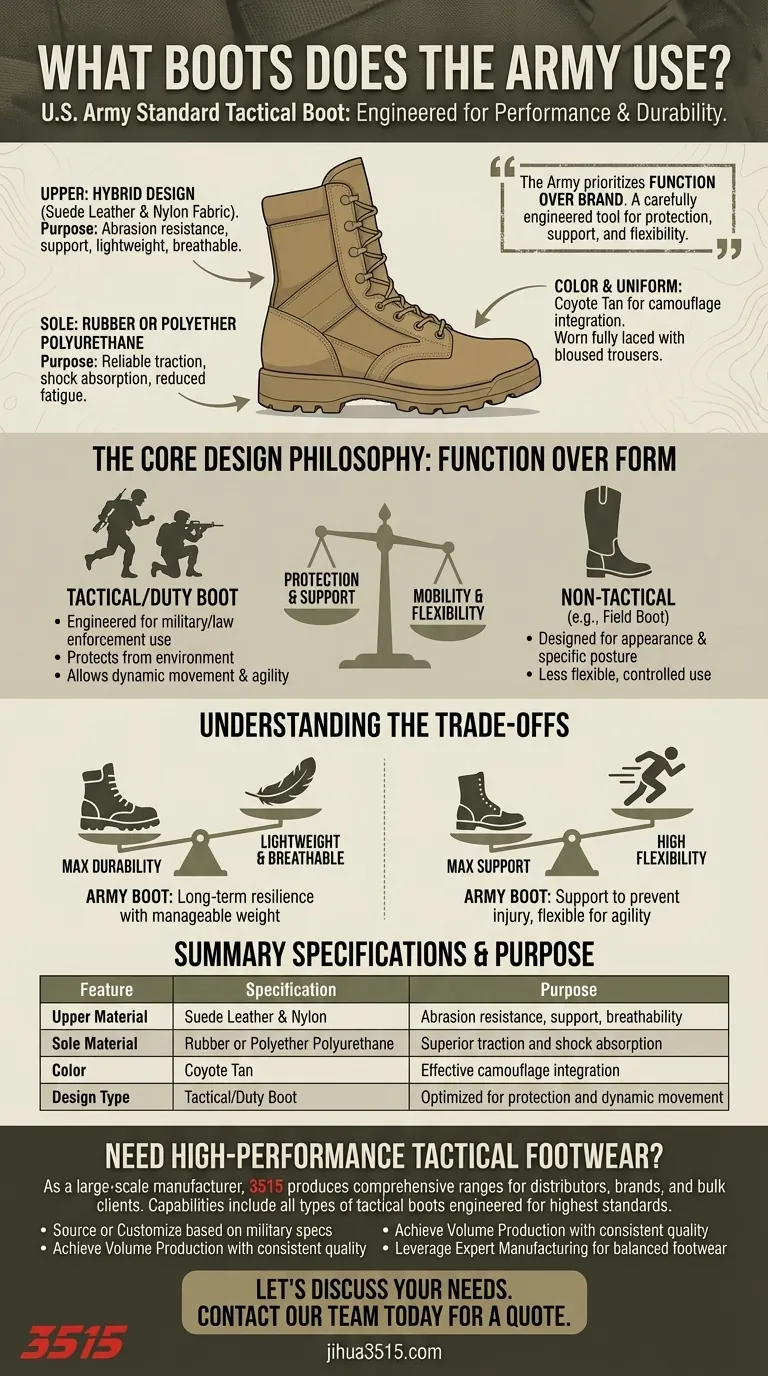
The standard U.S. Army boot is a coyote tan tactical boot specifically designed for performance and durability in varied combat environments. These boots are built to a precise set of specifications, featuring suede lowers paired with fabric uppers and a sole made of either rubber or polyether polyurethane. While multiple brands produce these boots, they must all adhere to the functional requirements set by the Army.
The Army prioritizes function over a specific brand. The required boot is a carefully engineered tool designed to provide a critical balance of protection, support, and flexibility for a soldier operating under demanding physical conditions.
The Anatomy of an Army Combat Boot
To understand the purpose of the Army boot, it's essential to break down its core components as specified by military regulations. Each element serves a distinct function related to performance and durability.
Material and Construction
The upper portion of the boot is a hybrid design, combining suede leather on the lower sections with a strong fabric like nylon for the upper shaft. This combination provides abrasion resistance and support around the foot while allowing for lighter weight and increased breathability around the calf.
Sole Composition
The outsole must be made from rubber or polyether polyurethane. These materials are chosen for their ability to provide reliable traction across diverse terrains, from mud and rock to pavement, while also offering crucial shock absorption to reduce fatigue during long marches.
Color and Uniform Integration
The required color is coyote tan, a muted earth tone that works effectively with the Army's current camouflage patterns. Regulations also dictate how they are worn: fully laced with the trousers bloused, ensuring a secure fit and a uniform appearance.
The Core Design Philosophy: Function Over Form
The Army combat boot is a piece of tactical equipment, not a fashion accessory. Its design is a direct reflection of the physical demands placed upon a soldier.
Defining the "Duty" Boot
At its heart, the Army boot is a type of duty or tactical boot. This category of footwear is engineered specifically for military and law enforcement use. The primary goal is to protect the wearer's feet and ankles from the environment.
Engineered for Dynamic Movement
Unlike heavy, rigid work boots, a tactical boot must remain flexible. Soldiers are expected to run, crouch, and move athletically. The design must provide robust support without significantly hindering mobility.
Contrasting with Non-Tactical Boots
The purpose of an Army boot becomes clearer when compared to a "field boot" used in equestrian sports. A field boot is designed for appearance and a specific, controlled posture. An Army combat boot is designed for unpredictable, high-stress situations where performance is the only metric that matters.
Understanding the Trade-offs
No single boot design is perfect for every possible scenario. The Army boot represents a series of carefully considered compromises to achieve the best all-around performance.
Durability vs. Weight
A thicker, all-leather boot might be more durable, but it would also be heavier and less breathable, leading to faster exhaustion. The suede and nylon combination is a trade-off that balances long-term resilience with the need to keep weight down.
Support vs. Flexibility
A highly rigid boot provides maximum ankle support against twists but restricts the natural movement needed for running or climbing. The Army boot must offer enough support to prevent injury while being flexible enough for a soldier to remain agile.
Making the Right Choice for Your Goal
Whether you are a soldier purchasing new gear or a civilian seeking high-performance footwear, understanding the boot's intended purpose is critical.
- If you require an authorized military boot: You must focus strictly on models that meet the specific material, color, and sole composition requirements.
- If you need a high-performance tactical boot for civilian use: Look for the core attributes of the Army boot—a balance of durable support, flexibility for movement, and a rugged sole.
- If your primary focus is another activity like formal riding: Recognize that the Army boot is highly specialized for combat and is not the optimal choice for tasks where appearance or a different kind of support is needed.
Ultimately, understanding the design principles behind an Army boot allows you to see it not just as footwear, but as a critical piece of performance equipment.
Summary Table:
| Feature | Specification | Purpose |
|---|---|---|
| Upper Material | Suede Leather & Nylon | Abrasion resistance, support, and breathability |
| Sole Material | Rubber or Polyether Polyurethane | Superior traction and shock absorption |
| Color | Coyote Tan | Effective camouflage integration |
| Design Type | Tactical/Duty Boot | Optimized for protection and dynamic movement |
Need High-Performance Tactical Footwear?
As a large-scale manufacturer, 3515 produces a comprehensive range of durable and reliable footwear for distributors, brand owners, and bulk clients. Our production capabilities encompass all types of tactical boots and shoes, engineered to meet the highest standards of performance and durability.
We can help you:
- Source or Customize tactical boots based on proven military specifications.
- Achieve Volume Production with consistent quality for your brand or distribution network.
- Leverage Expert Manufacturing for footwear that balances support, flexibility, and long-term resilience.
Let's discuss your specific needs. Contact our team today to get a quote or learn more about our manufacturing solutions.
Visual Guide
Related Products
- High-Traction Suede Tactical Boots Wholesale & Custom Manufacturing
- Wholesale Waterproof Tactical Boots Custom Suede & High-Traction Soles
- Durable Military Combat Boots with Water Drainage for Wholesale & OEM
- Durable Leather Tactical Boots Wholesale & Custom Manufacturing for Brands
- Wholesale Lightweight Tactical Boots Custom Manufacturer for Desert & Combat Use
People Also Ask
- Why is sequential analysis utilized to evaluate tactical boots? Master Dynamic Boot Development and Ergonomic Performance
- How does the material of tactical boots affect their performance? Choose the Right Material for Your Mission
- How do tactical boots differ from regular boots? Performance, Durability & Design Explained
- How do military uniforms and tactical boots impact the prediction of thermal risk? Essential Safety Insights
- What are the benefits of integrating FES and sEMG into tactical boots? Safety, Reliability & Field-Ready Performance