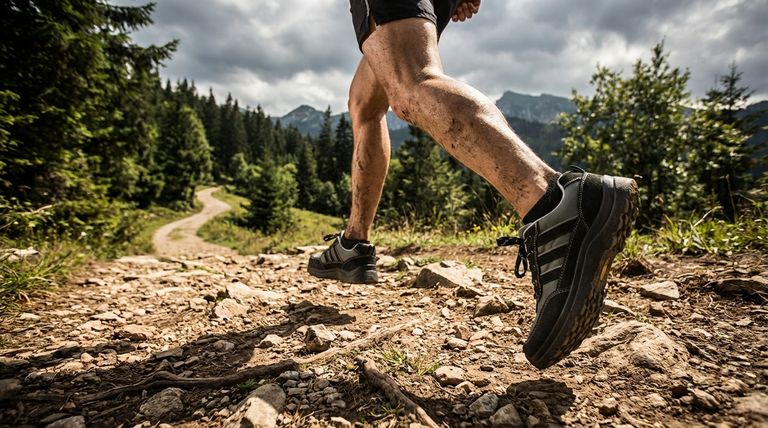
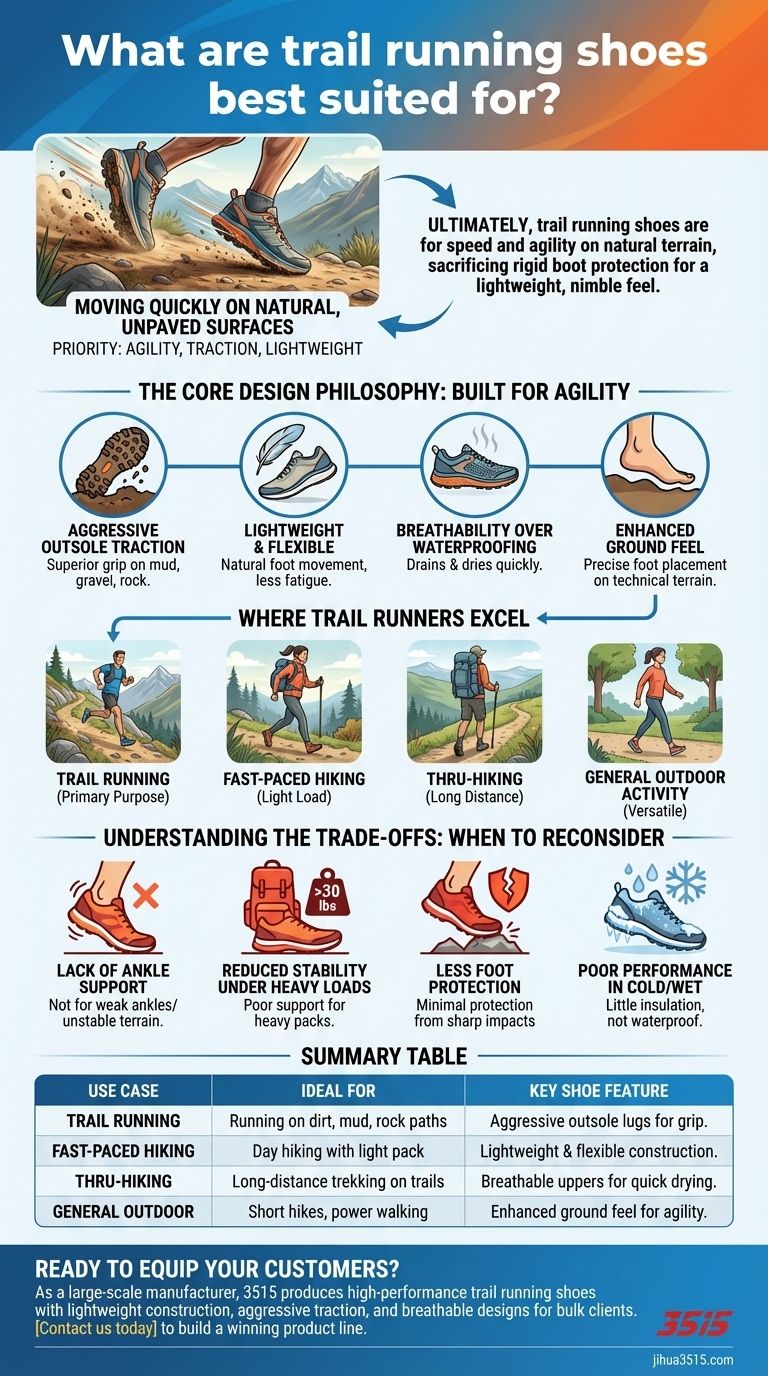
Ultimately, trail running shoes are best for moving quickly on natural, unpaved surfaces. They are specifically engineered for activities like trail running, fast-paced day hiking, and long-distance trekking on established paths. Their design prioritizes lightweight agility and aggressive traction over the heavy-duty protection of a traditional hiking boot.
The core decision to use a trail running shoe is a trade-off. You are choosing to sacrifice the rigid ankle support and robust protection of a hiking boot in exchange for significantly less weight, greater flexibility, and a more nimble feel for the ground beneath you.
The Core Design Philosophy: Built for Agility
To understand where trail runners excel, you must first understand their fundamental design. They are a hybrid, combining the soul of a road running shoe with the ruggedness required for off-road terrain.
Aggressive Outsole Traction
The most defining feature of a trail runner is its outsole. It is equipped with deep, widely spaced lugs made of sticky rubber. This design provides a superior grip on varied surfaces like dirt, mud, gravel, and rock.
Lightweight and Flexible Construction
Unlike the stiff shank of a hiking boot, a trail runner is built to be flexible. This allows your foot to move and adapt naturally to uneven ground, reducing the energy required with each step and minimizing fatigue over long distances.
Breathability Over Waterproofing
Most trail running shoes feature mesh uppers that are highly breathable. The philosophy is that your feet will likely get wet from sweat or creek crossings, so the shoe should be ableto drain and dry as quickly as possible, rather than trying to seal water out completely.
Enhanced Ground Feel
The thinner and more flexible midsole provides a better "feel" for the trail. This allows for more precise and reactive foot placement, which is critical when moving at speed over technical terrain.
Where Trail Runners Excel
Based on their design, these shoes have a clear set of ideal use cases.
Trail Running
This is their primary purpose. They provide the necessary traction, light weight, and shock absorption for running on everything from smooth singletrack to mountainous ascents.
Fast-Paced and Lightweight Hiking
For day hikers or "fastpackers" carrying a light load, trail runners are often the superior choice. They allow you to cover more ground with less effort compared to clunky boots.
Thru-Hiking on Established Trails
Trail runners have become the dominant footwear for long-distance hikers on well-maintained trails like the Appalachian Trail or Pacific Crest Trail. Over thousands of miles, the weight savings lead to a massive reduction in overall fatigue.
General Outdoor Activity
Their versatility makes them excellent for short hikes on groomed paths, power walking, or any activity where you need better traction than a standard sneaker but don't need the bulk of a boot.
Understanding the Trade-offs: When to Reconsider
The advantages of a trail running shoe are also its primary weaknesses. Understanding these limitations is critical for safety and comfort.
Lack of Ankle Support
The low-cut, flexible design offers virtually no protection against ankle rolls. If you have weak ankles or are navigating highly unstable, rocky terrain, a boot with a high cuff is a safer choice.
Reduced Stability Under Heavy Loads
The soft, flexible midsoles that make trail runners comfortable for running can feel unstable when carrying a heavy backpack (over 30 lbs / 13.5 kg). The shoe can compress and deform, offering poor support for the added weight.
Less Foot Protection
While they have toe guards and rock plates, the mesh uppers and flexible soles offer minimal protection from sharp rocks, roots, or direct impacts compared to the thick leather and rigid construction of a hiking boot.
Poor Performance in Cold or Wet Conditions
Standard trail runners offer little insulation and are rarely waterproof. In cold, snowy, or relentlessly wet environments, your feet will be unprotected from the elements.
Making the Right Choice for Your Activity
Selecting the right footwear depends entirely on your objective. Use these guidelines to make a clear decision.
- If your primary focus is speed and agility on trails: Trail runners are your ideal tool, offering the traction and flexibility you need to move quickly and efficiently.
- If your primary focus is thru-hiking with a light pack: Trail runners are an excellent choice to minimize weight and reduce fatigue, provided you don't require heavy ankle support.
- If your primary focus is technical hiking with a heavy pack: A traditional hiking boot or a more robust hiking shoe is the safer, more stable option to support the load and protect your feet.
- If your primary focus is casual day hikes on groomed paths: The versatility of a trail runner makes it a superb all-around choice that provides comfort and superior grip.
Ultimately, choosing a trail running shoe is a commitment to moving lightly and feeling connected to the terrain.
Summary Table:
| Use Case | Ideal For | Key Shoe Feature |
|---|---|---|
| Trail Running | Running on dirt, mud, and rock paths | Aggressive outsole lugs for grip |
| Fast-Paced Hiking | Day hiking with a light pack | Lightweight and flexible construction |
| Thru-Hiking | Long-distance trekking on established trails | Breathable uppers for quick drying |
| General Outdoor Activity | Short hikes, power walking | Enhanced ground feel for agility |
Ready to equip your customers with the perfect footwear for agility and speed?
As a large-scale manufacturer, 3515 produces a comprehensive range of high-performance trail running shoes and outdoor footwear. We offer the lightweight construction, aggressive traction, and breathable designs that distributors, brand owners, and bulk clients need to meet the demands of today's active consumers.
Contact us today to discuss your production needs and learn how our expertise can help you build a winning product line.
Visual Guide
Related Products
- Durable Rubber Sole Outdoor Shoes Wholesale & Custom Manufacturing
- Wholesale Durable Camouflage Canvas Shoes with High-Traction Cleated Rubber Sole
- Wholesale Breathable Perforated Leather Derby Shoes with Modern Comfort Sole
- Wholesale Durable & Breathable Training Shoes for Custom Brands
- Custom OEM Training Shoes Wholesale Manufacturer Durable & Breathable
People Also Ask
- What is the function of the sole in outdoor shoes? Find the Perfect Grip and Support
- What role do outdoor shoes and sneakers play in navigating external terrains? Engineered Stability for Every Surface
- How is AI utilized in the design of outdoor and safety footwear? Harnessing Big Data for Market-Driven Shoe Innovation
- Why is durability important when selecting outdoor shoes? A Guide to Safety & Long-Term Value
- What are the key components of outdoor shoes that affect comfort and sturdiness? A Guide to Durable, High-Performance Footwear