
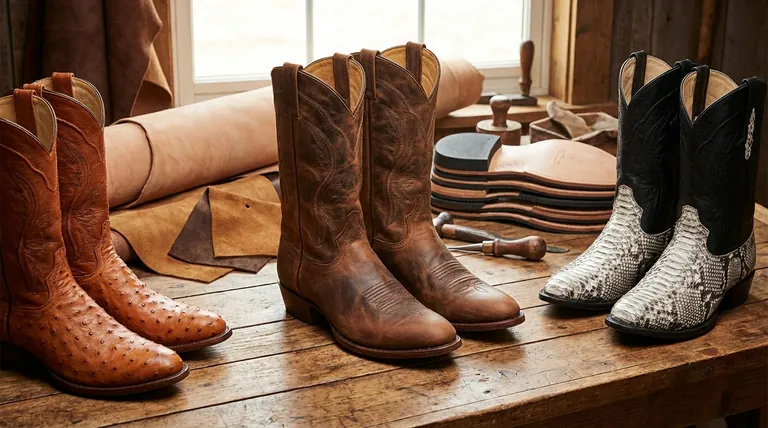
At their core, cowboy boots are crafted from a spectrum of leathers, each chosen for a specific purpose and aesthetic. The most common material is durable cowhide leather, but the landscape extends to a wide array of exotic skins like ostrich, snakeskin, caiman, and alligator for more luxurious, statement-making boots. Modern variations also incorporate materials like suede, nubuck, and synthetics to achieve different looks and functionalities.
The material of a cowboy boot is not just about its appearance; it is a direct statement of its intended function, balancing the timeless demands of durability with the distinct expressions of personal style.
The Foundation: Traditional Leathers
The majority of cowboy boots are built upon a foundation of proven, durable leathers derived from cattle. These materials form the backbone of the industry, from rugged work boots to classic dress boots.
Cowhide: The Workhorse Material
Full-grain and top-grain cowhide are the quintessential materials for cowboy boots. This leather is prized for its exceptional durability, resilience, and ability to mold to the wearer's foot over time. It's the standard for boots intended for daily wear or demanding work environments.
Suede and Nubuck: The Modern Aesthetic
For a softer texture and a more contemporary Western look, some boots utilize suede or nubuck. These are still forms of cowhide but have been processed to create a napped, velvet-like surface. They offer a distinct style but are generally less resistant to moisture and stains than traditional smooth leather.
The Statement Piece: Exotic Skins
Exotic skins transform a boot from simple footwear into a piece of wearable art. These materials are chosen for their unique textures, rarity, and luxurious appeal, often reserved for formal or special occasions.
Ostrich: The Textured Classic
Ostrich leather, particularly full-quill ostrich with its distinctive raised bumps, is one of the most popular exotic materials. It is renowned not just for its unique look but also for its remarkable softness and durability, making it a premium yet practical choice.
Reptilian Leathers: The Bold Choice
Skins from reptiles offer a sharp, defined, and often glossy appearance. Snakeskin, lizard, caiman, and alligator are all used to create boots with striking scale patterns. Caiman and alligator are especially prized for their rugged texture and association with high-end luxury.
Other Exotics: A World of Variety
The world of exotic boots also includes less common materials like eel, stingray, and deer. Each brings a unique texture and story, often found in custom-made, high-priced boots that are considered collector's items.
Beyond the Upper: The Sole and Heel
While the upper part of the boot gets the most attention, the sole is critical to its function and feel. The choice here is typically between tradition and modern practicality.
Leather Soles: The Traditional Standard
A leather sole is the classic choice, ideal for the smooth slide needed for dancing or getting in and out of a stirrup. It's a hallmark of traditional, high-quality boot construction.
Rubber Soles: The Practical Alternative
For increased durability, comfort, and traction on various surfaces, many modern boots feature a rubber sole. This material provides better grip and cushioning, making the boot more suitable for walking on pavement or working in wet conditions.
Understanding the Trade-offs
Choosing a boot material involves balancing aesthetics with practical considerations. No single material is perfect for every situation.
Durability vs. Delicacy
A full-grain cowhide boot is built to withstand abuse. In contrast, many exotic skins, like snakeskin or eel, are far more delicate and can be prone to drying, cracking, or peeling if not meticulously cared for.
Cost as an Indicator
There is a direct correlation between the rarity of the material and the price of the boot. Cowhide is the accessible standard, while a pair of alligator or full-quill ostrich boots represents a significant financial investment.
Maintenance Demands
All leather requires care, but exotics demand specialized attention. Reptilian skins need specific conditioners to keep their scales from flaking, while suede requires dedicated brushes and protectants to guard against water and dirt.
Making the Right Choice for Your Goal
Your intended use for the boots should be the primary factor guiding your choice of material.
- If your primary focus is daily wear or work: Choose a boot made from full-grain or top-grain cowhide for maximum durability and comfort.
- If your primary focus is formal events or making a statement: An exotic skin like full-quill ostrich or caiman offers unparalleled style and luxury.
- If your primary focus is a modern, casual style: Look for boots made from suede or nubuck for a softer, more contemporary appearance.
Ultimately, the right boot is the one that aligns with both your practical needs and your personal expression.
Summary Table:
| Material Type | Common Examples | Best For | Key Characteristics |
|---|---|---|---|
| Traditional Leathers | Cowhide, Suede, Nubuck | Daily wear, work, casual style | Durability, comfort, molds to foot |
| Exotic Skins | Ostrich, Snakeskin, Caiman, Alligator | Formal events, statement pieces | Unique texture, luxury, rarity |
| Soles | Leather, Rubber | Dancing, riding, or practical use | Smooth slide (leather) or traction (rubber) |
As a large-scale manufacturer, 3515 produces a comprehensive range of footwear for distributors, brand owners, and bulk clients. Whether you need durable cowhide work boots or luxurious exotic skin styles, our production capabilities encompass all types of shoes and boots. Let us help you source or customize the perfect cowboy boots for your market. Contact us today to discuss your needs!
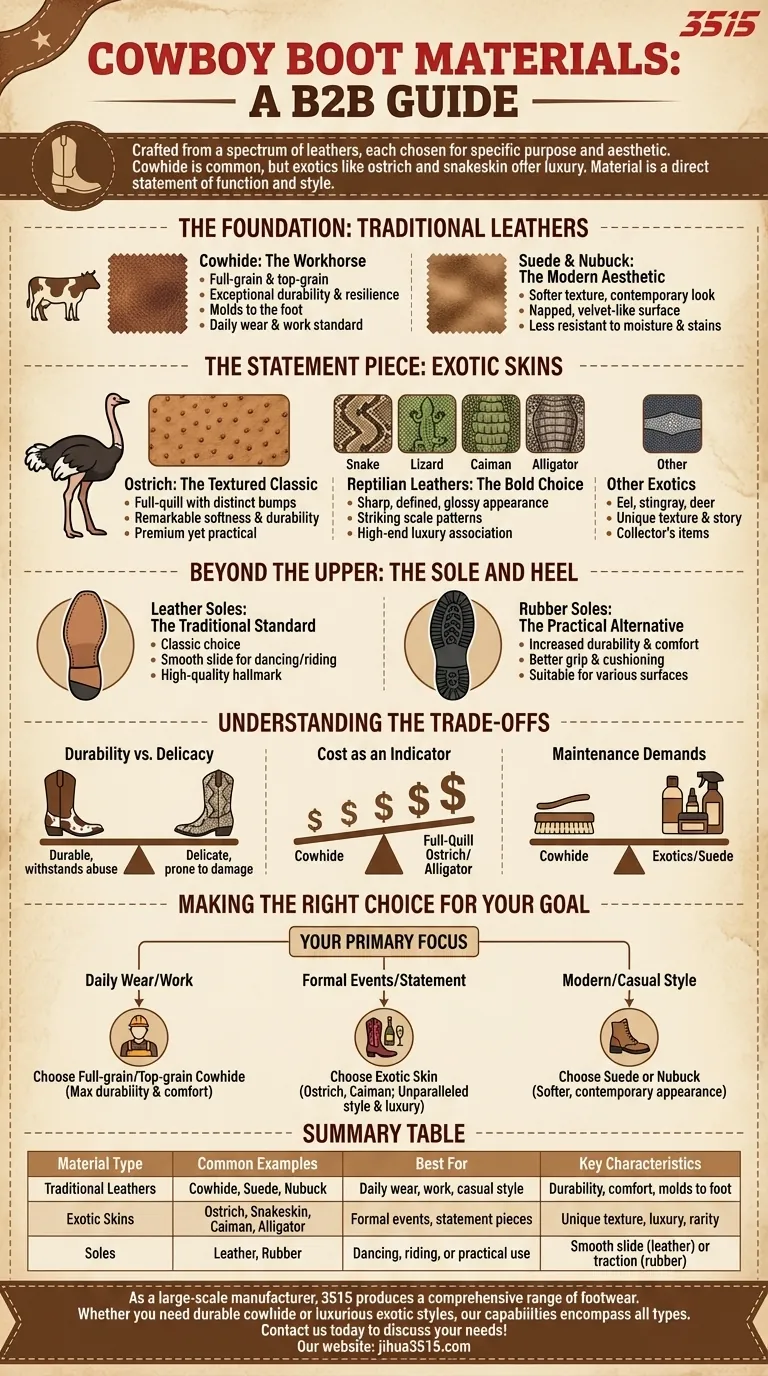
Visual Guide
Related Products
- Wholesale High-Traction Camo Boots - Custom Manufacturer for Brands
- High-Traction Suede Tactical Boots Wholesale & Custom Manufacturing
- Wholesale Lightweight Tactical Boots Custom Manufacturer for Desert & Combat Use
- Durable Leather Tactical Boots Wholesale & Custom Manufacturing for Brands
- Wholesale Durable Mid-Cut Tactical Boots for Custom & Private Label Brands
People Also Ask
- What are the key features of the new line of camo boots? Built for Extreme Cold & Rugged Terrain
- Are camo boots necessary for hunting success? Prioritize Performance Over Pattern
- How does the Rank Score Test identify the primary causes of premature failure in tactical and work boots? Key Insights
- What is the technical logic behind using closed-eye testing for tactical boots? Unlocking Peak Footwear Stability
- What shoes to wear for a security job? Durable, Protective Footwear for Long Shifts

















