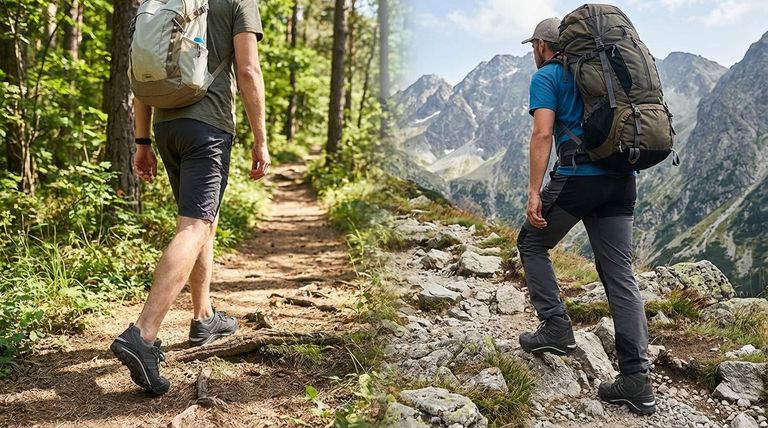
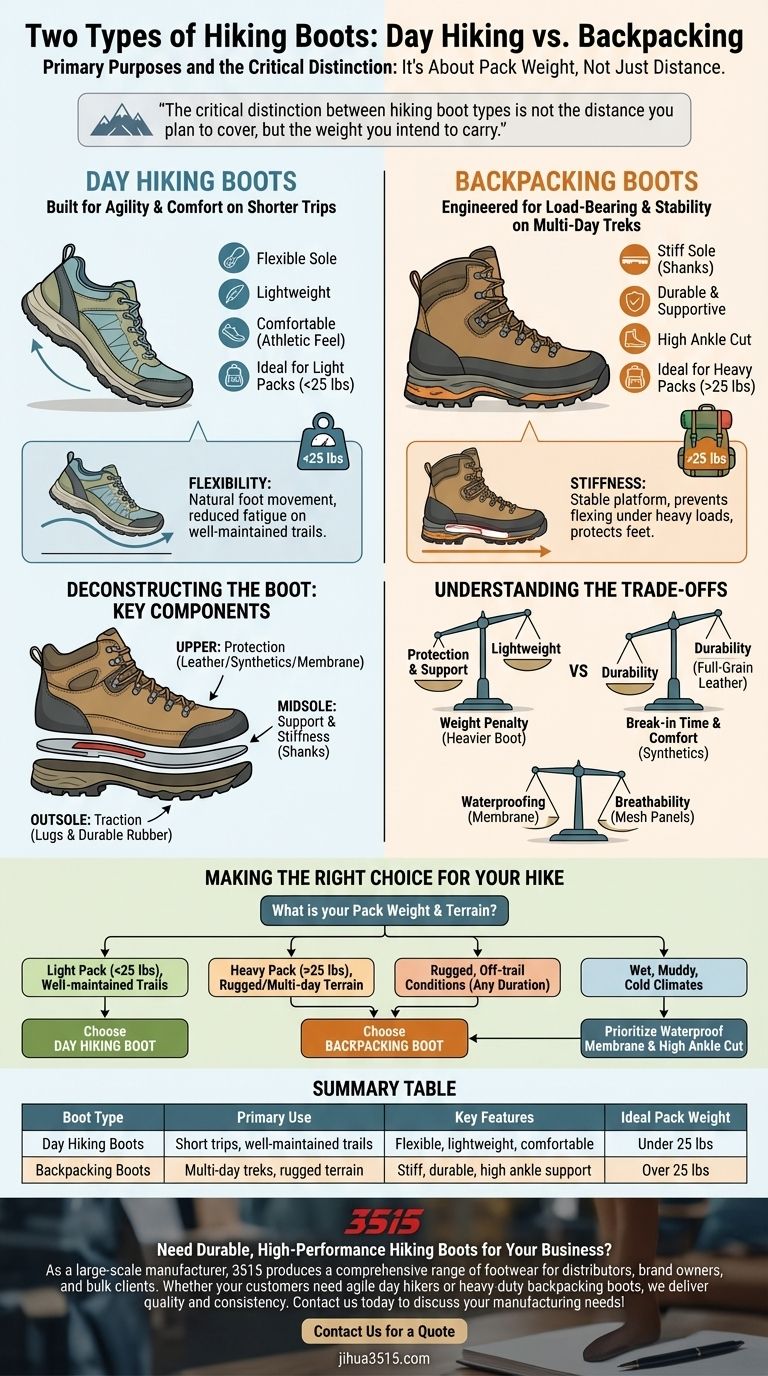
At their core, hiking boots fall into two primary categories based on the demands of the journey. The first is the day hiking boot, designed for flexibility and comfort on shorter trips with a light pack. The second is the backpacking boot, engineered with superior stiffness and ankle support to safely manage heavy loads over rugged, multi-day terrain.
The critical distinction between hiking boot types is not the distance you plan to cover, but the weight you intend to carry. Your pack's weight is the single most important factor in determining the level of stiffness and support you need to ensure stability and prevent injury.
The Fundamental Difference: Flexibility vs. Stiffness
The primary design principle separating hiking boots is the trade-off between a flexible sole for comfort and a rigid sole for support. Each serves a distinct purpose on the trail.
Day Hiking Boots: Built for Agility
Day hiking boots prioritize comfort and flexibility. They are often lighter and feel more like a robust athletic shoe.
Their softer midsoles allow your foot to flex naturally, which reduces fatigue on well-maintained trails and short excursions. These are ideal for hikers carrying a light daypack with just the essentials.
Backpacking Boots: Engineered for Load-Bearing
Backpacking boots are defined by their stiffness and durability. They feature much firmer midsoles and higher ankle cuts to provide a stable platform.
This rigidity is essential when carrying a heavy pack (typically 30 lbs or more). It protects your feet from sharp rocks underfoot and provides critical ankle support to prevent twists and sprains when your center of gravity is higher.
The Third Category: Mountaineering Boots
While day hiking and backpacking boots cover most needs, a third, highly specialized category exists: mountaineering boots.
These are the stiffest and most durable boots available, designed with features like crampon compatibility for navigating snow, glaciers, and extreme alpine conditions.
Deconstructing the Boot: Key Components
Understanding a boot's anatomy reveals why one is better suited for a specific task than another. The difference is found in the materials and construction of its core parts.
The Upper: Your First Line of Defense
The upper portion of the boot protects your foot from the elements. Materials range from full-grain leather, which offers maximum durability and water resistance, to synthetics and mesh, which are lighter, more breathable, and require less break-in time. Many boots also incorporate a waterproof-breathable membrane to keep feet dry.
The Midsole: The Source of Support
The midsole provides cushioning and, most importantly, determines the boot's stiffness. Backpacking boots contain rigid internal structures, called shanks, that run the length of the midsole. This prevents the boot from flexing under the weight of a heavy pack, reducing foot fatigue over long distances.
The Outsole: Your Connection to the Trail
The outsole is the rubber layer that contacts the ground. Hiking boots feature deep, aggressive patterns called lugs for superior traction on varied surfaces like dirt, mud, and rock. Backpacking boot outsoles are typically made from harder, more durable rubber compounds to withstand punishing terrain.
Understanding the Trade-offs
Selecting a hiking boot is an exercise in balancing competing priorities. There is no single "best" boot, only the best boot for a specific purpose.
The Weight Penalty
Protection and support come at the cost of weight. Heavier backpacking boots require more energy to lift with every step, which can add up to significant fatigue over a long day. A common saying is that "a pound on your feet is like five on your back."
Durability vs. Break-In Time
Tough, full-grain leather boots can last for thousands of miles but often require a significant break-in period to conform to your feet. Lighter synthetic boots are generally comfortable right out of the box but are less durable in the long run.
Breathability vs. Waterproofing
A waterproof membrane is excellent for crossing streams or hiking in the rain, but it inherently reduces breathability. In hot, dry climates, a more breathable, non-waterproof boot with mesh panels might keep your feet more comfortable by allowing sweat to evaporate quickly.
Making the Right Choice for Your Hike
To select the correct boot, align your choice directly with the weight of your pack and the ruggedness of your intended terrain.
- If your primary focus is day hiking with a light pack (under 25 lbs): Choose a flexible day hiking boot for maximum comfort and minimal weight.
- If your primary focus is multi-day trekking with a heavy pack (over 25 lbs): You need the stiffness and ankle support of a backpacking boot to prevent fatigue and injury.
- If your primary focus is hiking in rugged, off-trail conditions: A backpacking boot's durability and protection are superior, even if you are only out for a day.
- If your primary focus is hiking in wet, muddy, or cold climates: Prioritize a boot with a waterproof membrane and a higher ankle cut for the best protection.
Ultimately, the best hiking boot is the one that disappears on your foot, allowing you to focus on the trail ahead.
Summary Table:
| Boot Type | Primary Use | Key Features | Ideal Pack Weight |
|---|---|---|---|
| Day Hiking Boots | Short trips, well-maintained trails | Flexible, lightweight, comfortable | Under 25 lbs |
| Backpacking Boots | Multi-day treks, rugged terrain | Stiff, durable, high ankle support | Over 25 lbs |
Need Durable, High-Performance Hiking Boots for Your Business?
As a large-scale manufacturer, 3515 produces a comprehensive range of footwear for distributors, brand owners, and bulk clients. Our production capabilities encompass all types of shoes and boots, including the precise support and durability features outlined in this article. Whether your customers need agile day hikers or heavy-duty backpacking boots, we can deliver the quality and consistency your brand demands.
Contact us today to discuss your manufacturing needs and get a quote!
Visual Guide
Related Products
- Wholesale High-Traction Camo Boots - Custom Manufacturer for Brands
- Durable Rubber Sole Outdoor Shoes Wholesale & Custom Manufacturing
- Durable Spiked Camouflage Boots Wholesale & Factory Production
- Wholesale Lightweight Tactical Boots Custom Manufacturer for Desert & Combat Use
- Wholesale Waterproof Tactical Boots Custom Suede & High-Traction Soles
People Also Ask
- What are the key features of the new line of camo boots? Built for Extreme Cold & Rugged Terrain
- Are camo boots necessary for hunting success? Prioritize Performance Over Pattern
- What is the technical logic behind using closed-eye testing for tactical boots? Unlocking Peak Footwear Stability
- How does the Rank Score Test identify the primary causes of premature failure in tactical and work boots? Key Insights
- What shoes to wear for a security job? Durable, Protective Footwear for Long Shifts