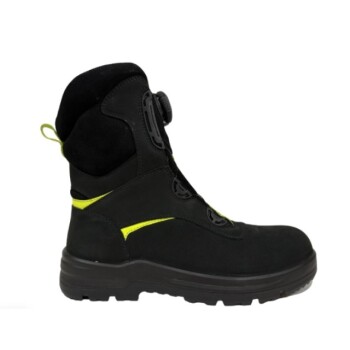
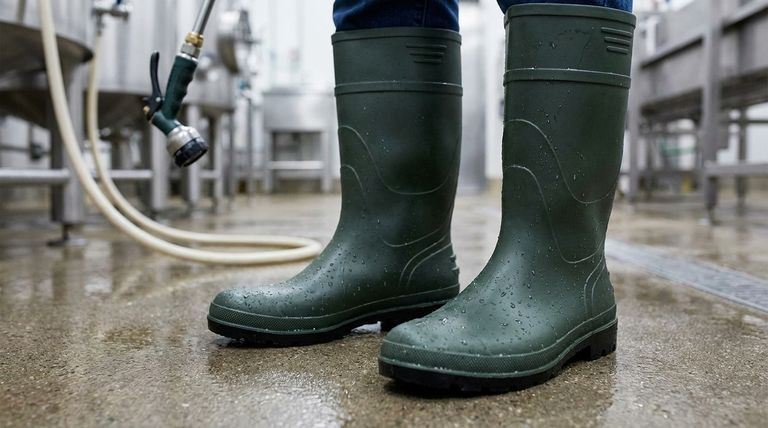
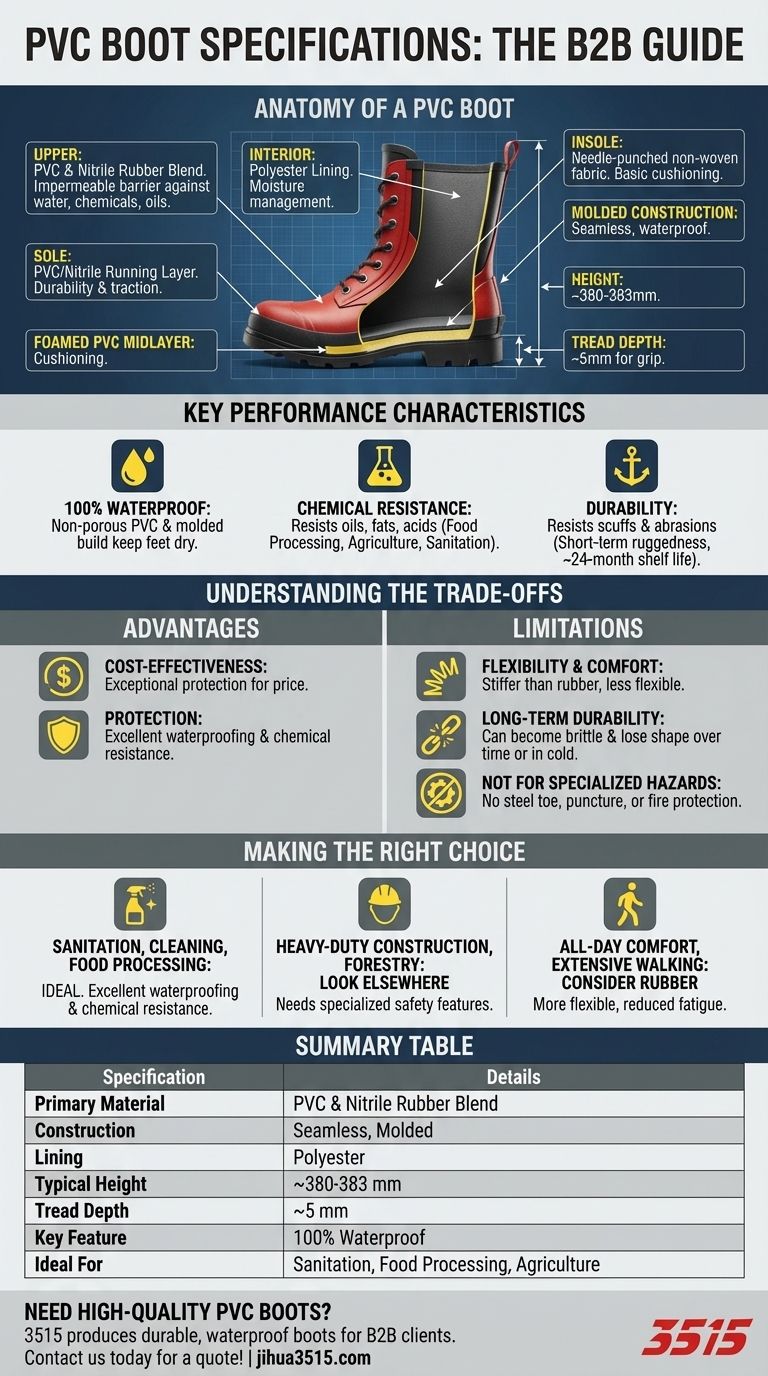
At their core, PVC boots are defined by their material composition, construction method, and physical dimensions. A typical specification includes an upper and sole made from a blend of polyvinyl chloride (PVC) and nitrile rubber, a polyester lining for basic comfort, and a molded construction that creates a seamless, waterproof barrier. Key physical specs often include a height of around 380 mm and a tread depth of 5 mm for traction.
While the surface specifications detail the materials and dimensions, the deeper story is one of trade-offs. PVC boots offer excellent waterproofing and chemical resistance at a low cost, but this comes at the expense of flexibility and long-term shape retention when compared to materials like rubber.
Deconstructing the Anatomy of a PVC Boot
To understand if a PVC boot is right for your needs, it's essential to break down its components and understand the role each specification plays in its overall performance.
The Upper: Your First Line of Defense
The upper portion of the boot is typically made from a blend of PVC and nitrile rubber. This combination is the source of the boot's primary benefits: it creates an impermeable barrier against water, mud, and a wide range of chemicals, oils, and fats.
The Sole: Foundation for Traction and Support
The sole is often a multi-layer system. A foamed PVC midlayer provides a degree of cushioning, while the solid PVC/nitrile running layer (the part that contacts the ground) is designed for durability. A tread depth of around 5 mm provides reliable grip in wet and slippery conditions.
The Interior: Lining and Insole
Inside, a simple polyester lining helps manage moisture and provides a smooth surface against the leg. The insole is often a basic textile material, such as a needle-punched non-woven fabric, offering minimal but functional cushioning.
Physical Dimensions and Construction
The seamless molded construction is a critical specification, as it eliminates stitches and seams that could otherwise become points of failure for water entry. A common height of around 383 mm provides substantial protection up the calf, and the overall weight can range from 2.4 to 3.25 kg per pair.
Key Performance Characteristics
These material specifications translate directly into tangible, real-world performance benefits that define the utility of a PVC boot.
Uncompromised Waterproofing
The non-porous nature of PVC and the molded construction method deliver what is arguably the boot's most important feature: it is 100% waterproof. This makes it an excellent choice for any environment where keeping feet dry is the top priority.
Chemical and Substance Resistance
The addition of nitrile rubber to the PVC compound enhances its resistance to oils, fats, acids, and other common industrial substances. This makes them highly suitable for environments like food processing, agriculture, and sanitation.
Durability and Lifespan
PVC boots are known for their ruggedness in the short term. They resist scuffs and abrasions well. However, it's important to note their typical shelf life is around 24 months, as the material's properties can change over time.
Understanding the Trade-offs
No material is perfect. While PVC offers significant advantages, its limitations are equally important to consider for making an informed decision.
Flexibility and Comfort
PVC is an inherently stiffer material than natural rubber. This rigidity can result in less comfort during activities that require significant walking or flexing of the foot.
Long-Term Durability and Shape
Over time and with heavy use, PVC can be prone to losing its original shape and can become brittle, especially in cold temperatures. This makes it potentially less durable than high-grade rubber for very demanding, long-term applications.
Cost vs. Performance
The primary driver for choosing PVC is often its cost-effectiveness. It provides exceptional protective qualities for its price point, making it a practical choice for large teams or for applications where boots are replaced frequently.
Not for Specialized Hazards
Standard PVC boot specifications do not include features for specialized mechanical or thermal hazards. They typically lack protective steel toe caps, puncture-resistant midsoles, or fire-retardant properties found in dedicated safety or emergency-response boots.
Making the Right Choice for Your Goal
Selecting the correct footwear depends entirely on the demands of your environment and task.
- If your primary focus is sanitation, cleaning, or food processing: The standard PVC boot specification is an ideal choice, offering excellent waterproofing and chemical resistance at an unbeatable price.
- If your primary focus is heavy-duty construction or forestry: You should look for specialized safety boots with features like steel toes and puncture-proof midsoles, as PVC alone does not provide this protection.
- If your primary focus is all-day comfort and extensive walking: A more flexible rubber boot may be a better investment, as it will provide superior comfort and reduce fatigue over long periods.
Ultimately, understanding the specifications allows you to match the tool precisely to the task at hand.
Summary Table:
| Specification | Details |
|---|---|
| Primary Material | PVC & Nitrile Rubber Blend |
| Construction | Seamless, Molded |
| Lining | Polyester |
| Typical Height | ~380-383 mm |
| Tread Depth | ~5 mm |
| Key Feature | 100% Waterproof |
| Ideal For | Sanitation, Food Processing, Agriculture |
Need high-quality PVC boots for your team?
As a large-scale manufacturer, 3515 produces a comprehensive range of durable, waterproof PVC boots for distributors, brand owners, and bulk clients. We offer the perfect balance of protection, chemical resistance, and cost-effectiveness for demanding environments.
Contact us today to discuss your requirements and get a competitive quote!
Visual Guide
Related Products
- Premium Wholesale Waterproof Safety Boots High Performance Protection for Industrial Markets
- High-Traction Suede Tactical Boots Wholesale & Custom Manufacturing
- High Performance Fire-Retardant Waterproof Safety Boots
- Premium Waterproof High-Cut Industrial Safety Boots for Wholesale and Bulk Orders
- Wholesale Waterproof Tactical Boots Custom Suede & High-Traction Soles
People Also Ask
- What weather and chemical protections do premium boots offer? Your Complete Guide to Safety & Performance
- Why are waterproof safety boots recommended for certain work environments? Essential Protection for Wet & Hazardous Jobs
- What are the primary protective functions of industrial safety boots in oil palm plantations? Master Rough Terrain Safety
- Why are oil-resistant and anti-slip properties critical for industrial safety boots? Expert Outsole Engineering Guide
- What are the best types of shoes for different gardening conditions? Find Your Perfect Match.