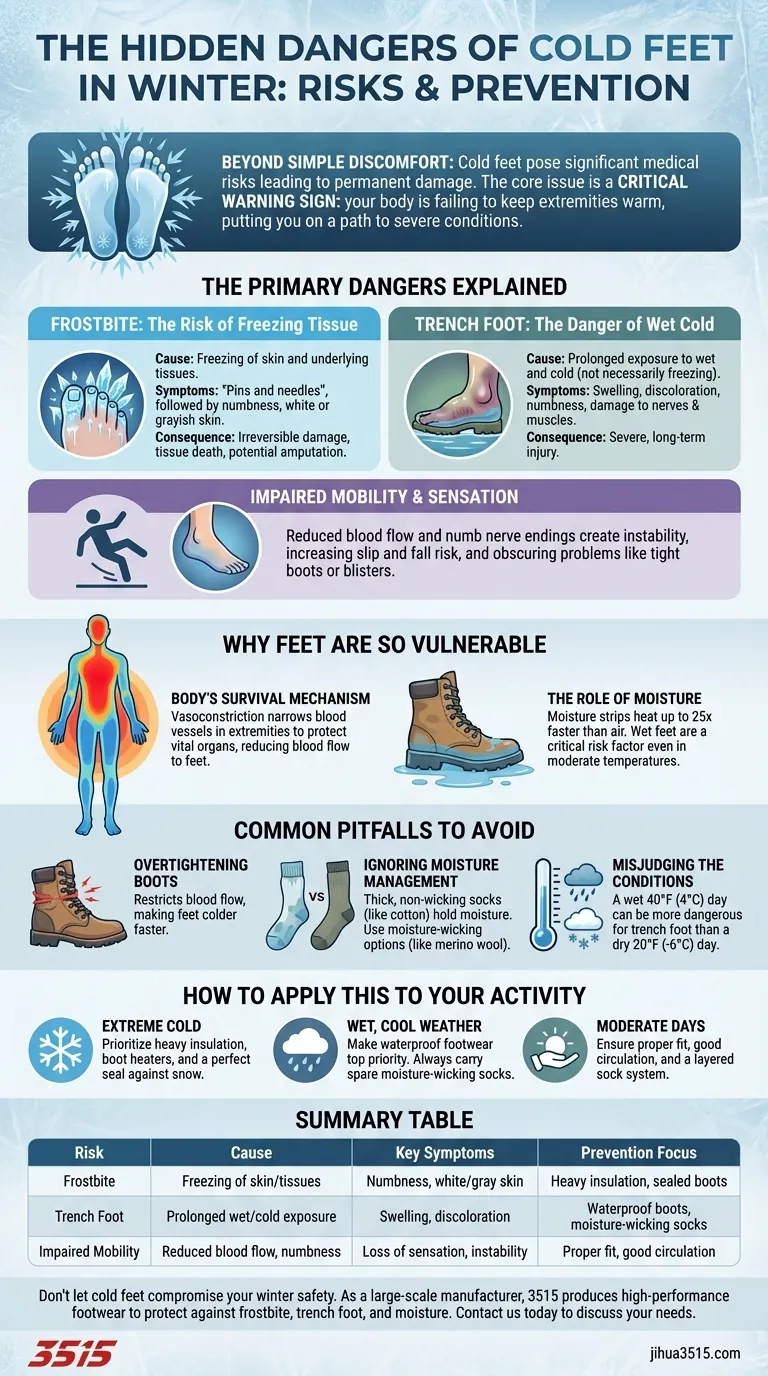
Beyond simple discomfort, cold feet in winter pose significant medical risks that can lead to permanent tissue damage. The primary dangers are frostbite, which is the freezing of skin and underlying tissues, and trench foot, a condition caused by prolonged exposure to cold and wet environments. Both can impair mobility and result in severe, long-term injury.
The core issue is that cold feet are not just a nuisance; they are a critical warning sign. They indicate that your body is failing to keep your extremities warm, putting you on a direct path toward serious conditions like frostbite and nerve damage.
The Primary Dangers Explained
When your feet get cold, your body is sending a clear signal. Ignoring it can lead to two primary medical emergencies, each with distinct causes and consequences.
Frostbite: The Risk of Freezing Tissue
Frostbite occurs when your skin and the tissues beneath it literally freeze. As ice crystals form in your cells, they cause irreversible damage.
The condition often begins with a feeling of "pins and needles," followed by numbness. The affected skin may appear white or grayish, and in severe cases, this can lead to tissue death, requiring amputation.
Trench Foot: The Danger of Wet Cold
Trench foot is a serious condition that develops from prolonged exposure to cold and wet conditions, often above freezing. It does not require freezing temperatures to occur.
Moisture strips heat from the skin much faster than air, leading to constricted blood vessels and damage to nerves and muscle tissue. Symptoms include swelling, discoloration, and numbness.
Impaired Mobility and Sensation
Even before frostbite or trench foot sets in, severe cold reduces blood flow and numbs nerve endings.
This loss of sensation makes you less stable and less aware of your footing, increasing the risk of slips and falls. It also makes it harder to feel if your boots are too tight or if a blister is forming, compounding potential problems.
Why Feet Are So Vulnerable
Understanding the mechanisms behind cold feet is the first step toward effective prevention. Your body's own survival instincts and environmental factors work against your extremities.
The Body's Survival Mechanism
When exposed to cold, your body prioritizes its core temperature to protect vital organs. It does this through vasoconstriction, narrowing the blood vessels in your hands and feet.
This reduces blood flow, conserving heat for your core but leaving your extremities vulnerable and cold.
The Role of Moisture
Moisture is the primary accelerator of heat loss. Whether from external snow melting into your boots or internal sweat, wet socks and skin can make your feet dangerously cold.
Water conducts heat away from the body up to 25 times faster than air, making wet feet a critical risk factor even in moderate temperatures.
Common Pitfalls to Avoid
Many cold-related foot injuries are the result of simple, preventable mistakes. Being aware of these common pitfalls is crucial for staying safe.
Overtightening Boots
Many people instinctively tighten their boots to feel warmer or more secure. However, this can restrict blood flow, directly undermining the circulation needed to keep your feet warm and making them colder, faster.
Ignoring Moisture Management
Focusing solely on insulation thickness while neglecting moisture is a frequent error. A thick, non-wicking sock (like cotton) that becomes damp from sweat will make your feet colder than a thinner, moisture-wicking sock (like merino wool).
Misjudging the Conditions
The greatest danger isn't always on the coldest day. A wet, 40°F (4°C) day can be more dangerous for developing trench foot than a dry, 20°F (-6°C) day if your feet are not kept dry.
How to Apply This to Your Activity
Your prevention strategy should be tailored to the specific conditions you face. A proactive approach is always the most effective.
- If your primary focus is preventing frostbite in extreme cold: Prioritize heavy insulation, consider boot heating systems, and ensure your boots and gaiters create a perfect seal against snow.
- If your primary focus is avoiding trench foot in wet, cool weather: Make waterproof footwear your top priority and always carry a spare pair of moisture-wicking socks to change into.
- If your primary focus is all-day comfort on moderate winter days: Ensure your boots fit properly without restricting circulation and use a layered sock system to manage sweat effectively.
Ultimately, protecting your feet is fundamental to ensuring your safety and enjoyment in any winter environment.
Summary Table:
| Risk | Cause | Key Symptoms | Prevention Focus |
|---|---|---|---|
| Frostbite | Freezing of skin/tissues | Numbness, white/gray skin | Heavy insulation, sealed boots |
| Trench Foot | Prolonged wet/cold exposure | Swelling, discoloration | Waterproof boots, moisture-wicking socks |
| Impaired Mobility | Reduced blood flow, numbness | Loss of sensation, instability | Proper fit, good circulation |
Don't let cold feet compromise your winter safety. As a large-scale manufacturer, 3515 produces a comprehensive range of high-performance footwear designed to protect against frostbite, trench foot, and moisture. Our boots are engineered for distributors, brand owners, and bulk clients who need reliable, durable solutions for any winter condition. Contact us today to discuss how our production capabilities can meet your specific needs.
Visual Guide
Related Products
- Premium Insulated Safety Boots and Shoes for Wholesale & Bulk Orders
- Durable Waterproof Rain Boots | Custom Manufacturer for Wholesale & Brands
- Factory Direct Wholesale Rain Boots Durable Waterproof & Fully Customizable
- Durable Rubber Sole Outdoor Shoes Wholesale & Custom Manufacturing
- Wholesale Durable Camouflage Canvas Shoes with High-Traction Cleated Rubber Sole
People Also Ask
- What are the recommended insulation ratings for mild winter conditions? A Guide for Active & Stationary Workers
- How does insulation thickness correlate with temperature ranges? A Guide to Choosing the Right Warmth
- What insulation level is needed for severe cold and stationary work? 1200g or Higher is Essential
- What safety advantages do insulated boots offer beyond warmth? Dielectric Protection & Superior Grip
- How does fleece lining contribute to the warmth of insulated boots? Trapping Air for Superior Cold Protection