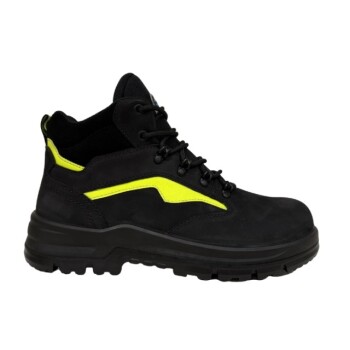
The core requirements for Navy boots are straightforward. To be in regulation, boots must be solid black, between 8 and 10 inches in height, and feature a composite safety toe. These non-negotiable standards ensure uniformity and provide a baseline of protection required for demanding naval environments.
While the basic regulations set the standard for compliance, understanding the functional features like slip resistance and waterproofing is what separates an adequate boot from a truly effective piece of professional equipment.
The Foundational Requirements: Staying in Regulation
To comply with U.S. Navy uniform standards for personally purchased boots, three primary criteria must be met. These rules form the foundation of what is acceptable for wear.
Color: Black Only
The required color for Navy boots is solid black. There are no authorized variations, such as coyote brown or sage green, which are common in other military branches.
Height: 8 to 10 Inches
This specific height range is mandated to provide adequate ankle support and protection from environmental or workplace hazards. It helps prevent sprains and shields the lower leg.
Safety Toe: Composite is Key
A composite toe cap is a mandatory safety feature. Unlike steel toes, composite toes are lighter and do not conduct electricity, which is a critical consideration for personnel working around sensitive electronic equipment or in hazardous electrical environments. This protects the wearer from the impact of heavy or falling objects.
Beyond the Basics: Features for Naval Environments
Meeting the basic regulations is only the first step. The unique challenges of naval service, particularly aboard a ship, mean that certain functional features are essential for safety and performance.
Superior Slip Resistance
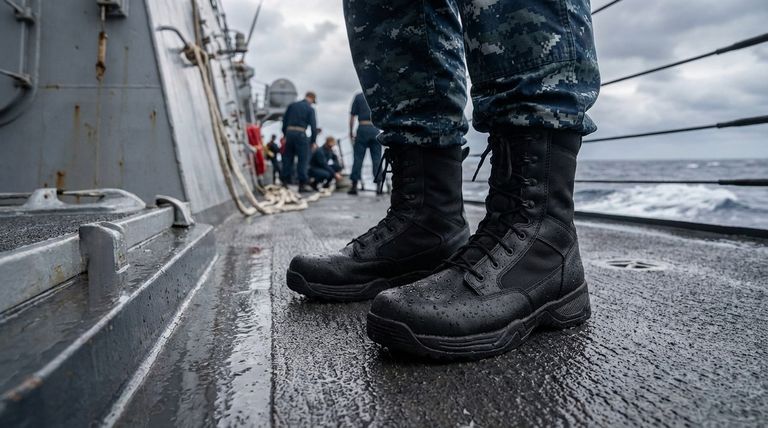
Wet decks and oily surfaces are a constant reality at sea. A boot with a high-traction, slip-resistant outsole is arguably one of the most important features for preventing falls and injuries.
Waterproofing
Exposure to water is unavoidable. Boots with a waterproof membrane or treated leather construction keep your feet dry, which is critical for comfort, health, and preventing blisters during long shifts.
All-Day Comfort and Support
Whether on a long mission or performing administrative work, comfort is essential for endurance. Look for boots with substantial arch support and high-quality cushioning to reduce fatigue and prevent chronic foot issues.
Exceptional Durability
Naval environments are harsh on equipment. Boots must be constructed from durable materials, like full-grain leather, and feature rugged construction to withstand constant exposure to saltwater, chemicals, and abrasive surfaces.
Understanding the Trade-offs
Choosing the right boot involves balancing competing characteristics. Not every feature is ideal for every situation, and it's important to understand the potential downsides.
Waterproofing vs. Breathability
A highly effective waterproof membrane can sometimes limit a boot's ability to breathe. In hot climates, this can lead to excessive sweat and discomfort. It's a trade-off between keeping external water out and letting internal moisture escape.
Protection vs. Weight
More protective features and thicker, more durable materials inevitably add weight. A heavier boot can increase fatigue over a long day. The use of a composite toe instead of steel is a perfect example of trying to balance protection with reduced weight.
Authorized Purchase vs. Organizational Issue
While personnel can often purchase their own boots that meet regulations, commanders can also direct the use of specific, organizationally-issued boots for certain tasks. These may be specialized safety or temperate-weather boots required for a particular job or environment.
Making the Right Choice for Your Role
Select your boot based on the primary demands of your specific duties and environment.
- If your primary focus is shipboard or flight deck duty: Prioritize a boot with maximum slip resistance and effective waterproofing.
- If your primary focus is ashore or administrative work: Emphasize lightweight construction and superior all-day comfort with excellent arch support.
- If your primary focus is expeditionary or field operations: Select the most durable boot you can find with aggressive traction and comprehensive ankle support.
Ultimately, choosing the right boot is a critical investment in your personal safety and professional effectiveness.
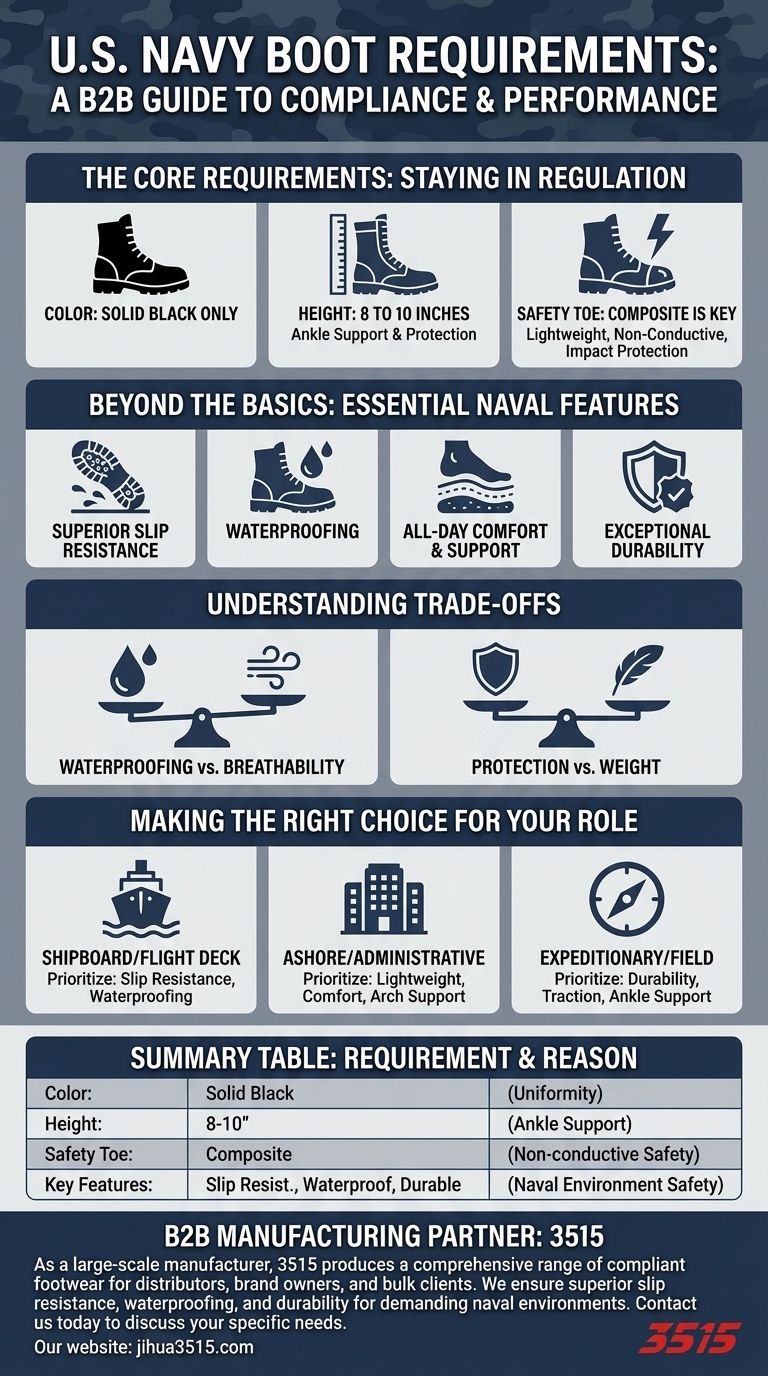
Summary Table:
| Requirement | Specification | Key Reason |
|---|---|---|
| Color | Solid Black | Uniformity and regulation compliance |
| Height | 8 to 10 inches | Ankle support and lower leg protection |
| Safety Toe | Composite (non-steel) | Lightweight and non-conductive for electrical safety |
| Key Features | Slip resistance, waterproofing, durability | Safety and performance in naval environments |
As a large-scale manufacturer, 3515 produces a comprehensive range of compliant footwear for distributors, brand owners, and bulk clients. Our production capabilities encompass all types of military and tactical boots, including those meeting strict Navy standards. We ensure superior slip resistance, waterproofing, and durability for demanding naval environments. Contact us today to discuss your specific needs and benefit from our expertise in manufacturing high-performance, regulation-compliant footwear. Get in touch with our team now!
Visual Guide
Related Products
- High-Traction Suede Tactical Boots Wholesale & Custom Manufacturing
- Durable Military Combat Boots with Water Drainage for Wholesale & OEM
- Wholesale Waterproof Tactical Boots Custom Suede & High-Traction Soles
- Durable Leather Tactical Boots Wholesale & Custom Manufacturing for Brands
- Durable Mid-Cut Tactical Boots for Wholesale & Private Label
People Also Ask
- Why is sequential analysis utilized to evaluate tactical boots? Master Dynamic Boot Development and Ergonomic Performance
- How does the material of tactical boots affect their performance? Choose the Right Material for Your Mission
- How do tactical boots differ from regular boots? Performance, Durability & Design Explained
- How do military uniforms and tactical boots impact the prediction of thermal risk? Essential Safety Insights
- What are the benefits of integrating FES and sEMG into tactical boots? Safety, Reliability & Field-Ready Performance