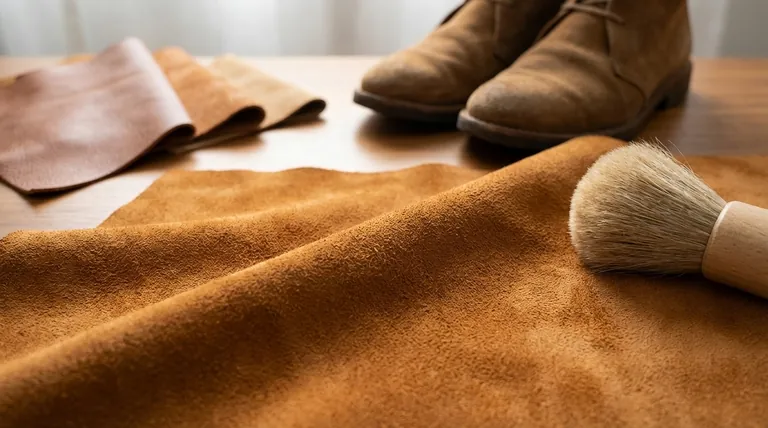
At its core, Suede is a unique type of leather defined by its texture. It is created from the soft underside of an animal hide, which is then buffed and sanded to create a signature velvety, napped finish. This process gives Suede its luxurious feel and casual-elegant appearance, but also makes it more delicate and absorbent than other common leathers.
The essential property of Suede is its trade-off: it offers a soft, lightweight, and stylish feel that is unmatched by smoother leathers, but this comes at the cost of lower durability and a high susceptibility to water damage and staining.
The Defining Characteristics of Suede
To truly understand Suede, we must look at how its composition dictates its unique feel, look, and performance.
Origin and Composition
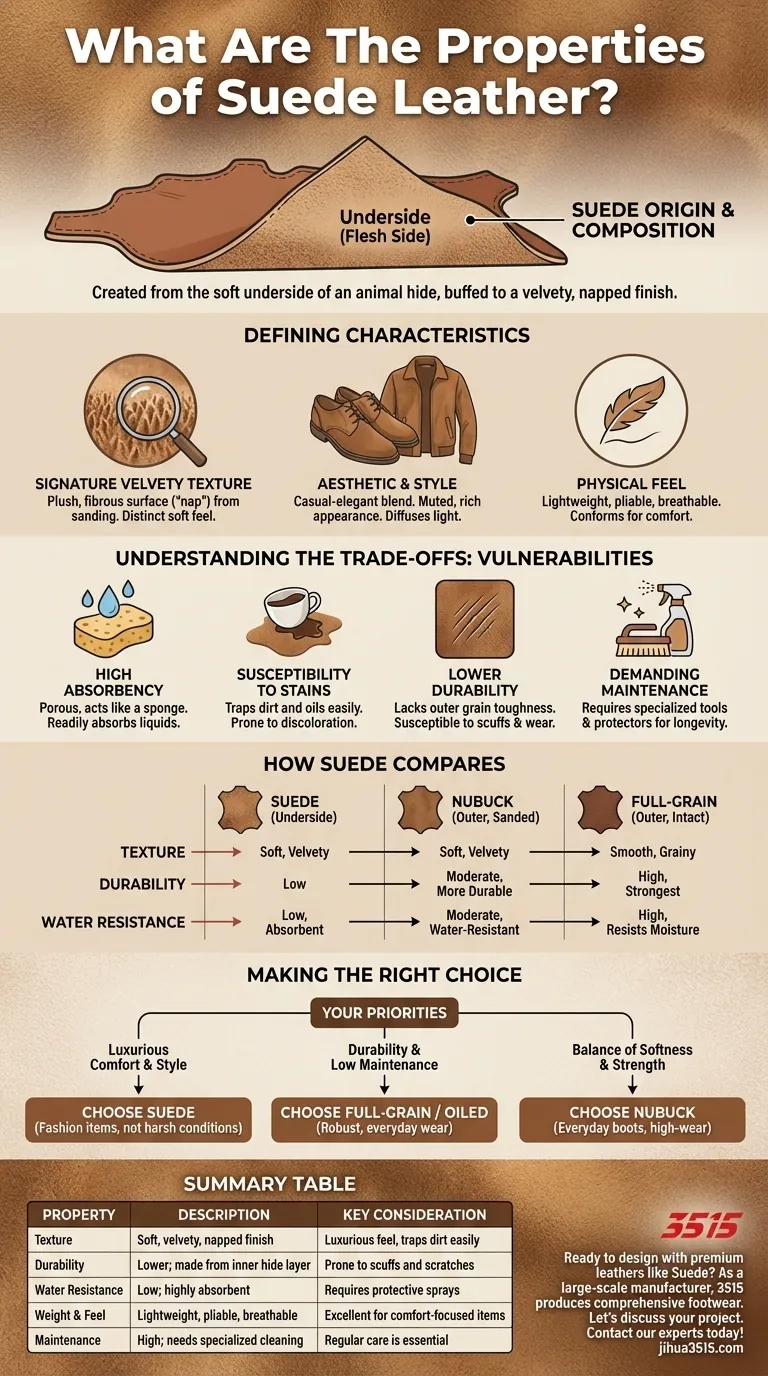
Suede is made from the inner, flesh-side layer of an animal hide. This part of the hide is less dense and durable than the outer layer, which is used for materials like full-grain leather. The term "Suede" comes from the French "gants de Suède," which means "gloves of Sweden."
Signature Velvety Texture
The most recognizable property of Suede is its soft, fibrous surface, often described as a "nap." This texture is the result of sanding or buffing the leather's surface to raise the fine fibers, creating a plush, velvety feel that is both visually and texturally distinct.
Aesthetic and Style
Suede leather achieves a unique blend of casual and elegant style. Its soft texture diffuses light, giving it a muted, rich appearance that works well with vibrant colors. It is frequently used in fashion sneakers, casual shoes, jackets, and accessories where comfort and style are paramount.
Physical Feel
Compared to traditional full-grain leather, Suede is significantly more lightweight, pliable, and breathable. This makes it exceptionally comfortable for items like footwear and clothing, as it conforms easily to the body.
Understanding the Trade-offs: Suede's Vulnerabilities
The very properties that make Suede desirable also create its biggest weaknesses. Acknowledging these is crucial for proper use and care.
High Absorbency
The open, napped surface of Suede acts like a sponge. It is highly porous and will readily absorb water and other liquids, which can lead to staining and can alter the texture of the material if not handled properly.
Susceptibility to Stains and Dirt
The same fibrous texture that feels soft also traps dirt, dust, and oils easily. This makes Suede prone to staining and discoloration, requiring regular and careful cleaning.
Lower Durability
Because it is made from the underside of the hide, Suede lacks the tough, dense grain of outer-layer leathers. It is more susceptible to scuffs, scratches, and general wear and tear, especially in high-stress applications.
Demanding Maintenance
Due to its vulnerabilities, Suede is a high-maintenance material. It requires specialized brushes, protectors, and cleaning techniques to preserve its appearance and extend its life. Proper care is not optional if you want it to last.
How Suede Compares to Other Leathers
Understanding Suede is easier when you see it in context with other popular leather types.
Suede vs. Nubuck
Nubuck is Suede's closest relative. It is also sanded to create a soft, velvety feel, but it is made from the outer side of the hide (top-grain leather). This makes Nubuck significantly more durable and water-resistant than Suede, though it is often more expensive.
Suede vs. Full-Grain Leather
These two are opposites. Full-grain leather is the strongest and most durable type, made from the top layer of the hide with its natural surface intact. It resists moisture well and develops a rich patina over time. Suede is soft and delicate; full-grain is tough and resilient.
Making the Right Choice for Your Goal
Selecting the right leather depends entirely on your priorities for the final product.
- If your primary focus is luxurious comfort and style: Suede's unmatched softness and lightweight feel make it an excellent choice for fashion items not exposed to harsh conditions.
- If your primary focus is durability and low maintenance: You should choose a more robust material like full-grain or oiled leather, as Suede requires constant, specialized care.
- If you want a balance of softness and strength: Nubuck offers a similar velvety texture to Suede but with greater durability, making it a superior choice for everyday boots and high-wear items.
Ultimately, choosing Suede means embracing its unique softness and beauty while respecting its need for careful maintenance.
Summary Table:
| Property | Description | Key Consideration |
|---|---|---|
| Texture | Soft, velvety, napped finish | Luxurious feel, but traps dirt easily |
| Durability | Lower; made from the inner hide layer | Prone to scuffs and scratches |
| Water Resistance | Low; highly absorbent | Requires protective sprays |
| Weight & Feel | Lightweight, pliable, and breathable | Excellent for comfort-focused items |
| Maintenance | High; needs specialized cleaning | Regular care is essential for longevity |
Ready to design with premium leathers like Suede?
As a large-scale manufacturer, 3515 produces a comprehensive range of footwear for distributors, brand owners, and bulk clients. Our expertise in materials like Suede, Nubuck, and full-grain leather ensures your products perfectly balance style, comfort, and performance. Let's discuss your project and find the ideal material for your needs.
Contact our experts today to start your custom footwear project!
Visual Guide
Related Products
- Dial Closure Leather Business Casual Shoes for Wholesale & Private Label
- Wholesale Leather Apron Toe Derby Shoes Custom Factory Production
- Wholesale Leather Ankle Boots with Lug Soles for Custom Brand Manufacturing
- Factory Direct Wholesale Leather Comfort Shoes with Dial Closure
- Wholesale Modern Perforated Leather Derby Shoes with Chunky Sole for Custom Branding
People Also Ask
- What are the top three recommended business casual shoes? Build a Polished, Versatile Wardrobe
- Why is choosing the right shoes important for a business casual look? Elevate Your Professional Image
- What materials are commonly used in business casual shoes? A Guide to Leather, Suede & More
- What factors should be considered when choosing business casual shoes? Find the Perfect Balance of Style & Comfort
- Are black or brown shoes better for business casual? Master the Versatile Choice for Your Wardrobe