
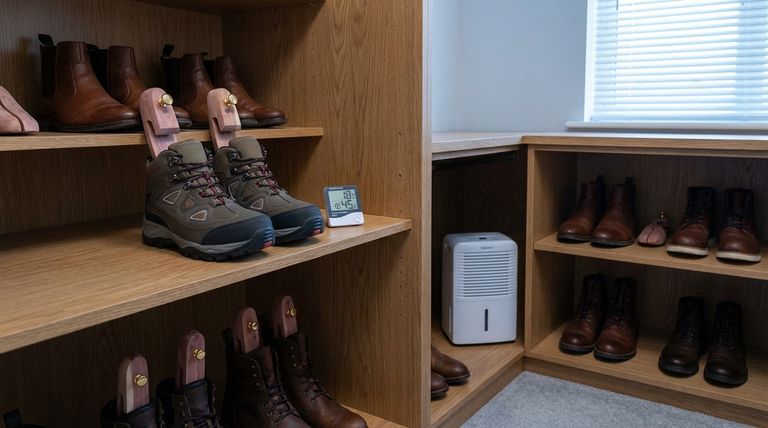
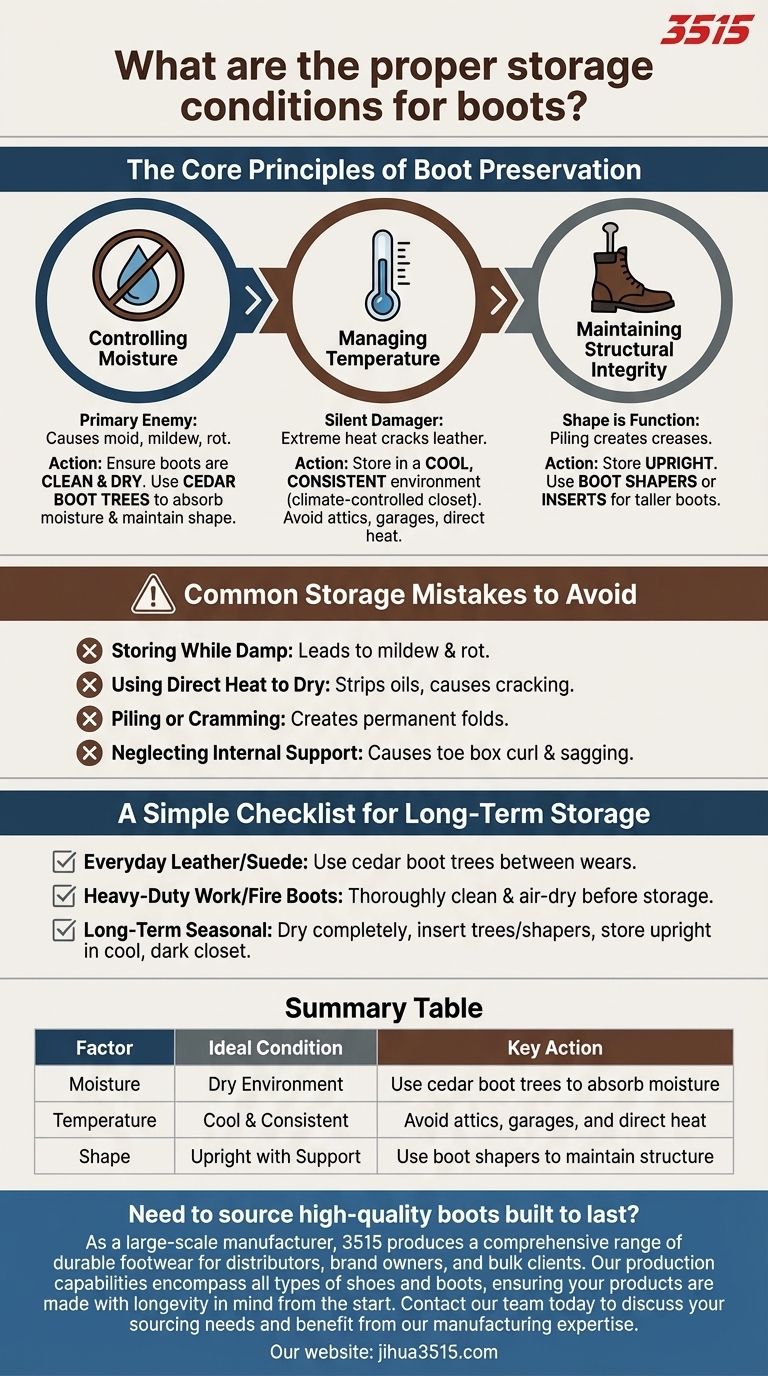
Proper boot storage boils down to three key environmental factors. To preserve their condition, boots must be stored in a cool, dry location where they can maintain their natural shape. They should never be put away while damp, and they must be kept away from direct heat sources to prevent materials from cracking or degrading.
Storing your boots correctly is not a passive act of putting them away. It is an active process of protecting them from their primary enemies: moisture, which causes mold and rot; heat, which causes brittleness; and physical stress, which permanently damages their shape.
The Core Principles of Boot Preservation
To extend the life of your footwear, you need to understand the forces working against it during storage. By controlling the environment, you control the rate of aging and prevent avoidable damage.
Controlling Moisture: The Primary Enemy
Moisture is the most significant threat to stored boots. It encourages the growth of mold and mildew, which can permanently stain and weaken leather, fabric, and stitching.
Before storage, always ensure your boots are completely clean and dry. For leather boots, this is especially critical as trapped moisture will degrade the material from the inside out.
Using cedar boot trees is a professional-grade solution. Cedar naturally absorbs residual moisture and odor while helping the boot maintain its intended shape.
Managing Temperature: The Silent Damager
Extreme temperatures can irreversibly damage your boots. High heat, such as from a radiator or a sunny window, will dry out leather, causing it to become brittle and crack.
The ideal storage environment is a cool, consistent temperature. A closet in a climate-controlled part of your home is far superior to a garage, attic, or basement where temperature and humidity can fluctuate dramatically.
Maintaining Structural Integrity: Shape is Function
The way a boot is physically positioned during storage directly impacts its structure. Piling boots on top of each other or stuffing them into a cramped space will create permanent creases and cause them to lose their shape.
Always store boots standing upright. This prevents the ankle and shaft from folding or creasing. For taller boots, a boot shaper or insert can help them stand straight and avoid slumping.
Common Storage Mistakes to Avoid
Understanding the principles is the first step. Actively avoiding common pitfalls is what truly protects your investment.
Storing While Damp
This is the most frequent and damaging mistake. Even a small amount of moisture can lead to mildew, rot, and a musty odor that is nearly impossible to remove.
Using Direct Heat to Dry
Never place wet boots near a radiator, fire, or heat vent to speed up drying. While fast, this intense, dry heat will strip the natural oils from leather, leading to cracking and stiffness. Always air-dry them at room temperature.
Piling or Cramming
Shoving boots into a pile at the bottom of a closet is a surefire way to create permanent folds and misshape the toe box. Each pair needs its own space to stand naturally.
Neglecting Internal Support
Without internal support, the toe box can curl upwards and the overall structure can sag over time. Boot trees are the best tool to combat this, actively preserving the boot's intended form.
A Simple Checklist for Long-Term Storage
Apply these rules based on your specific situation to ensure your boots remain in top condition, ready for their next use.
- For everyday leather or suede boots: Prioritize using cedar boot trees between wears to manage daily moisture and maintain the toe and heel shape.
- For heavy-duty work or fire boots: Focus on thoroughly cleaning and air-drying them before storage to prevent the breakdown of rugged materials.
- For long-term seasonal storage: Ensure they are completely dry, insert boot trees or shapers, and place them upright in a cool, dark, and dry closet.
By creating the right environment, you preserve not just the appearance of your boots, but their function, comfort, and longevity.
Summary Table:
| Factor | Ideal Condition | Key Action |
|---|---|---|
| Moisture | Dry Environment | Use cedar boot trees to absorb moisture |
| Temperature | Cool & Consistent | Avoid attics, garages, and direct heat |
| Shape | Upright with Support | Use boot shapers to maintain structure |
Need to source high-quality boots built to last? As a large-scale manufacturer, 3515 produces a comprehensive range of durable footwear for distributors, brand owners, and bulk clients. Our production capabilities encompass all types of shoes and boots, ensuring your products are made with longevity in mind from the start. Contact our team today to discuss your sourcing needs and benefit from our manufacturing expertise.
Visual Guide
Related Products
- High-Traction Suede Tactical Boots Wholesale & Custom Manufacturing
- Durable Leather Work Boots Wholesale Manufacturer & Custom Factory
- Durable Leather Work Boots for Wholesale & Custom Manufacturing
- Durable Leather Work Boots for Wholesale & Custom OEM Manufacturing
- Durable Leather Tactical Boots Wholesale & Custom Manufacturing for Brands
People Also Ask
- Why is sequential analysis utilized to evaluate tactical boots? Master Dynamic Boot Development and Ergonomic Performance
- How does the material of tactical boots affect their performance? Choose the Right Material for Your Mission
- How do tactical boots differ from regular boots? Performance, Durability & Design Explained
- How do military uniforms and tactical boots impact the prediction of thermal risk? Essential Safety Insights
- What are the benefits of integrating FES and sEMG into tactical boots? Safety, Reliability & Field-Ready Performance


















