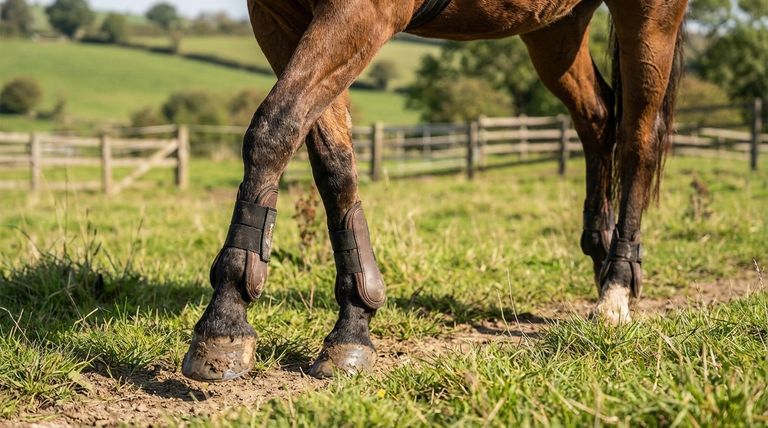
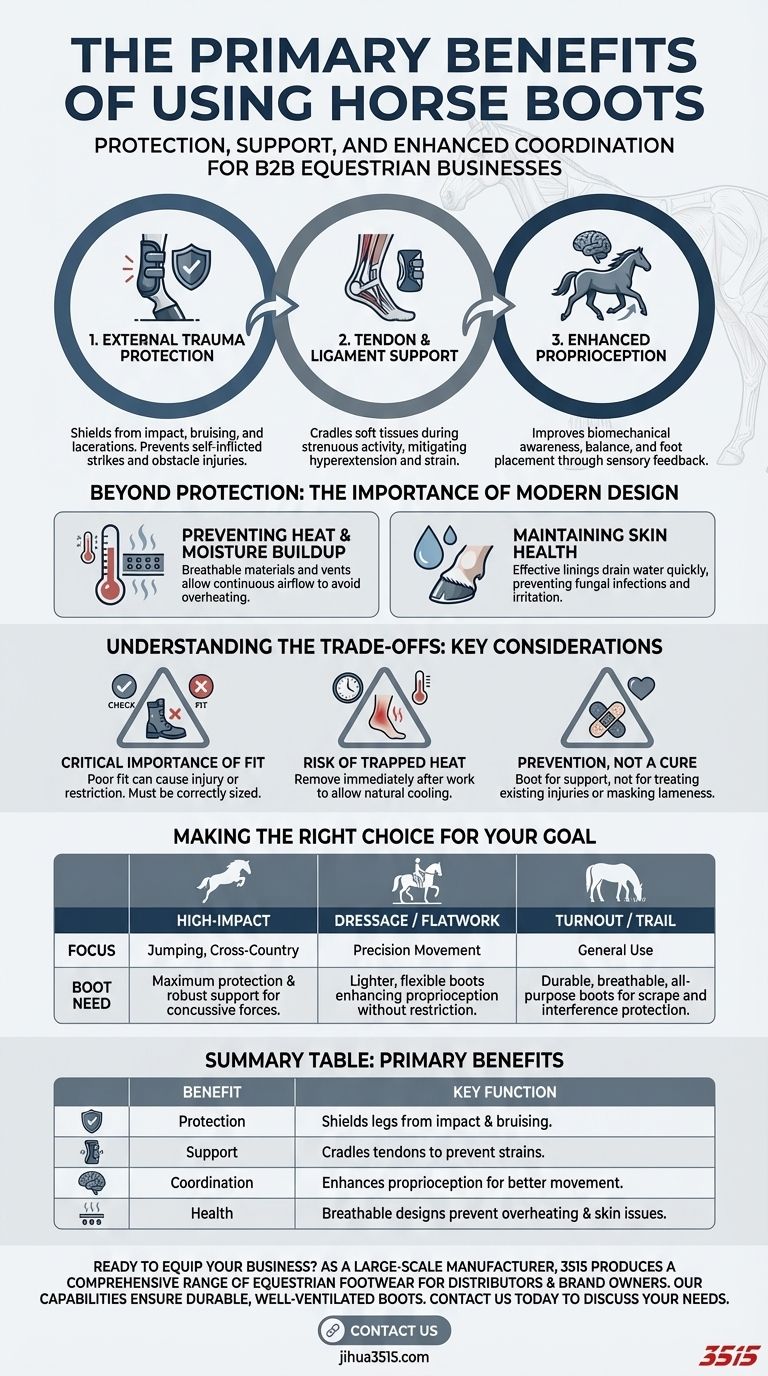
The primary benefits of using horse boots are to protect the horse's legs from impact, provide functional support to tendons and ligaments, and enhance the horse's natural coordination through sensory feedback. This combination of functions serves to reduce injury risk and improve overall performance and health.
While often viewed simply as armor, the true value of horse boots lies in their multifaceted role of preventing physical trauma, supporting critical biological structures, and improving a horse's own biomechanical awareness during movement.
The Core Functions of Horse Boots
The decision to use boots is an investment in your horse's soundness and longevity. Understanding their specific functions clarifies when and why they are necessary.
Protection Against External Trauma
The most straightforward benefit is physical protection. A horse's lower legs are vulnerable to a range of impacts that can cause bruising, lacerations, or more severe injury.
Boots act as a crucial shield against strikes from the horse's own hooves, such as in cases of overreaching (when a hind hoof strikes a front leg). They also protect against obstacles encountered during training, trail riding, or competition.
Support for Tendons and Ligaments
During strenuous activity, the soft tissues in a horse's legs are subjected to immense strain. Well-designed boots provide critical support to these structures.
They help to cradle the flexor tendons and suspensory ligament, mitigating the effects of hyperextension when the fetlock joint drops during high-impact landings or sharp turns. This support is a key factor in preventing common strains and sprains.
Enhanced Proprioception and Coordination
Proprioception is the horse's innate sense of where its limbs are in space. Horse boots can subtly enhance this sense.
The light pressure and physical contact of the boot transmit proprioceptive feedback to the horse's nervous system. This heightened awareness can lead to improved coordination, better balance, and more precise foot placement, which further reduces the risk of a misstep or injury.
Beyond Protection: The Importance of Modern Design
The materials and construction of a horse boot are just as important as its primary function. Modern designs incorporate features that directly contribute to the horse's health and comfort.
Preventing Heat and Moisture Buildup
A horse's leg tendons do not have a robust cooling system. Trapping excess heat can be detrimental, so proper ventilation is non-negotiable.
Breathable horse boots are designed with vents and specialized materials that allow heat and moisture to escape. This continuous airflow prevents the leg from overheating and reduces the risk of skin irritation.
Maintaining Skin Health
A warm, moist environment is a breeding ground for bacteria and fungi. Poorly designed boots can create these exact conditions against the horse's skin.
Effective ventilation and linings that drain water quickly are essential for preventing dermatophytes and other fungal infections. This ensures that in protecting the leg from impact, you are not inadvertently compromising the health of the skin underneath.
Understanding the Trade-offs
While beneficial, horse boots are a piece of equipment that must be used correctly. An objective assessment includes acknowledging potential downsides.
The Critical Importance of Fit
A poorly fitted boot can cause more harm than good. If it's too tight, it can restrict blood flow and create pressure sores; if it's too loose, it can slip and cause rubbing or become a hazard.
The Risk of Trapped Heat
Even with breathable designs, any covering will insulate to some degree. For this reason, boots should be removed immediately after work to allow the legs to cool down naturally. Leaving boots on for extended periods, especially in hot weather, can be counterproductive to tendon health.
A Tool for Prevention, Not a Cure
It is crucial to remember that boots are primarily for prevention and support, not for treating an existing injury. Using a boot to mask lameness or as a substitute for proper veterinary care and rehabilitation can lead to a more severe or permanent issue.
Making the Right Choice for Your Goal
Selecting the correct boot involves matching its specific design to your horse's discipline and individual needs.
- If your primary focus is high-impact work (jumping, cross-country): Prioritize boots offering maximum impact protection and robust tendon support to handle concussive forces.
- If your primary focus is dressage or flatwork: Choose lighter, more flexible boots that enhance proprioception and protect against minor bumps without restricting movement.
- If your primary focus is turnout or general trail riding: Look for durable, all-purpose boots that are highly breathable and protect against scrapes and interference.
Ultimately, choosing the right boot is about matching the equipment's specific function to your horse's unique anatomy and workload.
Summary Table:
| Primary Benefit | Key Function |
|---|---|
| Protection | Shields legs from impact, bruising, and lacerations. |
| Support | Cradles tendons and ligaments to prevent strains. |
| Coordination | Enhances proprioception for better balance and movement. |
| Health | Breathable designs prevent overheating and skin issues. |
Ready to equip your horse with the right protection?
As a large-scale manufacturer, 3515 produces a comprehensive range of equestrian footwear for distributors, brand owners, and bulk clients. Our production capabilities ensure you receive durable, well-ventilated horse boots designed for optimal protection, support, and comfort.
Contact us today to discuss your specific needs and discover how we can support your business with high-quality, reliable equine equipment.
Visual Guide
Related Products
- Wholesale High-Traction Camo Boots - Custom Manufacturer for Brands
- Wholesale Lightweight Tactical Boots Custom Manufacturer for Desert & Combat Use
- High-Traction Suede Tactical Boots Wholesale & Custom Manufacturing
- Durable Leather Tactical Boots Wholesale & Custom Manufacturing for Brands
- Wholesale Perforated Comfort Dress Shoes | Custom Derby Shoe Manufacturer
People Also Ask
- What are the key features of the new line of camo boots? Built for Extreme Cold & Rugged Terrain
- Are camo boots necessary for hunting success? Prioritize Performance Over Pattern
- What is the technical logic behind using closed-eye testing for tactical boots? Unlocking Peak Footwear Stability
- How does the Rank Score Test identify the primary causes of premature failure in tactical and work boots? Key Insights
- What shoes to wear for a security job? Durable, Protective Footwear for Long Shifts