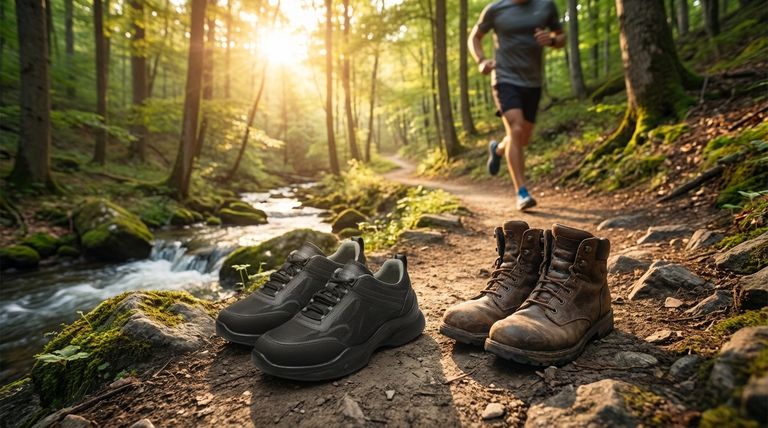
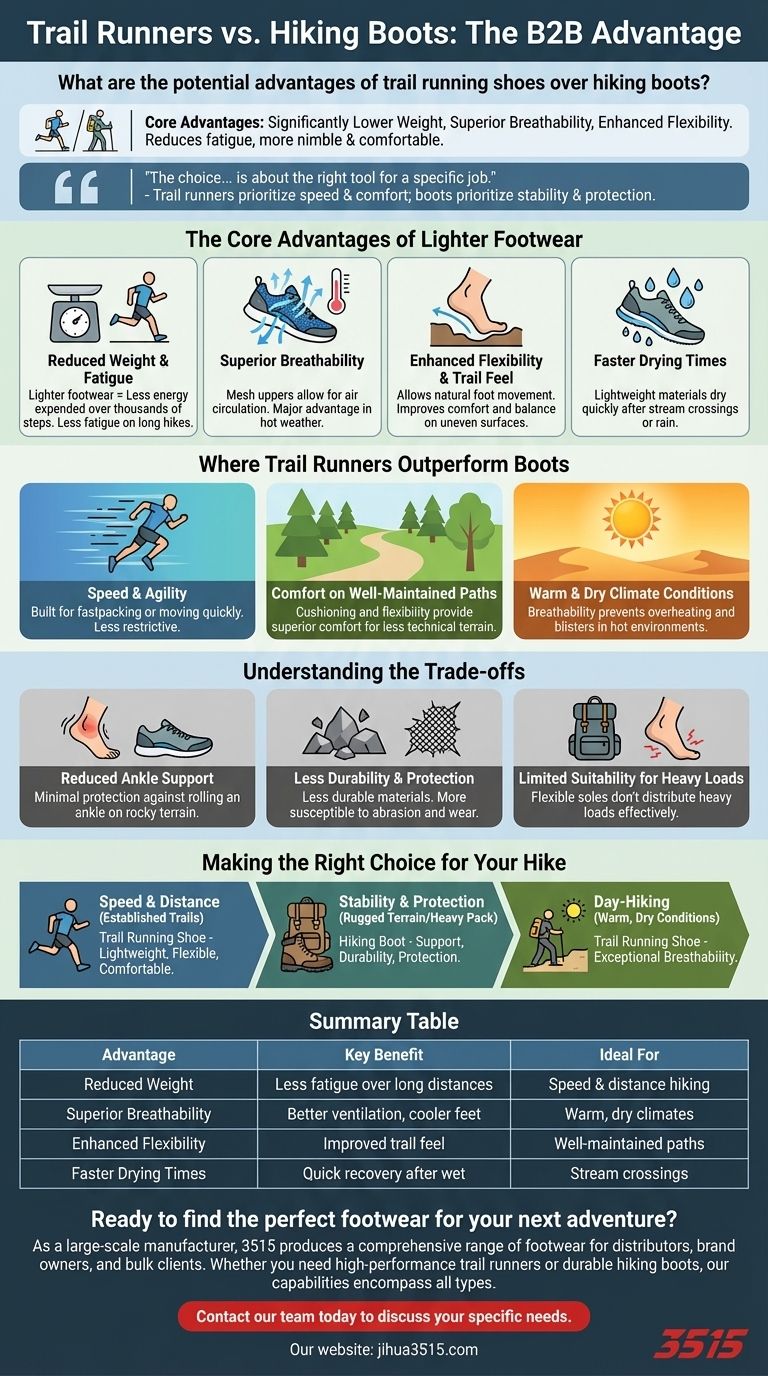
At their core, the primary advantages of trail running shoes over traditional hiking boots are their significantly lower weight, superior breathability, and enhanced flexibility. This combination reduces fatigue over long distances and provides a more nimble, comfortable experience, especially in warmer conditions or on less rugged terrain.
The choice between trail runners and hiking boots is not about which is universally "better," but which is the right tool for a specific job. Trail runners prioritize speed and comfort, while boots prioritize stability and protection.
The Core Advantages of Lighter Footwear
Opting for a lighter shoe has a cascade of benefits that directly impact your energy levels and comfort on the trail.
Reduced Weight and Fatigue
Every step requires you to lift your shoe. While the difference seems minimal, lighter footwear significantly reduces the total energy expended over thousands of steps, leading to less fatigue on long hikes.
Superior Breathability
Trail running shoes typically feature mesh uppers that allow for far greater air circulation than the leather or heavy synthetic materials of most boots. This ventilation is a major advantage in hot weather and for anyone prone to sweaty feet.
Enhanced Flexibility and Trail Feel
A more flexible shoe allows your foot to move and adapt to the ground more naturally. This not only improves comfort but also enhances your "trail feel," allowing your toes to grip and adjust for better balance on uneven surfaces.
Faster Drying Times
While most trail runners are not waterproof, their lightweight, breathable materials dry much more quickly than bulky hiking boots after a stream crossing or a rain shower.
Where Trail Runners Outperform Boots
Certain scenarios and environments clearly favor the agility and comfort of a trail running shoe.
Speed and Agility on the Trail
For those who prioritize covering ground quickly, there is no contest. The lightweight and less restrictive design of a trail runner is built for speed and agility, making them ideal for fastpacking or simply moving at a quicker pace.
Comfort on Well-Maintained Paths
On established, well-maintained trails without significant technical challenges, the stiff sole and heavy construction of a boot can feel like overkill. A trail runner's cushioning and flexibility provide superior comfort for these excursions.
Warm and Dry Climate Conditions
In hot and arid environments, the breathability of a trail runner is crucial for preventing your feet from overheating and developing blisters. The improved ventilation keeps your feet cooler and more comfortable.
Understanding the Trade-offs
Choosing trail runners means accepting a different set of compromises compared to boots. Understanding these limitations is critical for safety and performance.
Reduced Ankle Support
The most significant trade-off is the lack of ankle support. Most trail runners are low-cut and offer minimal protection against rolling an ankle, a risk that increases on rocky, unstable terrain.
Less Durability and Protection
The lightweight mesh and flexible soles are inherently less durable than the robust materials used in hiking boots. They offer less protection from sharp rocks underfoot and are more susceptible to abrasion and wear.
Limited Suitability for Heavy Loads
When carrying a heavy backpack, the stability and stiff sole of a hiking boot are essential. They help distribute the load and prevent foot fatigue and injury in a way that a flexible trail runner cannot.
Making the Right Choice for Your Hike
Your decision should be based entirely on your specific objective, the terrain you plan to cover, and the weight you intend to carry.
- If your primary focus is speed and distance on established trails: A trail running shoe is the superior choice for its lightweight, flexible, and comfortable design.
- If your primary focus is stability and protection with a heavy pack or on rugged terrain: A hiking boot provides the necessary support, durability, and protection for your feet and ankles.
- If your primary focus is day-hiking in warm, dry conditions: The exceptional breathability of a trail runner will almost always provide a more comfortable experience.
Ultimately, selecting the right footwear is about matching the tool to the adventure you have planned.
Summary Table:
| Advantage | Key Benefit | Ideal For |
|---|---|---|
| Reduced Weight | Less fatigue over long distances | Speed and distance hiking |
| Superior Breathability | Better ventilation, cooler feet | Warm, dry climates |
| Enhanced Flexibility | Improved trail feel and natural movement | Well-maintained, non-technical paths |
| Faster Drying Times | Quick recovery after getting wet | Stream crossings, light rain |
Ready to find the perfect footwear for your next adventure?
As a large-scale manufacturer, 3515 produces a comprehensive range of footwear for distributors, brand owners, and bulk clients. Whether you need high-performance trail runners for speed or durable hiking boots for rugged terrain, our production capabilities encompass all types of shoes and boots.
Contact our team today to discuss your specific needs and discover how we can deliver the right footwear solution for your market.
Visual Guide
Related Products
- Durable Rubber Sole Outdoor Shoes Wholesale & Custom Manufacturing
- Premium Suede Sport Safety Shoes for Wholesale & Bulk Orders
- Wholesale Durable Camouflage Canvas Shoes with High-Traction Cleated Rubber Sole
- Wholesale Durable & Breathable Training Shoes for Custom Brands
- Wholesale Breathable Training Shoes Custom Athletic Footwear Manufacturer
People Also Ask
- What is the function of the sole in outdoor shoes? Find the Perfect Grip and Support
- What role do outdoor shoes and sneakers play in navigating external terrains? Engineered Stability for Every Surface
- How is AI utilized in the design of outdoor and safety footwear? Harnessing Big Data for Market-Driven Shoe Innovation
- Why is durability important when selecting outdoor shoes? A Guide to Safety & Long-Term Value
- What are the key components of outdoor shoes that affect comfort and sturdiness? A Guide to Durable, High-Performance Footwear