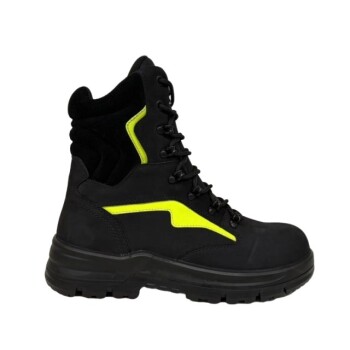
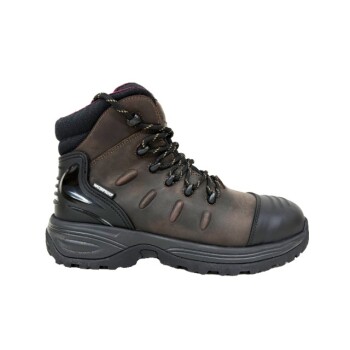
When choosing a work boot, the safety toe is your first line of defense. The three primary materials used to provide this critical impact protection are steel, alloy, and composite. While all certified safety toes meet the same stringent safety standards for impact and compression, they differ significantly in weight, conductivity, and cost.
The decision between steel, alloy, and composite toes is not a question of which is "stronger"—all certified toes meet the same safety requirements. The right choice depends entirely on your work environment, budget, and the need for features like low weight or thermal insulation.
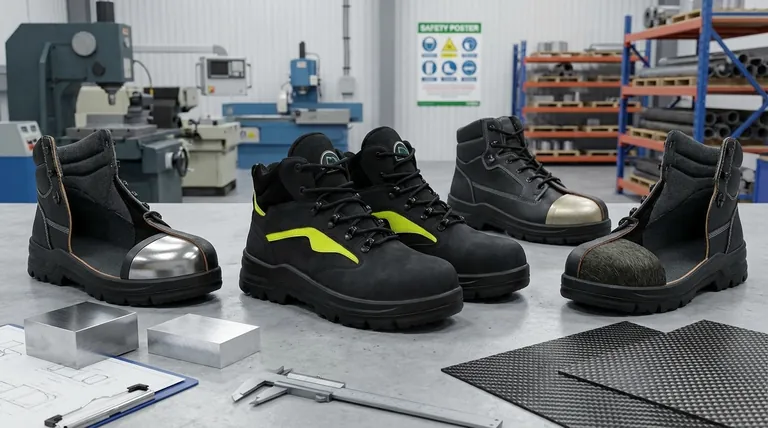
The Foundation of Protection
Every safety toe, regardless of material, serves a single primary purpose: to protect your feet from serious injury.
What All Safety Toes Must Do
A certified safety toe must shield the wearer from both impact and compression. This means it is tested to withstand a heavy object falling on it and to resist being crushed under a heavy rolling load, as defined by standards like those from ASTM International.
The material used to achieve this protection is where the key differences emerge, influencing the boot's overall feel and performance in specific environments.
A Head-to-Head Comparison of Materials
Each safety toe material brings a distinct set of properties to the boot, making it better suited for certain jobs and conditions.
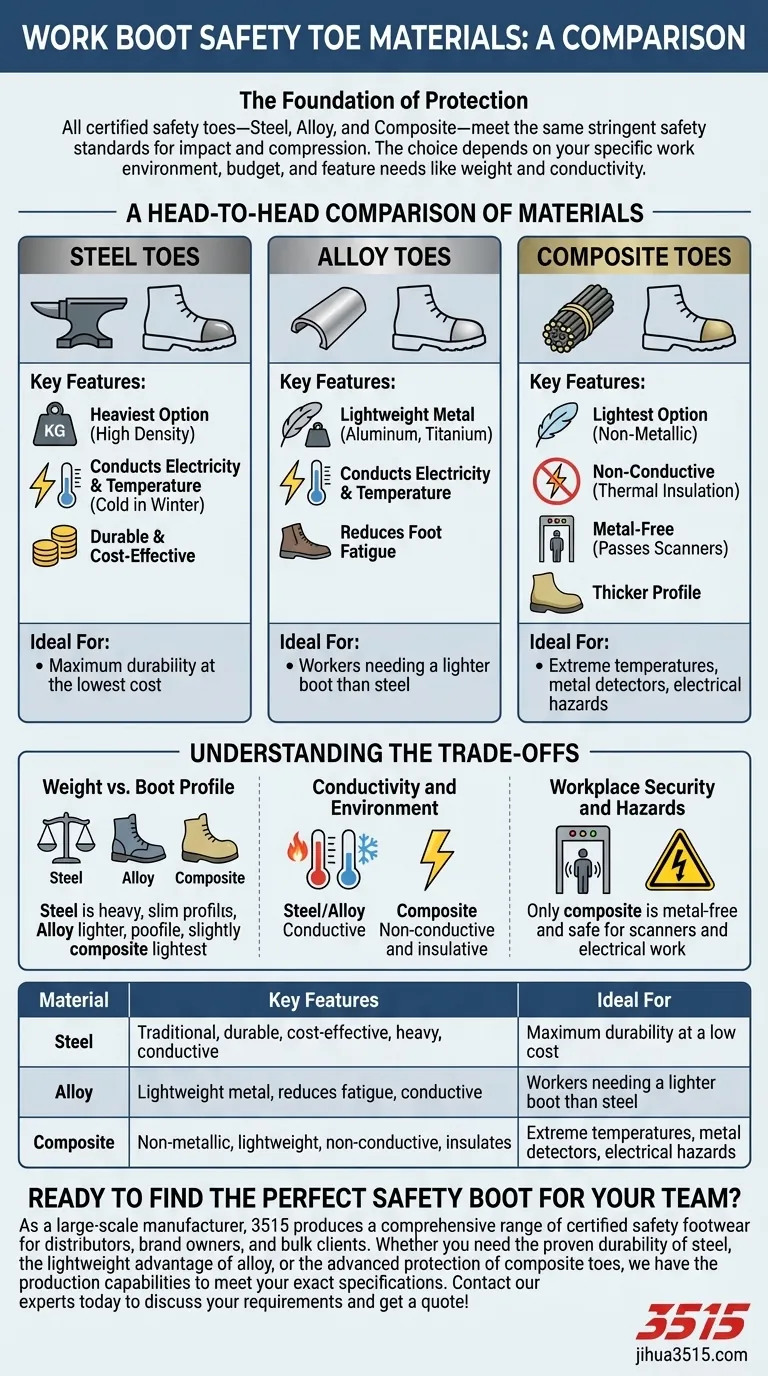
The Traditional Standard: Steel Toes
Steel is the original safety toe material and remains a popular, reliable choice. It has a long-standing reputation for strength and durability.
Because of its high density, steel is the heaviest option. It is also a conductor of electricity and temperature, meaning it can become very cold in winter environments.
The Lightweight Metal: Alloy Toes
Alloy toes are typically crafted from materials like aluminum or titanium. They provide the same level of certified protection as steel but at a significantly lower weight.
These metals are lighter than steel, reducing foot fatigue over a long workday. While still conductive, they offer a good middle-ground for those seeking a lighter boot without moving to a non-metallic option.
The Modern Alternative: Composite Toes
Composite toes are made from non-metallic materials, including Kevlar, carbon fiber, fiberglass, and plastic. They are the most recent innovation in safety footwear.
Their key advantage is their low weight and lack of metal. This makes them ideal for anyone working in extreme cold or heat, as they do not conduct temperature. They are also the only choice for professionals who must pass through metal detectors.
Understanding the Trade-offs
Choosing the right material requires balancing its benefits against its potential drawbacks for your specific situation.
Weight vs. Boot Profile
Steel is the heaviest, alloy is lighter, and composite is the lightest of all. This reduction in weight can lead to a significant decrease in fatigue.
However, to achieve the same strength rating as metal, composite toes often need to be slightly thicker or more bulbous. This can affect the overall look and fit of the boot's toe box.
Conductivity and Environment
If you work outdoors in extreme temperatures, a metal toe can become a source of discomfort. Both steel and alloy conduct cold and heat directly to your foot.
Composite toes are non-conductive, providing superior thermal insulation. This makes them the clear choice for workers in very hot or very cold climates.
Workplace Security and Hazards
For electricians or workers in high-security areas with metal detectors, a non-metallic boot is essential.
Composite toes are 100% metal-free, allowing you to pass through scanners without issue and providing an extra layer of safety against electrical hazards.
Making the Right Choice for Your Work Environment
Your daily tasks and workplace conditions should be the ultimate guide in your decision.
- If your primary focus is maximum durability at the lowest cost: Steel toes remain the proven, economical industry standard.
- If your primary focus is reducing fatigue and boot weight: Alloy toes provide a significant weight reduction compared to steel while maintaining a metallic structure.
- If your primary focus is working in extreme temperatures or passing through metal detectors: Composite toes are the superior, non-conductive, and non-metallic choice.
By understanding these core differences, you can select a safety toe that provides certified protection while perfectly matching the demands of your job.
Summary Table:
| Material | Key Features | Ideal For |
|---|---|---|
| Steel | Traditional, durable, cost-effective, heavy, conductive | Maximum durability at a low cost |
| Alloy | Lightweight metal, reduces fatigue, conductive | Workers needing a lighter boot than steel |
| Composite | Non-metallic, lightweight, non-conductive, insulates | Extreme temperatures, metal detectors, electrical hazards |
Ready to find the perfect safety boot for your team?
As a large-scale manufacturer, 3515 produces a comprehensive range of certified safety footwear for distributors, brand owners, and bulk clients. Whether you need the proven durability of steel, the lightweight advantage of alloy, or the advanced protection of composite toes, we have the production capabilities to meet your exact specifications.
Contact our experts today to discuss your requirements and get a quote!
Visual Guide
Related Products
- Durable Leather Safety Boots for Wholesale & Custom OEM Manufacturing
- Premium Grain Leather Safety Boots for Bulk Supply
- Wholesale Durable Safety Boots Manufacturer Customizable Steel Toe Work Boots
- Durable Steel Toe Safety Boots Wholesale & Custom Manufacturing
- Durable Leather Moc Toe Work Boots for Wholesale & Custom Manufacturing
People Also Ask
- What are the OSHA and ASTM standards for safety toe boots? Ensure Your Footwear is Fully Compliant
- What workplace hazards do safety toe boots protect against? Comprehensive Protection Guide
- What are the different types of safety toe boots available? Choose the Right Protection for Your Job
- What do the symbols M, F, I, and C represent on safety toe boots? Decode ASTM F2413 for Maximum Protection
- What are the common hazards present in work environments that safety boots protect against? Find Your Perfect Match