
At a glance, the primary types of horse riding boots are categorized by height: short boots, often called Paddock or Jodhpur boots, and long boots, which include styles like Field and Dress boots. These designs are not just for style; they are purpose-built to provide safety, support, and effective communication with the horse across different equestrian disciplines.
The core decision between boot types comes down to your primary activity. Short boots offer versatility for daily riding and groundwork, while long boots provide the specific leg support and formal appearance required for competition and specialized disciplines.
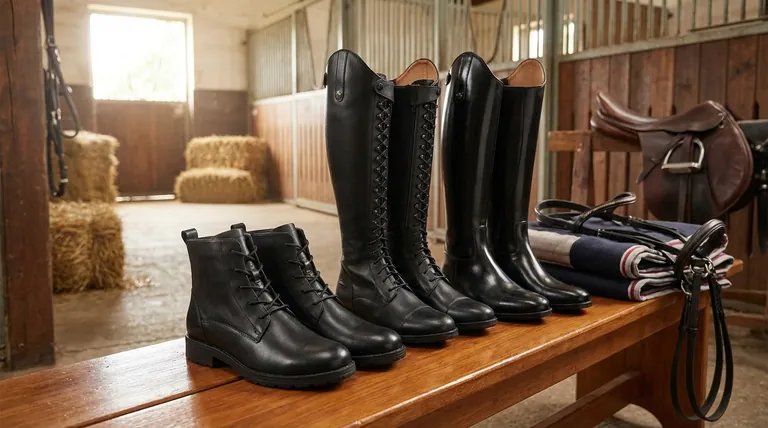
Breaking Down Boot Categories
The world of riding boots can be simplified into two fundamental categories: short and long. Within these categories, specific styles have evolved to meet the demands of different equestrian activities, from casual riding to formal competitions.
Short Boots: The Everyday Workhorse
Short boots, which typically end just above the ankle, are the versatile foundation of many riders' wardrobes. They are often paired with half-chaps or gaiters to mimic the leg protection of a tall boot.
Paddock or Jodhpur Boots: These are the most common type of short boot. They are durable, comfortable for walking, and ideal for everyday schooling, lessons, and general barn work.
Yard or Barn Boots: While similar in height, these are built with a focus on durability and often feature waterproof materials and rugged, non-slip soles. They are designed more for groundwork and stable chores than for dedicated riding.
Long Boots: For Performance and Presentation
Long boots extend up to the knee, offering maximum lower leg support and protection. This design creates a stable leg position against the horse's side, which is critical for clear communication and a secure seat.
Field Boots: Easily identified by the lacing at the ankle, these boots are designed for disciplines that require a shorter stirrup length, such as show jumping and eventing. The laces provide flexibility through the ankle, allowing the heel to drop.
Dress Boots: These are the most formal style, characterized by a smooth, seamless appearance without laces. They are stiffer than field boots and are the standard for dressage, where a long, still leg is paramount.
Understanding the Trade-offs
Choosing the right boot involves balancing practicality, performance, and cost. Each style comes with its own set of advantages and disadvantages.
Versatility vs. Specialization
Short boots are exceptionally versatile and generally more comfortable for walking around the barn. However, when paired with half-chaps, they may not offer the same seamless feel or polished look as a true long boot in a show ring.
Long boots provide superior in-saddle support and the correct appearance for competition. Their downside is a lack of flexibility for groundwork and a higher price point. They are specialized tools for riding.
Material and Maintenance
Most traditional riding boots are made from leather, which offers durability and breathability but requires regular cleaning and conditioning. Synthetic options are often more affordable and easier to maintain but may not offer the same longevity or customized fit over time as leather.
Making the Right Choice for Your Goal
Your choice of boot should directly support your equestrian activities.
- If your primary focus is daily training and barn work: A quality pair of Paddock boots is the most practical and versatile starting point.
- If your primary focus is competitive show jumping or eventing: Field boots will provide the necessary ankle flexibility and formal appearance.
- If your primary focus is competitive dressage: Dress boots are the required standard, offering the stiffness and formal look needed for the discipline.
- If your primary focus is riding in cold or wet conditions: Look for insulated and waterproof Winter or Yard boots designed specifically for harsh weather.
Ultimately, the right riding boot enhances your safety and improves your effectiveness as a rider.
Summary Table:
| Boot Type | Height | Primary Use | Key Features |
|---|---|---|---|
| Paddock/Jodhpur | Short (Ankle) | Daily Riding, Lessons, Barn Work | Versatile, comfortable for walking |
| Field Boots | Long (Knee) | Show Jumping, Eventing | Ankle lacing for flexibility |
| Dress Boots | Long (Knee) | Dressage Competition | Stiff, seamless, formal appearance |
| Yard/Barn Boots | Short (Ankle) | Groundwork, Stable Chores | Waterproof, rugged, non-slip soles |
Ready to Equip Your Riders with the Perfect Boot?
As a large-scale manufacturer, 3515 produces a comprehensive range of equestrian footwear for distributors, brand owners, and bulk clients. Whether you need versatile Paddock boots for everyday use or specialized Field and Dress boots for competition, we have the production capabilities and expertise to deliver high-quality, durable footwear that meets the demands of any discipline.
Let's discuss your specific needs and how we can support your business.
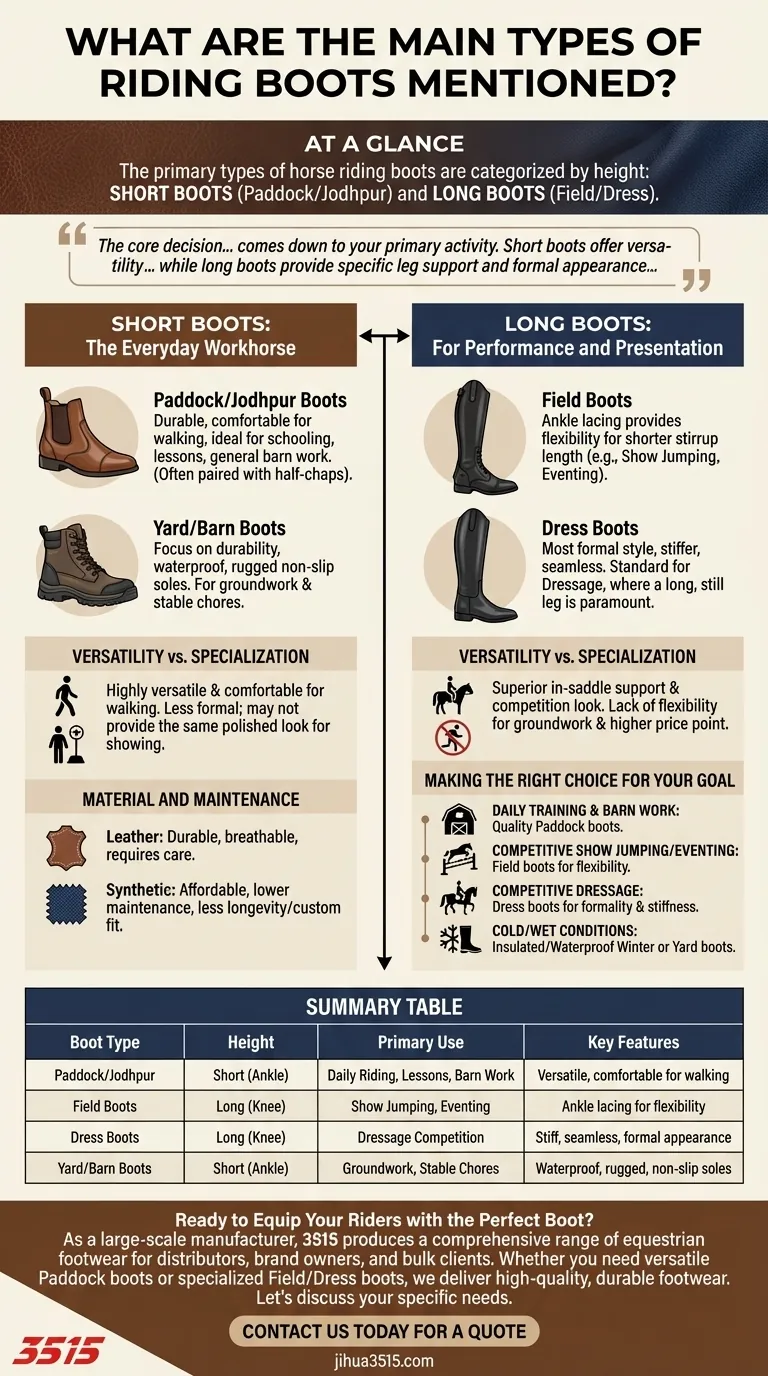
Visual Guide
Related Products
- Heavy-Duty Waterproof Nubuck Safety Boots Safety Shoes for Bulk Supply
- Premium Wholesale Tactical Style Safety Shoes Boots with Quick Lacing
- Wholesale High-Traction Camo Boots - Custom Manufacturer for Brands
- Wholesale Tactical Boots High-Traction & Reflective for Bulk & Brand Orders
- High-Traction Suede Tactical Boots Wholesale & Custom Manufacturing
People Also Ask
- What primary protective functions do professional safety boots provide in urban solid waste recovery and waste picking processes? Discover Dual-Layer Protection.
- How do safety boots reduce cutting hazards? Essential Protection for Your Workforce
- Which organizations develop safety standards for work boots? Ensure Compliance & Worker Safety
- What are the common types of safety boots and their primary uses? A Guide to Industrial Footwear
- Why is ankle and arch support important in safety footwear? Prevent Injury & Fatigue



















