
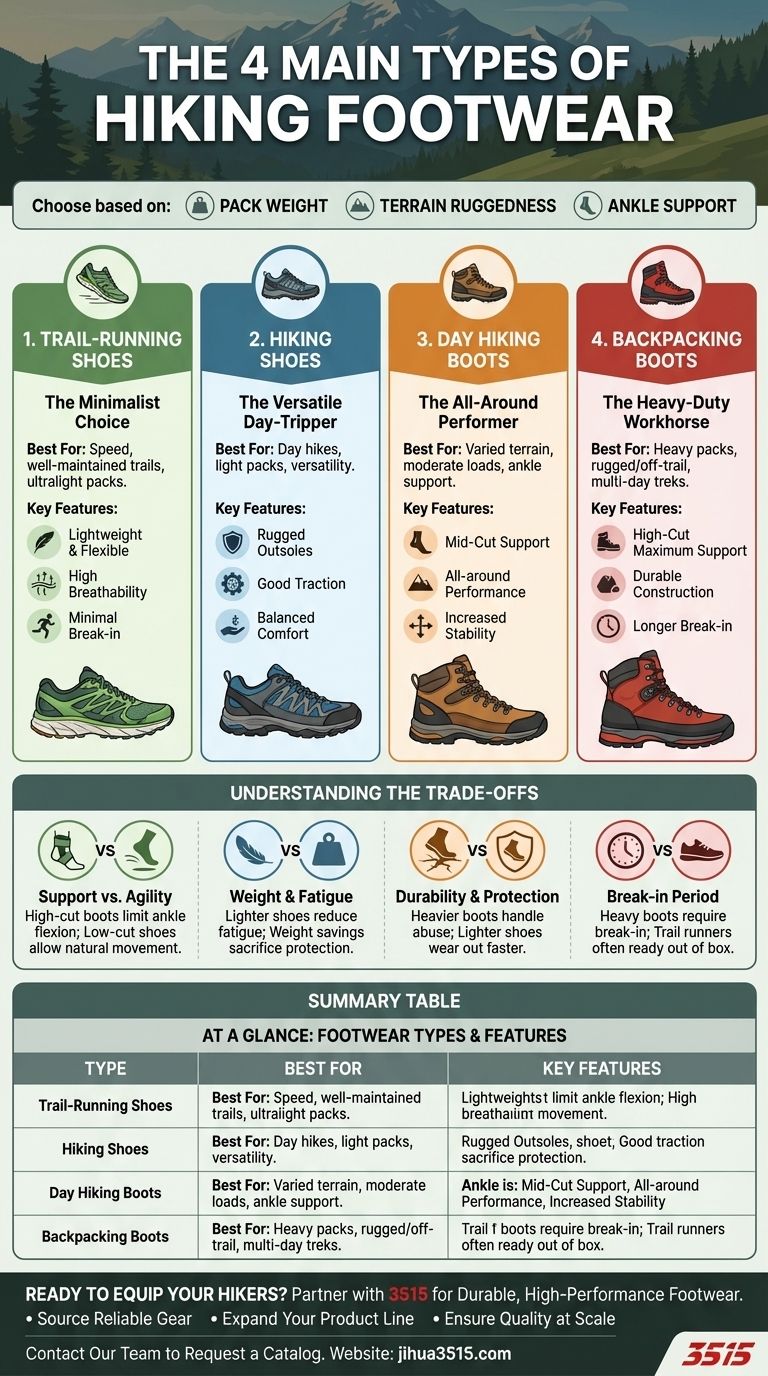
To choose the right hiking footwear, you must first understand the four primary categories available. These are lightweight trail-running shoes, low-cut hiking shoes, mid-cut day hiking boots, and high-cut backpacking boots. The fundamental difference between them is a trade-off between the agility of a lightweight shoe and the rugged support of a heavy-duty boot.
Your choice of hiking footwear isn't about finding the "best" option, but the right tool for the job. The decision hinges on three factors: the weight of your pack, the ruggedness of the terrain, and your personal need for ankle support.
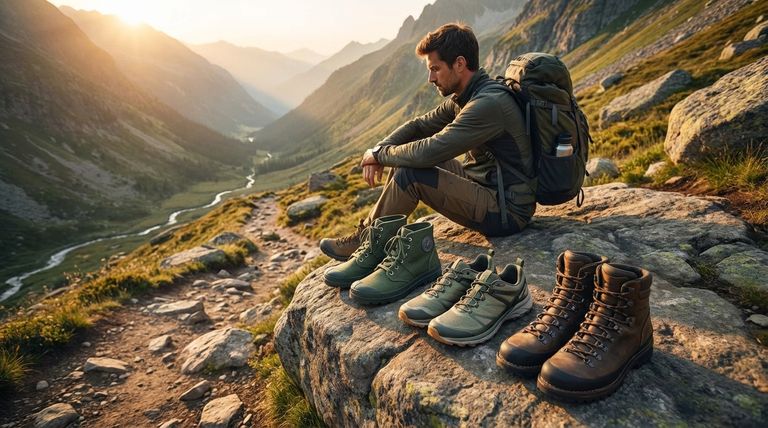
The Four Primary Types of Hiking Footwear
Each category of hiking footwear is engineered to solve a specific set of problems on the trail. Understanding their intended purpose is the first step in making an informed decision.
Trail-Running Shoes: The Minimalist Choice
Trail runners are the lightest and most flexible option. They prioritize speed and breathability over all else, with minimal support and a feel similar to a standard running shoe.
They excel on well-maintained trails where agility is key. Many long-distance and ultralight backpackers favor them to reduce fatigue over thousands of miles.
Hiking Shoes: The Versatile Day-Tripper
Hiking shoes are low-cut models that are stiffer and more durable than trail runners. They feature more rugged outsoles for improved traction and underfoot protection from sharp rocks.
These are the ideal choice for most day hikes with a light pack. They offer an excellent balance of comfort and trail performance for hikers who don't require heavy-duty ankle support.
Day Hiking Boots: The All-Around Performer
These boots typically feature a mid-cut design that covers the ankle, offering a significant step up in support and stability compared to a hiking shoe.
They represent a middle ground, providing more protection and support for varied terrain without the weight and rigidity of a full backpacking boot. This makes them a great starting point for many hikers.
Backpacking Boots: The Heavy-Duty Workhorse
Backpacking boots are the heaviest and most robust option, almost always featuring a high-cut design that extends well above the ankle for maximum support.
Their stiff midsoles and durable construction are designed to handle heavy pack loads and challenging, off-trail terrain. They offer the highest level of protection and are essential for demanding multi-day treks, mountaineering, or winter conditions.
Understanding the Trade-offs
Selecting the right footwear requires you to weigh competing priorities. What you gain in one area, you often sacrifice in another.
Support and Stability vs. Agility
The primary trade-off is between ankle support and freedom of movement. High-cut boots limit ankle flexion, which helps prevent sprains when carrying a heavy pack on uneven ground.
Low-cut shoes allow for a more natural and agile foot placement, but they place a greater demand on the strength and stability of your own ankles.
Weight and Fatigue
Weight on your feet consumes significantly more energy than weight on your back. Choosing a lighter shoe, like a trail runner, can dramatically reduce fatigue over a long day of hiking.
However, that weight savings comes at the cost of the protection and support provided by the stiffer soles and durable materials found in heavier boots.
Durability and Protection
Heavier backpacking boots are built with tougher materials and more rigid construction. They are designed to withstand years of abuse on rocky and abrasive terrain while protecting your feet from impact.
Lighter shoes and trail runners will wear out faster and offer less protection from trail hazards like sharp rocks and roots.
Break-in Period
The stiffer and more robust the boot, the longer the break-in period. Heavy-duty backpacking boots often require several shorter hikes to mold to your feet and avoid discomfort on a long trip.
Trail runners and many modern hiking shoes require little to no break-in time and are often comfortable right out of the box.
Making the Right Choice for Your Hike
Your ideal footwear is the one that best matches the demands of your specific hiking style and goals.
- If your primary focus is speed and ultralight travel on well-maintained trails: Trail-running shoes offer the best combination of low weight and breathability.
- If your primary focus is day hiking with a light pack: Hiking shoes provide the ideal balance of comfort, traction, and agility for most single-day adventures.
- If your primary focus is all-around versatility and ankle support for moderate loads: Day hiking boots are a reliable choice that bridges the gap between shoes and heavy boots.
- If your primary focus is multi-day backpacking with a heavy pack or rugged terrain: Backpacking boots deliver the essential stability and protection your feet and ankles will need.
Ultimately, choosing the right footwear is about ensuring your comfort and safety, allowing you to focus on the experience of the trail itself.
Summary Table:
| Footwear Type | Best For | Key Features |
|---|---|---|
| Trail-Running Shoes | Speed, well-maintained trails, ultralight packs | Lightweight, flexible, minimal break-in |
| Hiking Shoes | Day hikes, light packs, versatility | Low-cut, rugged soles, good traction |
| Day Hiking Boots | Varied terrain, moderate loads, ankle support | Mid-cut, all-around performance, stability |
| Backpacking Boots | Heavy packs, rugged/off-trail, multi-day treks | High-cut, maximum support & protection, durable |
Ready to Equip Your Hikers with the Perfect Footwear?
As a large-scale manufacturer, 3515 produces a comprehensive range of durable and high-performance hiking footwear for distributors, brand owners, and bulk clients. Our production capabilities encompass all types of shoes and boots, from agile trail runners to heavy-duty backpacking boots, ensuring you get the right product for your target market.
Partner with us to:
- Source Reliable Gear: Offer your customers footwear built for comfort, safety, and durability on any trail.
- Expand Your Product Line: Access a full catalog designed to meet the specific needs of every hiker.
- Ensure Quality at Scale: Leverage our manufacturing expertise for consistent, high-volume production.
Let's discuss your specific needs and how we can support your business. Contact our team today to request a catalog or start a conversation.
Visual Guide
Related Products
- Durable Rubber Sole Outdoor Shoes Wholesale & Custom Manufacturing
- Wholesale High-Traction Camo Boots - Custom Manufacturer for Brands
- Wholesale Durable Camouflage Canvas Shoes with High-Traction Cleated Rubber Sole
- Wholesale Lightweight Tactical Boots Custom Manufacturer for Desert & Combat Use
- Wholesale Waterproof Tactical Boots Custom Suede & High-Traction Soles
People Also Ask
- What is the function of the sole in outdoor shoes? Find the Perfect Grip and Support
- What role do outdoor shoes and sneakers play in navigating external terrains? Engineered Stability for Every Surface
- How is AI utilized in the design of outdoor and safety footwear? Harnessing Big Data for Market-Driven Shoe Innovation
- Why is durability important when selecting outdoor shoes? A Guide to Safety & Long-Term Value
- What are the key components of outdoor shoes that affect comfort and sturdiness? A Guide to Durable, High-Performance Footwear



















