At its core, the world of cowboy boots is divided by purpose. The main types are the Classic Western (or Traditional), the Roper, the Buckaroo, the Stockman, and the Western Work Boot, each designed with a specific function in mind, from horseback riding to all-day walking comfort and job site safety.
The style of a cowboy boot is not arbitrary; its form directly follows its intended function. Understanding the differences in heel height, toe shape, and shaft length will tell you exactly what a boot was designed to do.

The Core Styles: Function Defines Form
The visual differences between cowboy boot styles are direct results of their evolution for specific tasks. A boot designed for a rodeo rider has vastly different features than one made for a rancher who spends as much time on their feet as in the saddle.
The Classic Western Boot
This is the quintessential cowboy boot, built primarily for riding. It features a tall shaft (12 inches or more), a distinctly angled "riding heel" (at least 1.5 inches high), and often a pointed or narrow toe.
The tall, angled heel is designed to prevent the rider's foot from slipping through the stirrup, a critical safety feature. The high shaft protects the leg from brush, thorns, and snakebites.
The Roper Boot
The Roper style was developed for rodeo competitors in events like calf roping, which required them to quickly dismount and run. This boot is built for both riding and walking.
It has a much shorter, squarer "walking heel" that is typically under 1.5 inches. The shaft is also shorter, and the toe is often rounded or squared, providing significantly more comfort for all-day wear on the ground.
The Buckaroo Boot
The Buckaroo is the most dramatic and specialized style. It is an extreme riding boot, distinguished by a very tall shaft, often exceeding 14 inches, which provides maximum protection for the rider's leg.
These boots frequently feature more elaborate decorative stitching and a taller, angled riding heel. They are purpose-built for individuals who spend the vast majority of their day on horseback.
The Stockman Boot
The Stockman is a practical, hybrid design that serves as a versatile all-around boot for ranch work. It borrows features from both the Classic and Roper styles.
Typically, it has a deeper scallop (the "V" shape at the top of the shaft) and a lower, broader heel similar to a Roper. This makes it more comfortable for groundwork than a Classic boot but more robust than a standard Roper.
The Western Work Boot
This is a modern adaptation of the classic silhouette, engineered for manual labor and job site safety. While it maintains a Western look, it incorporates modern safety features.
These boots often have rubber, slip-resistant outsoles and protective features like steel or composite toe caps. They merge traditional style with the functional requirements of a modern work boot.
Understanding the Trade-offs
Choosing a cowboy boot involves balancing tradition, comfort, and function. A feature that makes a boot excellent for one task can make it unsuitable for another.
Heel Height vs. Walking Comfort
The tall, angled heel of a Classic or Buckaroo boot is essential for safety in the stirrup but can become uncomfortable and unstable during extended periods of walking on hard surfaces.
Conversely, the low, flat heel of a Roper provides excellent stability and comfort for walking but offers less security in the stirrup compared to a traditional riding heel.
Toe Shape vs. Stirrup Access
A traditional pointed toe was designed to help a rider easily guide their foot into the stirrup. However, it offers less room for your toes.
Modern square and round-toe designs prioritize foot comfort and are now extremely popular across all styles, even on boots meant for riding. The choice is now a matter of both comfort and aesthetic preference.
Leather Soles vs. Rubber Soles
Traditional cowboy boots use a smooth leather sole, which allows the foot to slide easily in and out of the stirrup. This same feature, however, offers poor traction on wet or slick surfaces.
Western work boots and many modern Ropers use rubber outsoles to provide superior grip and durability, sacrificing the traditional slide of a leather sole for enhanced safety on the ground.
Making the Right Choice for Your Goal
Your intended use is the single most important factor in selecting the right type of cowboy boot.
- If your primary focus is authentic style and occasional riding: The Classic Western boot offers the iconic silhouette and functional features for time in the saddle.
- If your primary focus is all-day comfort and versatility: The Roper boot, with its lower walking heel and shorter shaft, is the ideal choice for everyday wear.
- If your primary focus is demanding ranch work or job site safety: A purpose-built Western Work boot provides the necessary protection and traction.
- If your primary focus is maximum protection for extensive riding: The Buckaroo boot's tall shaft and specialized design offer unparalleled performance on horseback.
Ultimately, choosing the right cowboy boot is about matching the tool to the task at hand.
Summary Table:
| Boot Type | Primary Function | Key Features |
|---|---|---|
| Classic Western | Riding | Tall shaft, angled riding heel, pointed/narrow toe |
| Roper | Riding & Walking | Shorter shaft, low walking heel, rounded toe |
| Buckaroo | Extensive Riding | Very tall shaft, tall angled heel, elaborate stitching |
| Stockman | Versatile Ranch Work | Hybrid design, deep scallop, broad heel |
| Western Work Boot | Job Site Safety | Modern safety features (e.g., steel toe, rubber sole) |
Ready to Get the Perfect Boot for Your Needs?
As a large-scale manufacturer, 3515 produces a comprehensive range of cowboy boots for distributors, brand owners, and bulk clients. Whether you need the authentic style of a Classic Western, the all-day comfort of a Roper, or the safety features of a Western Work Boot, our production capabilities cover all types of footwear.
Let us help you provide the right boot for your customers' specific goals. Contact our expert team today to discuss your production needs!
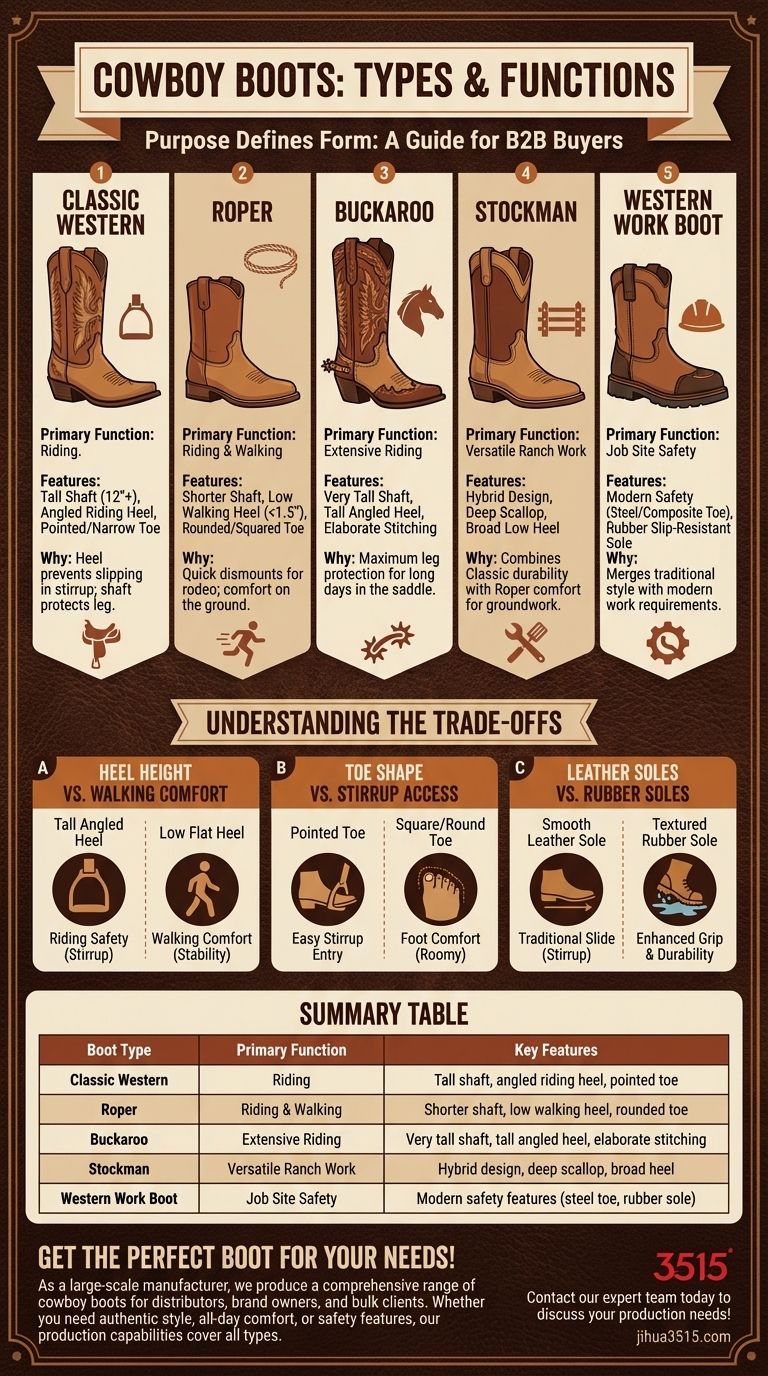
Visual Guide
Related Products
- Wholesale High-Traction Camo Boots - Custom Manufacturer for Brands
- Durable Spiked Camouflage Boots Wholesale & Factory Production
- High-Traction Suede Tactical Boots Wholesale & Custom Manufacturing
- Wholesale Lightweight Tactical Boots Custom Manufacturer for Desert & Combat Use
- Durable Leather Tactical Boots Wholesale & Custom Manufacturing for Brands
People Also Ask
- What are the key features of the new line of camo boots? Built for Extreme Cold & Rugged Terrain
- Are camo boots necessary for hunting success? Prioritize Performance Over Pattern
- What is the technical logic behind using closed-eye testing for tactical boots? Unlocking Peak Footwear Stability
- How does the Rank Score Test identify the primary causes of premature failure in tactical and work boots? Key Insights
- What shoes to wear for a security job? Durable, Protective Footwear for Long Shifts