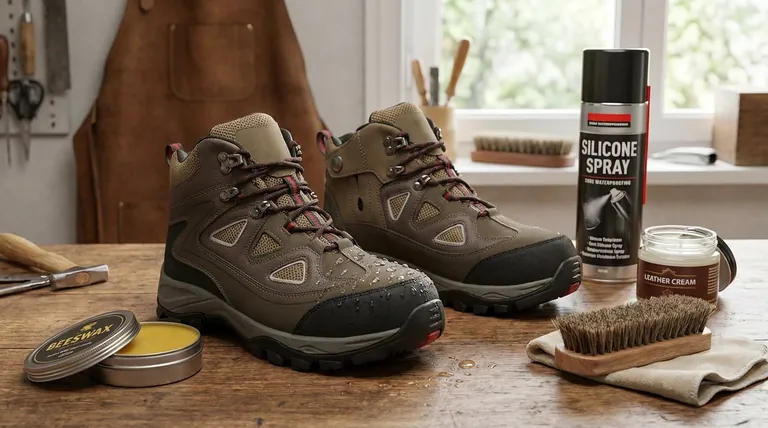
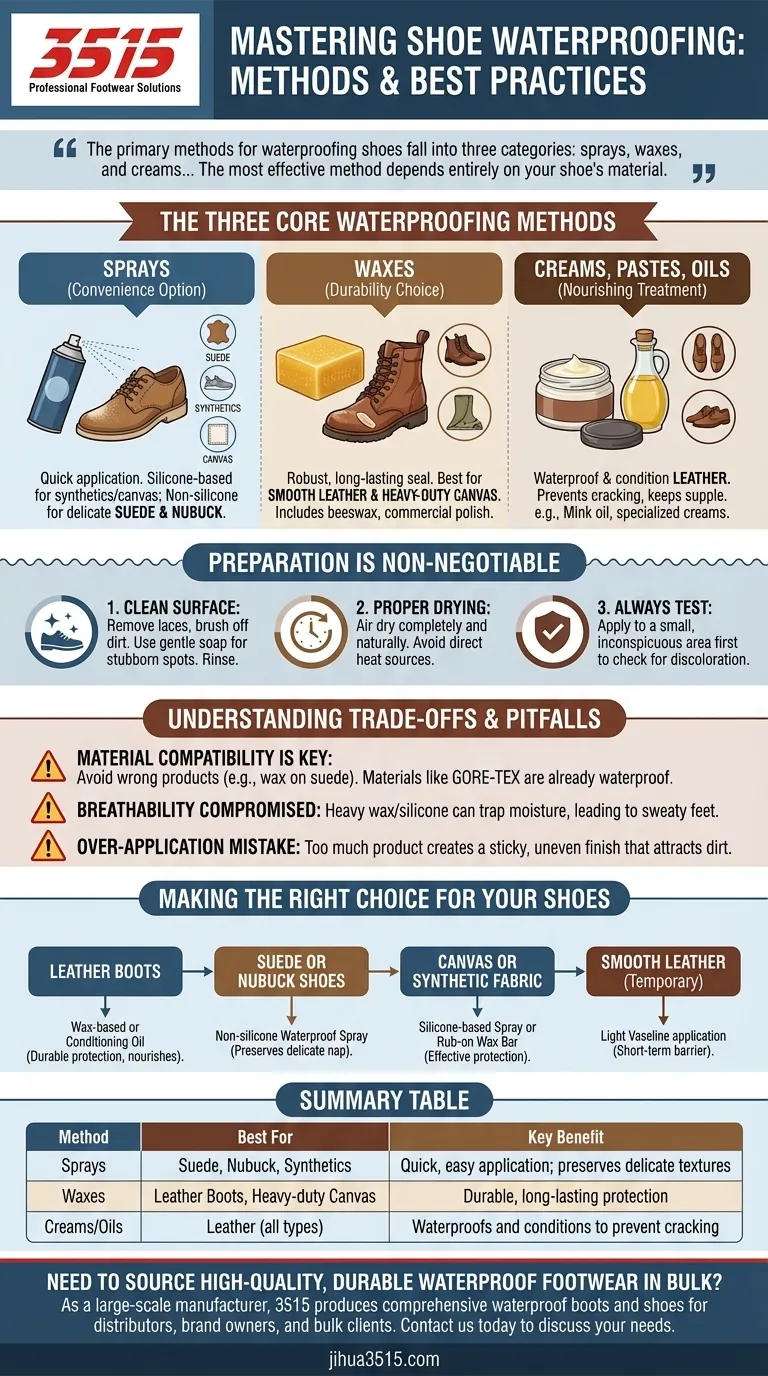
The primary methods for waterproofing shoes fall into three categories: sprays, waxes, and creams. Sprays are best for delicate materials like suede and synthetics, while waxes offer durable, heavy-duty protection for leather and canvas. Creams and oils both waterproof and condition leather, preventing it from cracking.
The most effective waterproofing method is not universal; it depends entirely on your shoe's material. Proper cleaning and preparation are just as critical as the treatment itself for achieving a durable, water-repellent barrier.
The Three Core Waterproofing Methods
Choosing the right waterproofing agent is the first and most important step. Each type interacts differently with various shoe materials, offering a unique balance of protection, durability, and ease of application.
H3: Sprays (The Convenience Option)
Waterproofing sprays are the fastest and easiest method to apply. They create a protective barrier over the surface of the shoe.
Silicone-based sprays are highly effective and work on a wide range of materials, including synthetics and canvas. Non-silicone sprays are specifically formulated for delicate materials like suede and nubuck, as they are less likely to alter the texture or color.
H3: Waxes (The Durability Choice)
Wax-based products provide a robust and long-lasting waterproof seal by penetrating the shoe's material. They are the ideal choice for smooth leather boots and heavy-duty canvas footwear.
Common options include beeswax, which is a natural and highly effective choice, or commercial wax polishes that both waterproof and enhance the shoe's appearance. In a pinch, even simple candle wax can be used as a DIY alternative.
H3: Creams, Pastes, and Oils (The Nourishing Treatment)
These treatments are designed primarily for leather, offering a dual benefit of waterproofing and conditioning. They keep the leather supple and prevent it from drying out and cracking.
Products like mink oil or specialized waterproofing creams are absorbed by the leather, creating a deep, water-resistant barrier. Vaseline can serve as a temporary solution for smooth leather but is less durable than dedicated products.
Preparation Is Non-Negotiable
Applying a waterproofing treatment to a dirty or improperly prepared shoe will trap grime, reduce effectiveness, and can even damage the material. Following these steps is essential for a successful application.
H3: Start with a Clean Surface
Always begin by removing the laces and thoroughly brushing off any loose dirt, dust, or mud. This prevents debris from getting sealed into the shoe's surface.
For stubborn spots, use a soft brush or cloth with a gentle soap, like saddle soap for leather. Be sure to rinse away any soap residue completely, as it can deteriorate the fabric over time.
H3: Proper Drying is Crucial
After cleaning, you must let the shoes air dry completely and naturally.
Never place shoes near a direct heat source like a radiator, fireplace, or in a machine dryer. Intense heat can shrink materials, weaken adhesives, and permanently damage the shoe's structure.
H3: Always Perform a Test
Before applying any product to your entire shoe, test it on a small, inconspicuous area first, such as the inner side of the shoe's tongue. This allows you to see if the treatment will cause any unwanted discoloration or change in texture.
Understanding the Trade-offs and Pitfalls
Waterproofing is a balancing act. Achieving water resistance can sometimes come at the cost of other shoe characteristics, and common mistakes can easily undermine your efforts.
H3: Material Compatibility is Key
The most common mistake is using the wrong product for the material. Applying wax to suede will ruin its soft texture, and some oils can permanently darken light-colored leather.
Furthermore, materials like GORE-TEX or rubber are already waterproof. These materials require regular cleaning to maintain their performance, not aftermarket waterproofing treatments which can clog their microporous structures.
H3: Breathability Can Be Compromised
Creating a barrier to keep water out can sometimes trap moisture in. Heavy applications of wax or silicone-based products can reduce a shoe's natural breathability, which may lead to sweaty feet.
H3: The Mistake of Over-Application
More is not always better. Applying too much of any product can result in a sticky, uneven finish that attracts more dirt and can be difficult to correct. Always follow the manufacturer's instructions for application.
Making the Right Choice for Your Shoes
Your goal determines your method. Use this guide to select the optimal treatment based on your specific footwear.
- If your primary focus is protecting leather boots: A wax-based product or a conditioning oil will provide durable, long-lasting protection while also nourishing the material.
- If your primary focus is treating suede or nubuck shoes: A non-silicone waterproof spray is the only safe and effective option to preserve the shoe's delicate nap.
- If your primary focus is waterproofing canvas or synthetic fabric: A versatile silicone-based spray or a rub-on wax bar offers the most effective and straightforward protection.
- If your primary focus is a temporary fix for smooth leather: A light, even application of Vaseline can provide a short-term water-resistant barrier in an emergency.
Properly waterproofing your shoes not only keeps your feet dry but also significantly extends the life of your footwear.
Summary Table:
| Method | Best For | Key Benefit |
|---|---|---|
| Sprays | Suede, Nubuck, Synthetics | Quick, easy application; preserves delicate textures |
| Waxes | Leather Boots, Heavy-duty Canvas | Durable, long-lasting protection |
| Creams/Oils | Leather (all types) | Waterproofs and conditions to prevent cracking |
Need to source high-quality, durable waterproof footwear in bulk?
As a large-scale manufacturer, 3515 produces a comprehensive range of waterproof boots and shoes for distributors, brand owners, and bulk clients. Our production capabilities ensure reliable performance and longevity for all types of footwear.
Contact us today to discuss your specific needs and receive a customized quote.
Visual Guide
Related Products
- Wholesale Premium Waterproof Nubuck Safety Shoes Boots
- Heavy-Duty Waterproof Nubuck Safety Boots Safety Shoes for Bulk Supply
- Premium Wholesale Waterproof Safety Boots High Performance Protection for Industrial Markets
- Premium Waterproof Nubuck Safety Boots for Wholesale
- Durable Waterproof Rain Boots | Custom Manufacturer for Wholesale & Brands
People Also Ask
- Why are waterproof safety boots recommended for certain work environments? Essential Protection for Wet & Hazardous Jobs
- What materials are commonly used in waterproof boots? The Complete Guide to Durable, Breathable Protection
- What are the drawbacks of waterproof boots? The Breathability vs. Protection Trade-Off
- What is the advantage of one-piece construction in waterproof boots? Unbeatable Seamless Protection
- What is the difference between waterproof, water-resistant, and water-repellent boots? Choose the Right Protection for Your Feet