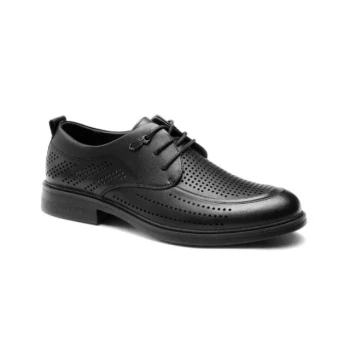
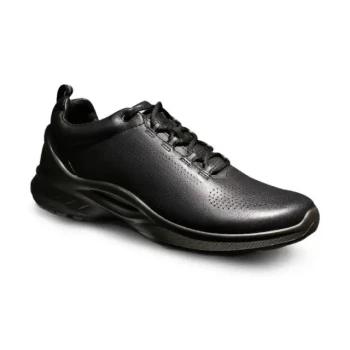
At their core, trekking shoes serve three primary functions: to provide protection from the elements and terrain, to ensure safety and stability on uneven ground, and to deliver the comfort necessary to endure long distances with a heavy pack. They are a specialized tool engineered to manage the unique stresses hiking places on your feet and ankles.
The fundamental purpose of a trekking shoe is not just to cover your foot, but to act as a support system that reduces fatigue, prevents injury, and allows you to move confidently and efficiently over challenging terrain.
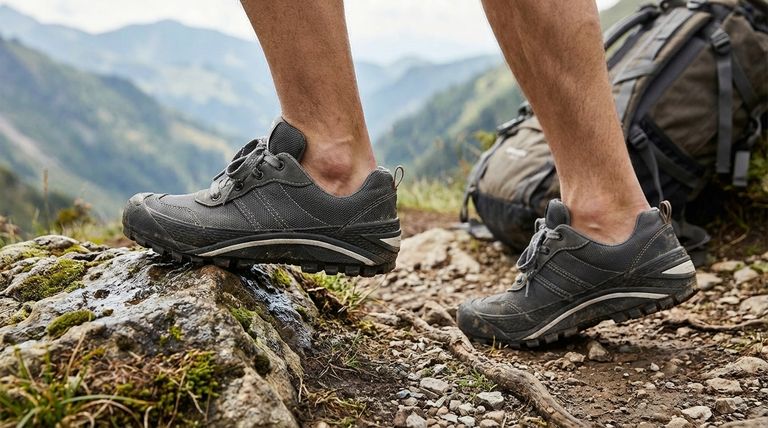
The Core Functions: A Deeper Look
Understanding how trekking shoes accomplish their mission reveals why they are indispensable for serious hiking. Each feature is a deliberate solution to a specific problem encountered on the trail.
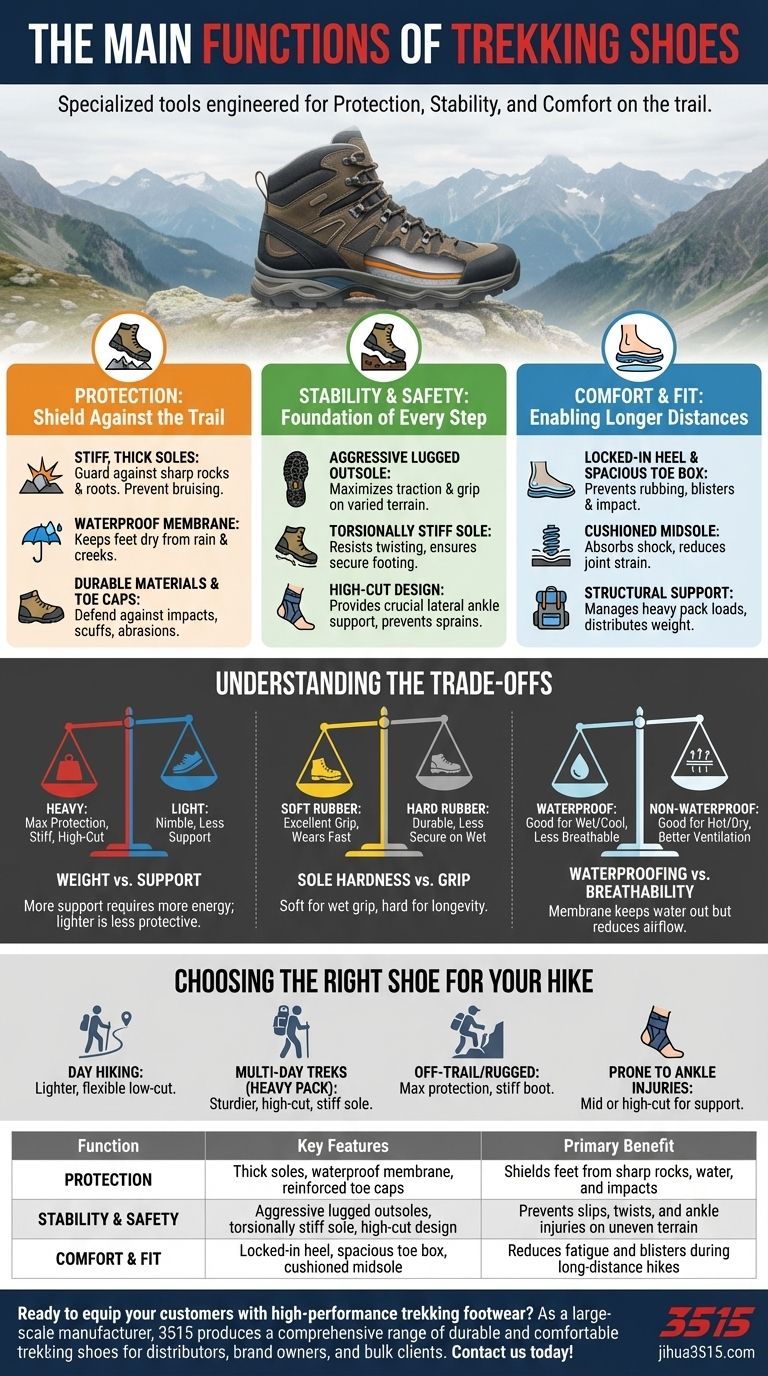
Protection: Your Shield Against the Trail
A trekking shoe's first job is to be a barrier between your foot and the environment. This goes far beyond what a standard athletic shoe can offer.
Stiff, thick soles guard the bottom of your foot against sharp rocks and roots. This prevents bruising and punctures that can quickly end a hike.
Many trekking shoes also feature a waterproof yet breathable membrane. This critical layer keeps your feet dry from external moisture like rain or creek crossings, which is essential for preventing blisters and maintaining comfort.
Finally, durable upper materials and reinforced toe caps protect you from direct impacts, scuffs, and abrasions common on rocky or overgrown trails.
Stability & Safety: The Foundation of Every Step
The trail is an unpredictable surface. Trekking shoes are designed to create a stable platform that minimizes the risk of slips, falls, and joint injuries.
The outsole is made of specialized rubber compounds with deep, aggressive lugs (the tread pattern). This design maximizes traction and grip on varied surfaces like dirt, mud, and rock, while also effectively shedding debris.
A torsionally stiff sole is key. This means the shoe resists twisting, which provides a secure, surefooted feeling when traversing uneven ground and prevents your foot from contorting unnaturally.
For more demanding hikes, a high-cut design provides crucial lateral support for your ankles. This helps prevent twists and sprains, especially when you're fatigued or carrying the extra weight of a backpack.
Comfort & Fit: Enabling Longer Distances
Comfort in a trekking shoe is not about softness; it's about a precise, supportive fit that prevents pain and fatigue over many miles.
The fit must be exact: your heel must be locked in place to prevent rubbing and blisters, while your toes need a finger-width of space to avoid impact on descents.
Proper shoes are engineered to support your foot's natural rolling motion. A well-designed midsole provides cushioning to absorb shock, reducing the strain on your joints with every step.
This structural support is designed to manage the additional load of a heavy pack, distributing weight more evenly and reducing the stress on your feet, knees, and back.
Understanding the Trade-offs: Weight vs. Support
Choosing the right trekking shoe involves balancing competing priorities. There is no single "best" shoe, only the best shoe for a specific purpose.
The Weight Penalty
The most significant trade-off is between support and weight. A highly protective, stiff, high-cut boot will be heavier.
While offering maximum protection, heavier boots require more energy to lift with every step, which can increase fatigue over a long day. Lighter shoes are more nimble but offer less protection and support.
Sole Hardness and Grip
The rubber compound of the outsole presents another choice. Softer rubber provides excellent grip, especially on wet rock, but it wears down much faster.
Harder rubber compounds are far more durable and will last longer, but they can feel slippery and less secure on wet or slick surfaces.
Waterproofing vs. Breathability
A waterproof membrane is excellent for wet, cool conditions, but it inevitably reduces a shoe's breathability.
In hot, dry climates, a non-waterproof shoe with better ventilation might keep your feet cooler and drier from sweat, which can be just as important for blister prevention.
Choosing the Right Shoe for Your Hike
Your decision should be guided by the terrain you'll be on and the weight you'll be carrying.
- If your primary focus is day hiking on well-maintained trails: A lighter, more flexible low-cut hiking shoe will likely provide sufficient support and comfort.
- If your primary focus is multi-day treks with a heavy backpack: A sturdier, high-cut boot with a torsionally stiff sole is essential for ankle support and stability.
- If your primary focus is navigating off-trail, rugged terrain: Prioritize maximum protection with a durable, stiff boot that offers the best possible traction and support.
- If you are prone to ankle injuries: Always opt for a mid or high-cut boot to provide the necessary lateral support, regardless of the trail's difficulty.
Ultimately, the right trekking shoe is the one that allows you to focus on the journey, not on your feet.
Summary Table:
| Function | Key Features | Primary Benefit |
|---|---|---|
| Protection | Thick soles, waterproof membrane, reinforced toe caps | Shields feet from sharp rocks, water, and impacts |
| Stability & Safety | Aggressive lugged outsoles, torsionally stiff sole, high-cut design | Prevents slips, twists, and ankle injuries on uneven terrain |
| Comfort & Fit | Locked-in heel, spacious toe box, cushioned midsole | Reduces fatigue and blisters during long-distance hikes |
Ready to equip your customers with high-performance trekking footwear?
As a large-scale manufacturer, 3515 produces a comprehensive range of durable and comfortable trekking shoes and boots for distributors, brand owners, and bulk clients. Our production capabilities encompass all types of outdoor footwear, engineered to meet the demands of any trail.
Contact us today to discuss your specific needs and discover how we can support your business with reliable, high-quality footwear solutions.
Visual Guide
Related Products
- Durable Rubber Sole Outdoor Shoes Wholesale & Custom Manufacturing
- Wholesale Durable Camouflage Canvas Shoes with High-Traction Cleated Rubber Sole
- Wholesale Durable Camo Canvas Shoes with High-Traction Rubber Soles
- Wholesale Waterproof Tactical Boots Custom Suede & High-Traction Soles
- Durable Leather High-Ankle Tactical Boots for Wholesale & Custom Manufacturing
People Also Ask
- What is the function of the sole in outdoor shoes? Find the Perfect Grip and Support
- What role do outdoor shoes and sneakers play in navigating external terrains? Engineered Stability for Every Surface
- How is AI utilized in the design of outdoor and safety footwear? Harnessing Big Data for Market-Driven Shoe Innovation
- Why is durability important when selecting outdoor shoes? A Guide to Safety & Long-Term Value
- What are the key components of outdoor shoes that affect comfort and sturdiness? A Guide to Durable, High-Performance Footwear