
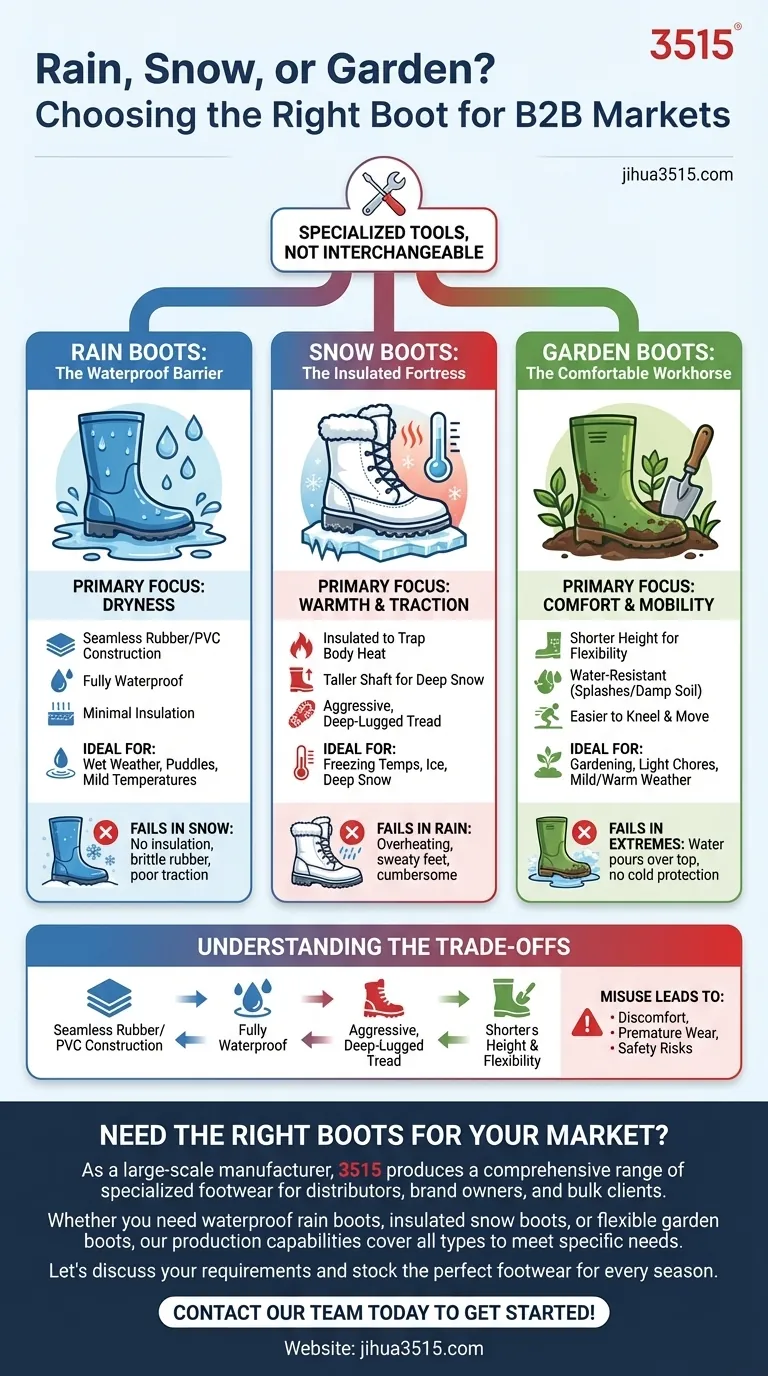
At their core, rain boots prioritize dryness, snow boots prioritize warmth and traction, and garden boots prioritize flexible comfort for light work. While all offer a degree of protection, each is a specialized tool designed for a distinct environmental challenge.
The most common mistake is assuming these boots are interchangeable. Using the wrong boot for the condition not only leads to discomfort but can also cause premature wear and fail to provide the safety you need.

The Core Function of Each Boot
Understanding the design philosophy behind each boot type is the key to selecting the right one. Their construction directly reflects their intended purpose.
Rain Boots: The Waterproof Barrier
Rain boots are engineered with a single primary goal: to keep your feet completely dry from external moisture.
Their construction is typically a seamless mold of rubber or PVC, creating an impenetrable barrier against water. They are flexible enough for walking but offer minimal insulation.
Snow Boots: The Insulated Fortress
Snow boots are built to combat cold and slippery surfaces. Their defining feature is insulation, which traps body heat to keep your feet warm in freezing temperatures.
They also feature a taller shaft to keep deep snow out and an aggressive, deep-lugged tread designed specifically to grip ice and snow, preventing dangerous slips.
Garden Boots: The Comfortable Workhorse
Garden boots are designed for mobility and comfort during outdoor chores in mild or warm weather.
Their shorter height allows for greater ankle flexibility, making it easier to kneel and move around. While water-resistant, they are meant for splashes and damp soil, not for submersion in deep puddles.
Understanding the Trade-offs
Using the wrong type of boot is often ineffective and can even be counterproductive. Each design comes with inherent limitations when used outside its intended environment.
Why Rain Boots Fail in Snow
Rain boots provide zero insulation, making them a poor choice for cold weather as your feet will quickly become dangerously cold.
Furthermore, the rubber can become stiff and brittle in freezing temperatures, and their simple soles lack the specialized tread needed for reliable traction on ice.
The Problem with Snow Boots in Rain
Wearing insulated snow boots in mild, rainy weather is overkill. The heavy insulation will trap too much heat, leading to sweaty, uncomfortable feet. They are often heavier and less flexible than rain boots, making them cumbersome for simple walks.
When Garden Boots Aren't Enough
The low-cut design of garden boots makes them unsuitable for deep puddles or snow, as moisture will easily spill over the top. They also lack the insulation for cold and the robust waterproofing needed for prolonged exposure to wet conditions.
Making the Right Choice for Your Needs
Base your decision on the primary challenge you expect to face.
- If your primary focus is staying dry in mild, wet weather: A classic rain boot is the precise tool for the job.
- If your primary focus is warmth and safety in freezing temperatures: Only a dedicated, insulated snow boot will provide the necessary protection.
- If your primary focus is comfort and mobility for outdoor chores: A flexible, shorter garden boot is your most practical option.
Choosing the right boot is about matching your equipment to the specific environmental conditions you face.
Summary Table:
| Boot Type | Primary Focus | Key Features | Ideal For |
|---|---|---|---|
| Rain Boots | Dryness | Seamless rubber/PVC, fully waterproof | Wet weather, puddles, mild temperatures |
| Snow Boots | Warmth & Traction | Insulated, aggressive tread, tall shaft | Freezing temperatures, ice, and deep snow |
| Garden Boots | Comfort & Mobility | Shorter height, flexible, water-resistant | Gardening, light chores, mild/warm weather |
Need the Right Boots for Your Market?
As a large-scale manufacturer, 3515 produces a comprehensive range of specialized footwear for distributors, brand owners, and bulk clients. Whether you need fully waterproof rain boots, insulated snow boots, or flexible garden boots, our production capabilities cover all types of shoes and boots to meet your customers' specific needs.
Let's discuss your requirements and how we can help you stock the perfect footwear for every season.
Contact our team today to get started!
Visual Guide
Related Products
- Factory Direct Wholesale Rain Boots Durable Waterproof & Fully Customizable
- Durable Waterproof Rain Boots | Custom Manufacturer for Wholesale & Brands
- Wholesale Waterproof Tactical Boots Custom Suede & High-Traction Soles
- High Performance Fire-Retardant Waterproof Safety Boots
- Durable Rubber Sole Outdoor Shoes Wholesale & Custom Manufacturing
People Also Ask
- What are the characteristics of rain boots? A Guide to Waterproof Footwear for Every Need
- What factors should be considered when choosing rain boots? Find the Perfect Boot for Your Needs
- What are the main differences between rain boots and snow boots? Choose the Right Boot for Your Climate
- How should one decide between PVC and rubber for rain boots? A Guide to Choosing the Right Material
- Why are rain boots more flexible and comfortable than snow boots? The Key Differences Explained



















