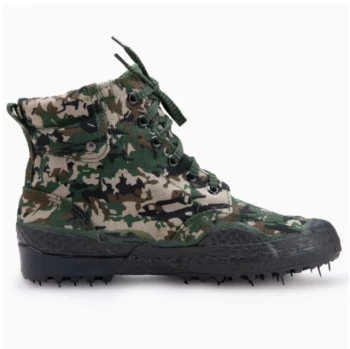
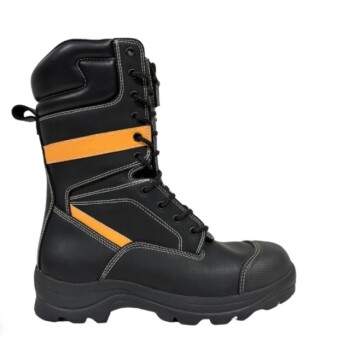
The key improvements in jungle boots for tropical climates are a direct response to the environment's two greatest challenges: constant moisture and hazardous terrain. These boots introduced drainage ports to let water escape, a "Panama" sole to shed mud, a steel shank for puncture protection, and lightweight, breathable uppers to help feet dry quickly.
The central design philosophy of a true jungle boot is counterintuitive: it's not about keeping water out, but about letting it out as quickly as possible while protecting the foot from the terrain.
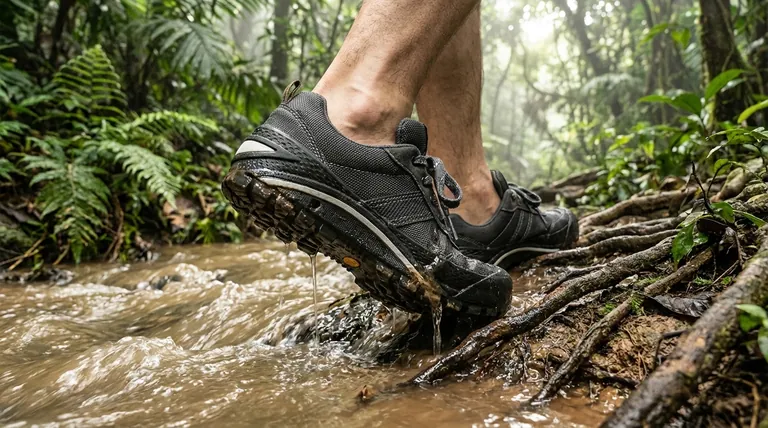
The Core Challenge: Water and Heat
The primary failure of traditional leather boots in a jungle is their tendency to hold water. This adds weight, softens the skin, and leads to severe foot problems. Jungle boot design directly attacks this issue.
Rapid Water Evacuation
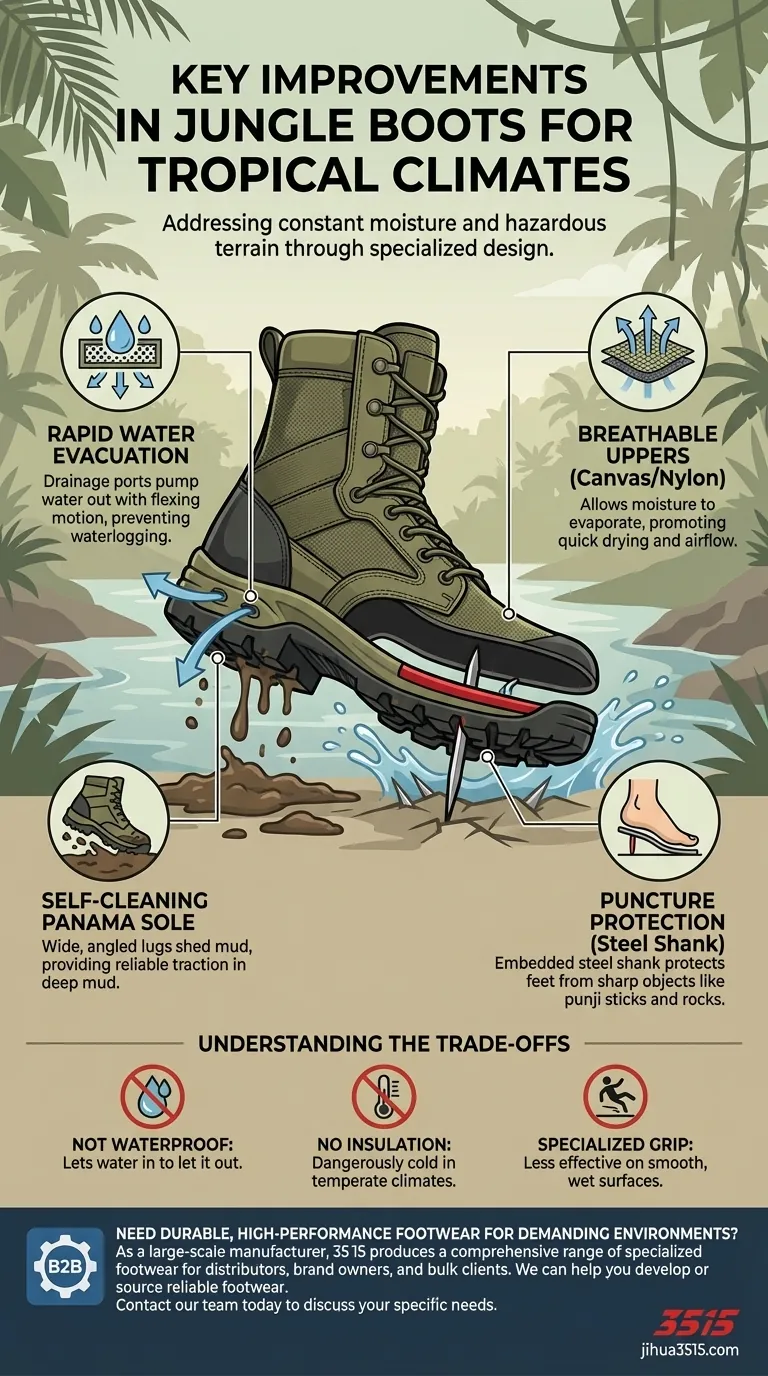
True jungle boots feature drainage ports, which are small, screened vents located on the instep near the sole of the boot.
Their function is simple but critical: as you walk, the flexing motion of your foot actively pumps water out of the boot. This prevents the boot from becoming a heavy, water-logged bucket on your foot.
Breathable Uppers
Instead of thick, waterproof leather, jungle boots use uppers made of canvas or nylon fabric.
This material is not waterproof by design. It allows moisture to evaporate quickly, promoting airflow and helping the foot and sock to dry much faster than they would inside a leather or Gore-Tex boot.
Conquering Unforgiving Terrain
Jungle floors are a chaotic mix of mud, unseen roots, and sharp objects. The sole and internal structure of the boot were engineered specifically for this reality.
The Self-Cleaning Panama Sole
The defining feature of many jungle boots is the Panama sole, which uses wide, angled rubber lugs.
This pattern is designed to shed mud and clay with every step, preventing it from caking and turning the sole into a slick, heavy plate. It provides reliable traction in the most common jungle condition: deep mud.
Puncture Protection
A thin steel shank is embedded within the sole of the boot.
This was a direct response to hazards like sharpened punji sticks used in warfare, but it remains essential for protecting the foot from sharp rocks, roots, and other debris that could easily puncture a softer sole.
Understanding the Trade-offs
The specialized nature of a jungle boot means it comes with compromises that make it unsuitable for other environments. Understanding these is key.
Feature, Not a Bug: Not Waterproof
The most common misunderstanding is that jungle boots should be waterproof. They are the opposite.
In an environment where your feet will inevitably get wet from river crossings or torrential rain, a waterproof boot simply traps that water inside. The jungle boot's 'get wet, dry fast' approach is far more effective for maintaining foot health.
Lack of Insulation
The same features that make these boots excellent in the heat—breathability and light materials—make them dangerously cold in temperate or winter climates. They offer virtually no insulation.
Specialized Grip
While the Panama sole is brilliant in mud, its large, hard rubber lugs may offer less grip on smooth, wet surfaces like river rocks or slick logs compared to modern, multi-directional hiking boot soles.
Making the Right Choice for Your Environment
Your choice of footwear must be dictated by the conditions you expect to face.
- If your primary focus is a hot, consistently wet, and muddy environment: The classic jungle boot design with drainage ports and a Panama sole is purpose-built for your needs.
- If your primary focus is a temperate or dry climate: A traditional hiking boot will offer better support and water resistance without the unnecessary drainage features.
- If your primary focus is protection from ground hazards in any climate: Look for any boot that includes a puncture-resistant shank or plate in its sole construction.
Ultimately, a jungle boot is a highly specialized tool designed to solve a very specific set of environmental problems.
Summary Table:
| Key Improvement | Primary Function |
|---|---|
| Drainage Ports | Actively pump water out to prevent waterlogging. |
| Breathable Uppers (Canvas/Nylon) | Promote airflow for quick drying. |
| Panama Sole | Sheds mud with wide, angled lugs for superior traction. |
| Steel Shank | Provides puncture protection from sharp objects. |
Need Durable, High-Performance Footwear for Demanding Environments?
As a large-scale manufacturer, 3515 produces a comprehensive range of specialized footwear for distributors, brand owners, and bulk clients. Our production capabilities encompass all types of boots, including rugged designs built for extreme conditions like tropical climates.
We can help you develop or source reliable footwear that combines durability with specialized features. Contact our team today to discuss your specific needs and explore how we can bring value to your product line.
Visual Guide
Related Products
- Wholesale Lightweight Tactical Boots Custom Manufacturer for Desert & Combat Use
- Factory Direct Wholesale Rain Boots Durable Waterproof & Fully Customizable
- Durable Spiked Camouflage Boots Wholesale & Factory Production
- Durable Waterproof Rain Boots | Custom Manufacturer for Wholesale & Brands
- Wholesale Waterproof Tactical Boots Custom Suede & High-Traction Soles
People Also Ask
- What are the common types of combat boots? Find the Right Boot for Your Mission
- What specialized protections do tactical boots offer? Maximize Endurance with High-Performance Footwear
- How does additive manufacturing equipment reduce environmental risks? Sustainable Tactics for Modern Footwear Production
- What are the different types of tactical boots available? Find the Right Boot for Your Mission
- What are the main construction similarities between tactical boots and tactical sneakers? Built for Performance & Durability