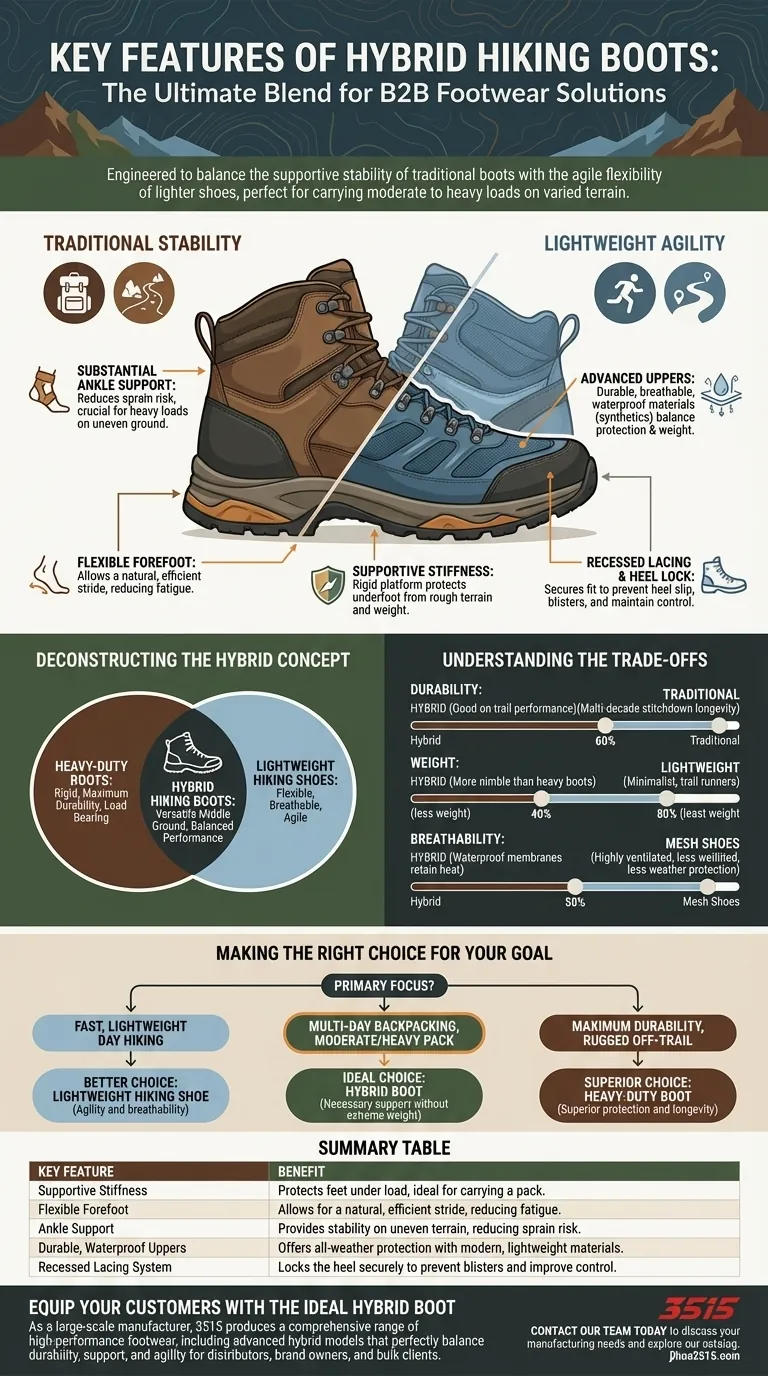
The key features of hybrid hiking boots are designed to blend the supportive, load-bearing characteristics of a traditional boot with the agile feel of a lighter shoe. They provide substantial ankle support and stiffness for carrying weight but remain flexible enough for nimble movement. Key elements include recessed lacing for a secure heel lock, durable yet breathable waterproof uppers, and compatibility with accessories like gaiters.
A hybrid hiking boot is engineered to solve a fundamental conflict: the need for load-bearing stability without sacrificing the lightweight flexibility required for nimble movement on varied terrain. It occupies a critical middle ground between heavy-duty backpacking boots and minimalist hiking shoes.
Deconstructing the "Hybrid" Concept
To understand hybrid boots, it's best to see them as a deliberate fusion of features from two distinct categories: heavy-duty backpacking boots and lightweight hiking shoes. They borrow the best attributes from each to create a versatile solution.
The Core Duality: Stiffness and Flexibility
Traditional heavy boots use hard, durable soles and sometimes internal shanks to create a rigid platform. This is excellent for carrying a heavy pack over rough terrain, as it protects your foot.
Hybrid boots retain much of this supportive stiffness underfoot but build in more flexibility, particularly in the forefoot. This allows for a more natural and efficient stride, reducing fatigue.
Ankle Support for Heavy Loads
A defining feature of any serious boot is its height, which typically rises several inches above the ankle. This provides crucial support and stability on uneven ground, reducing the risk of sprains.
The hybrid model fully adopts this principle, ensuring you have the necessary support for a backpack, a feature often absent in lower-cut hiking shoes.
Advanced Uppers: Protection Without Weight
Heavy-duty boots often rely on thick, one-piece leather uppers for maximum durability. Lightweight hikers use synthetic fabrics and mesh for breathability and low weight.
Hybrid boots find a middle ground. They use modern synthetic materials that are tough enough to resist thorns and abrasion but are lighter than full-grain leather. These uppers almost always incorporate a breathable, waterproof membrane.
Securing the Fit for Performance
A boot is only effective if it fits securely. The hybrid design often includes specific features to achieve this.
Recessed lace hooks help lock the heel into the back of the boot. This prevents your foot from sliding forward on descents and is critical for avoiding blisters and maintaining control. Compatibility with gaiters further signals that these boots are designed for serious, all-condition use.
Understanding the Trade-offs: The Hybrid Compromise
While hybrids offer great versatility, they are a product of compromise. Understanding their limitations is key to determining if they are right for you.
Durability vs. Traditional Boots
A hybrid's lighter, synthetic materials may not offer the same multi-decade lifespan as a traditional, stitchdown leather boot. They prioritize on-trail performance over ultimate, recraftable longevity.
Weight vs. Lightweight Hikers
Though more nimble than their heavy-duty counterparts, hybrid boots are still heavier and bulkier than a true lightweight hiking shoe or trail runner. On very long, fast-paced hikes with a light pack, this extra weight can become noticeable.
Breathability vs. Mesh Shoes
The waterproof membranes and durable upper materials required for protection will always retain more heat than the highly ventilated mesh uppers of a day-hiking shoe. This is a necessary trade-off for all-weather capability.
Making the Right Choice for Your Goal
Selecting the correct footwear category depends entirely on your intended use.
- If your primary focus is multi-day backpacking with a moderate to heavy pack: The hybrid boot is likely your ideal choice, offering the necessary support without the extreme weight of a traditional boot.
- If your primary focus is fast, lightweight day hiking on established trails: You may be better served by a dedicated lightweight hiking shoe that prioritizes agility and breathability above all else.
- If your primary focus is maximum durability for rugged, off-trail use: A heavy-duty, full-leather boot provides superior protection and longevity, despite its weight penalty.
Choosing the right footwear begins with a clear understanding of the balance between protection, support, and weight.
Summary Table:
| Key Feature | Benefit |
|---|---|
| Supportive Stiffness | Protects feet under load, ideal for carrying a pack. |
| Flexible Forefoot | Allows for a natural, efficient stride, reducing fatigue. |
| Ankle Support | Provides stability on uneven terrain, reducing sprain risk. |
| Durable, Waterproof Uppers | Offers all-weather protection with modern, lightweight materials. |
| Recessed Lacing System | Locks the heel securely to prevent blisters and improve control. |
Ready to equip your customers with the ideal hybrid hiking boot?
As a large-scale manufacturer, 3515 produces a comprehensive range of high-performance footwear for distributors, brand owners, and bulk clients. Our production capabilities encompass all types of shoes and boots, including advanced hybrid models that perfectly balance durability, support, and agility.
We can help you deliver the right product for your market. Contact our team today to discuss your manufacturing needs and explore our catalog.
Visual Guide
Related Products
- Wholesale High-Traction Camo Boots - Custom Manufacturer for Brands
- Durable Rubber Sole Outdoor Shoes Wholesale & Custom Manufacturing
- Durable Spiked Camouflage Boots Wholesale & Factory Production
- Durable High-Ankle Tactical Boots Wholesale Manufacturer for Custom & Bulk Orders
- Wholesale Tactical Boots High-Traction & Reflective for Bulk & Brand Orders
People Also Ask
- What are the key features of the new line of camo boots? Built for Extreme Cold & Rugged Terrain
- Are camo boots necessary for hunting success? Prioritize Performance Over Pattern
- What is the technical logic behind using closed-eye testing for tactical boots? Unlocking Peak Footwear Stability
- How does the Rank Score Test identify the primary causes of premature failure in tactical and work boots? Key Insights
- What shoes to wear for a security job? Durable, Protective Footwear for Long Shifts