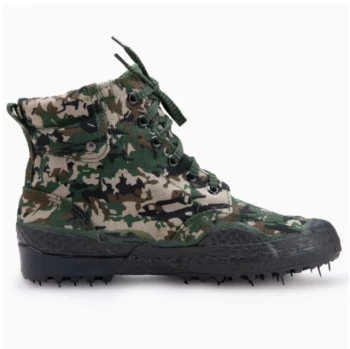
The defining features of jungle boots for hiking are their lightweight construction, aggressive tread for mud, and a design philosophy centered on drainage rather than waterproofing. Unlike traditional hiking boots that try to keep water out, jungle boots are engineered to let water enter and exit quickly, allowing them to dry fast in perpetually wet, humid conditions.
The core insight is that jungle boots are a specialized tool, not a general-purpose hiking solution. Their unique drainage-focused design makes them exceptional in hot and swampy environments but presents significant trade-offs in temperate, cold, or rocky terrains where traditional hiking boots excel.
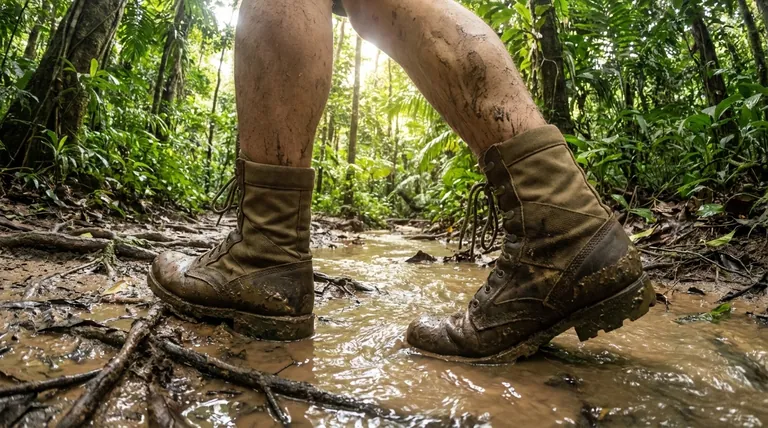
The Core Philosophy: Drainage Over Waterproofing
The most critical concept to understand about jungle boots is their intentional lack of waterproofing. This isn't a flaw; it's their primary design feature, born from the reality of jungle environments.
Designed for Saturation
In extremely humid or swampy conditions, keeping feet dry from external water is nearly impossible. Jungle boots embrace this reality. They are built with materials like canvas and feature drainage vents to allow water to flow in and, more importantly, out.
The Importance of Quick Drying
The main goal is to prevent your feet from being perpetually waterlogged, which can lead to trench foot and other issues. By using non-absorbent materials and drainage ports, the boot and your socks can begin to dry as you walk, even in high humidity.
Superior Breathability
In hot climates, waterproof boots trap sweat, effectively soaking your feet from the inside. The breathable uppers of jungle boots allow moisture and heat to escape, which is critical for comfort and foot health in tropical environments.
Key Anatomical Features
While drainage is the guiding principle, the physical construction of jungle boots is tailored for stability and performance in their intended environment.
Lightweight Construction
Jungle boots typically use a combination of leather on the lower sections for durability and nylon or canvas for the uppers. This significantly reduces weight compared to all-leather hiking boots, decreasing fatigue on long treks.
Aggressive Outsole Tread
The classic "Panama" sole features deep, wide-spaced lugs. This aggressive pattern is designed to provide maximum grip in deep mud and, just as importantly, to shed that mud quickly so the tread remains effective.
High Ankle Support
Originating as military footwear, jungle boots provide excellent ankle support. This feature is vital for maintaining stability when navigating slippery, uneven terrain like muddy slopes, roots, and creek beds.
Understanding the Trade-offs: Jungle Boots vs. Traditional Hikers
Choosing a jungle boot for the wrong environment can be a significant mistake. Their specialized nature comes with clear disadvantages outside of their niche.
When Waterproofing is Superior
In temperate or cold climates where you might encounter occasional streams, puddles, or snow, a waterproof boot is far more effective. It keeps your feet warm and dry, whereas a jungle boot would immediately let in cold water.
The Comfort and Cushioning Gap
Modern hiking boots often feature advanced EVA midsoles that provide substantial cushioning for comfort on long-distance treks, especially on hard-packed or rocky trails. Jungle boots are typically stiffer and less cushioned, which can lead to foot fatigue on such surfaces.
Durability on Rocky Terrain
While durable in mud and vegetation, the canvas or nylon uppers of a jungle boot are more susceptible to abrasion and tearing on sharp, rocky terrain compared to the full-grain leather construction of many traditional backpacking boots.
Making the Right Choice for Your Hike
To select the correct footwear, you must first assess your most common hiking environment. The boot is a tool, and you must match the tool to the task.
- If your primary focus is hiking in hot, humid, and constantly wet conditions: The jungle boot's superior drainage and breathability make it an ideal choice.
- If your primary focus is hiking in temperate climates with occasional water crossings: A modern, waterproof hiking boot will provide better overall protection and comfort.
- If your primary focus is long-distance backpacking on varied or rocky trails: A dedicated backpacking boot with superior cushioning and robust protection is the safer and more comfortable option.
- If your primary focus is fast and light day hiking on well-maintained trails: A low-cut hiking shoe or trail runner will likely offer the best balance of weight and comfort.
Ultimately, choosing the right footwear begins with an honest assessment of your environment, not just the features of the boot itself.
Summary Table:
| Key Feature | Purpose & Benefit |
|---|---|
| Drainage Vents | Allows water to flow in and out, preventing waterlogged feet and trench foot. |
| Aggressive 'Panama' Sole | Provides superior grip in deep mud and sheds mud quickly. |
| Lightweight Canvas/Nylon | Reduces fatigue and enhances breathability in hot, humid climates. |
| High Ankle Support | Offers stability on slippery, uneven jungle terrain. |
Need Durable, High-Performance Jungle Boots for Your Customers?
As a large-scale manufacturer, 3515 produces a comprehensive range of high-quality footwear tailored for the demands of distributors, brand owners, and bulk clients. Our production capabilities encompass all types of specialized boots, including jungle boots built with the precise features detailed above.
We can help you equip your customers with the right gear for their adventures. Contact us today to discuss your specific needs and explore our manufacturing solutions.
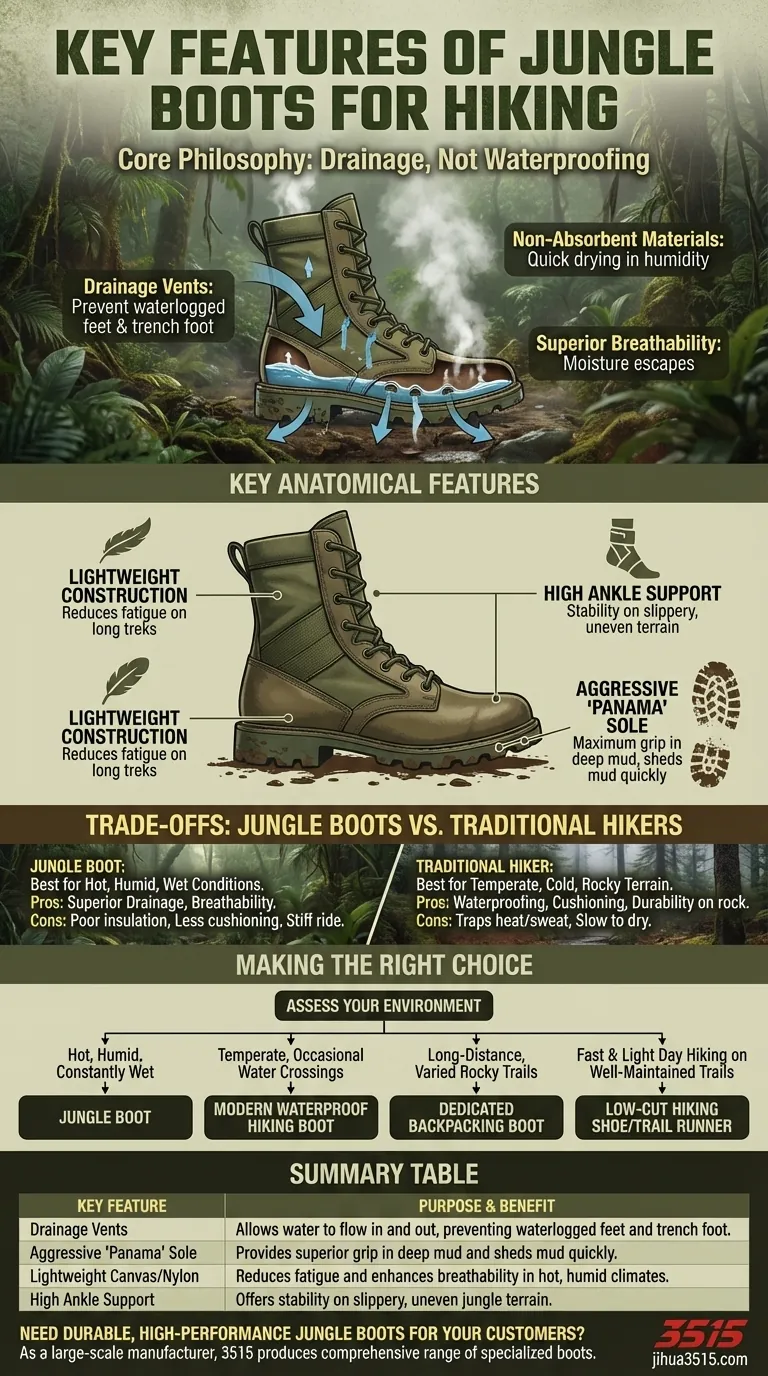
Visual Guide
Related Products
- Wholesale Lightweight Tactical Boots Custom Manufacturer for Desert & Combat Use
- Durable Spiked Camouflage Boots Wholesale & Factory Production
- Wholesale High-Traction Camo Boots - Custom Manufacturer for Brands
- Durable Leather High-Ankle Tactical Boots for Wholesale & Custom Manufacturing
- Durable High-Ankle Tactical Boots Wholesale Manufacturer for Custom & Bulk Orders
People Also Ask
- What are the common types of combat boots? Find the Right Boot for Your Mission
- What specialized protections do tactical boots offer? Maximize Endurance with High-Performance Footwear
- What are the different types of tactical boots available? Find the Right Boot for Your Mission
- How is the compatibility of polymer materials demonstrated in smart footwear? Enhancing Tactical & Training Performance
- What are the main construction similarities between tactical boots and tactical sneakers? Built for Performance & Durability