
At their core, forestry boots are a highly specialized category of personal protective equipment (PPE) defined by their resistance to chainsaw cuts. Key features include certified cut protection, steel or composite safety toes, aggressive Vibram soles for extreme terrain, GORE-TEX waterproofing, and integrated climate control systems for all-day comfort and safety.
The critical distinction is that a standard work boot protects you from the environment, while a true forestry boot is specifically engineered to protect you from the unique and severe hazards of operating a chainsaw.
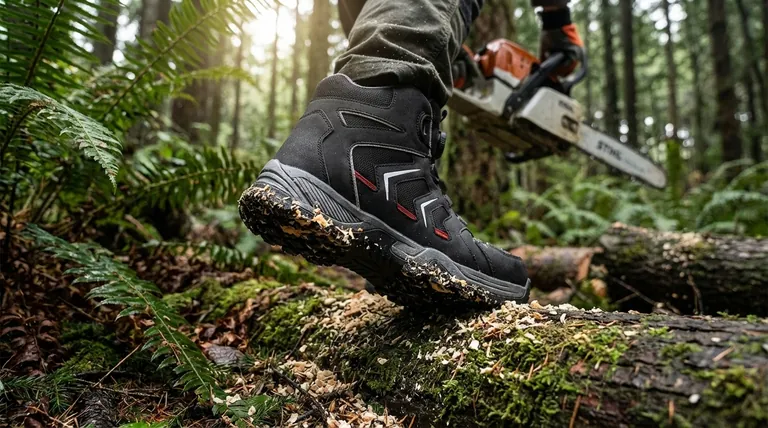
Deconstructing the Core Features
To understand why forestry boots are essential for arborists and loggers, we must examine how each component addresses a specific, high-stakes risk found in the field.
Chainsaw Cut Protection: The Defining Feature
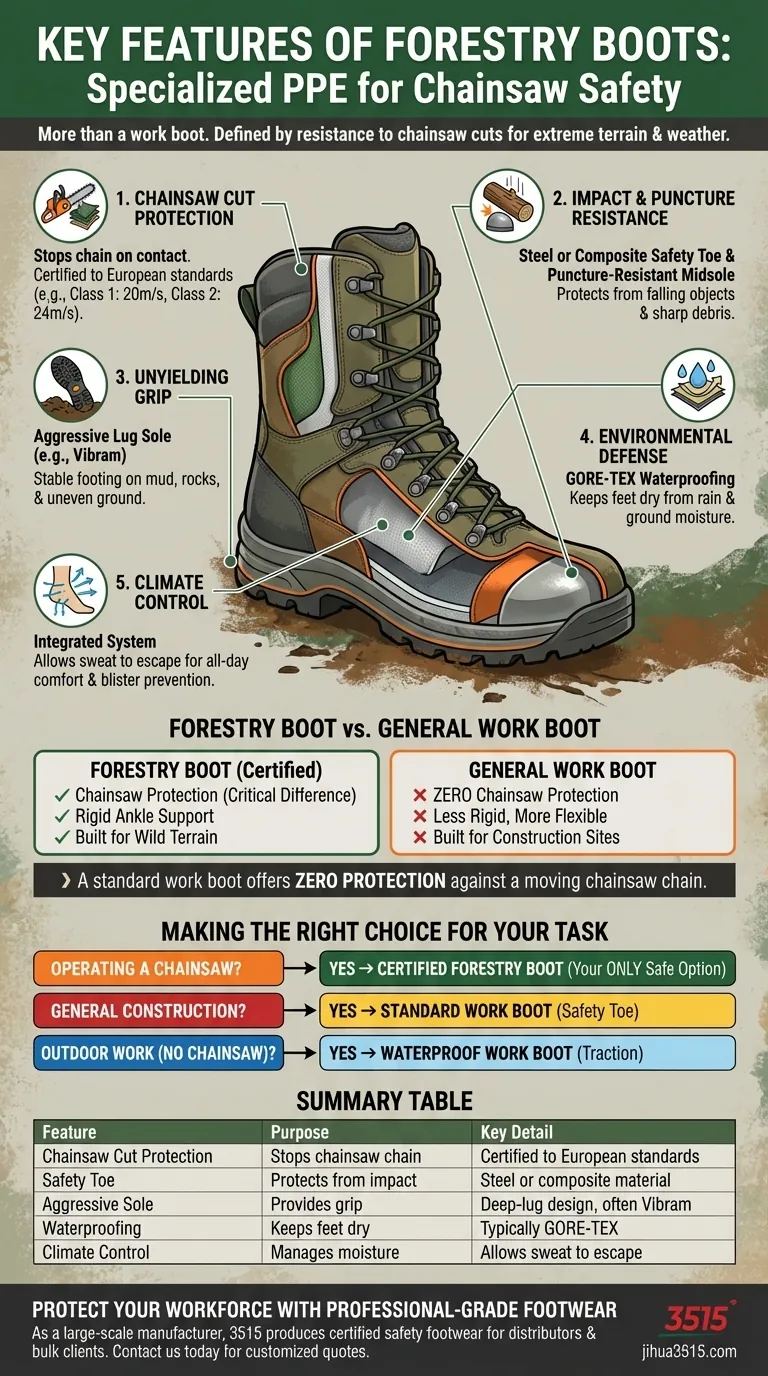
The single most important feature is certified cut protection. This is not simply thick leather; it involves layers of specialized fabric designed to clog the sprocket of a chainsaw on contact, stopping the chain.
These boots are rated according to European standards, such as Class 1 (protecting against chain speeds of 20 m/s) and Class 2 (24 m/s), which directly correspond to the power of the equipment being used.
Impact and Puncture Resistance
Like other heavy-duty work boots, forestry boots incorporate steel or composite safety toe caps. This protects the wearer from the impact of falling logs, tools, and other heavy objects.
They also feature puncture-resistant midsoles to guard against sharp sticks, rocks, or debris on the forest floor.
Unyielding Grip: The Role of the Sole
Forestry work occurs on unpredictable and often treacherous ground. To counter this, these boots feature deep, aggressive lug soles, often made by Vibram, a brand renowned for its durable, high-traction rubber compounds.
This design ensures stable footing on mud, wet leaves, rocks, and uneven terrain, preventing slips and falls that could be catastrophic when operating machinery.
Environmental Defense: Waterproofing and Climate Control
Keeping feet dry is critical for both comfort and safety over a long workday. A GORE-TEX membrane provides reliable waterproofing to keep rain and ground moisture out.
Simultaneously, a Climate Control System allows moisture and sweat from inside the boot to escape, keeping the foot dry and preventing the blisters and discomfort that can lead to distraction and accidents.
Forestry Boots vs. General Work Boots
While a heavy-duty work boot offers significant protection, it is crucial to understand why it is not a substitute for a certified forestry boot in a logging environment.
The Critical Difference in Protection
A standard work boot, even a steel-toed one, offers zero protection against a moving chainsaw chain. The leather and even the steel toe can be cut through instantly.
Only boots with the layered, cut-resistant fabric and the appropriate class rating are designed to mitigate this specific risk.
Ankle Support and Rigidity
Both boot types are high-cut to provide ankle support and protect against abrasions. However, the construction of a forestry boot is often far more rigid due to the added layers of protective material.
This rigidity is a necessary trade-off for safety, providing a stable platform and guarding against twists on uneven ground, but it makes them less flexible than a typical construction boot.
Built for Different Hazards
General work boots are designed for hazards like falling objects on a construction site, electrical risks, or slippery factory floors.
Forestry boots are engineered for a wilder, more dynamic environment where the primary threats are a powerful cutting tool and treacherous, natural terrain.
Making the Right Choice for Your Task
Selecting the correct footwear is a non-negotiable safety decision. Your choice must be dictated by the specific tasks you will be performing.
- If your primary focus is operating a chainsaw or working in active logging: A certified forestry boot with the appropriate cut-protection class is your only safe and acceptable option.
- If your primary focus is general construction or factory work: A standard heavy-duty work boot with a safety toe, non-slip sole, and any other required features (e.g., electrical hazard rating) is sufficient.
- If your primary focus is outdoor work without chainsaw risk: A high-quality waterproof work boot with excellent traction and ankle support is appropriate, but it must not be used for chainsaw operation.
Ultimately, choosing the right boot is not just about comfort; it is a critical decision that directly impacts your personal safety on the job.
Summary Table:
| Feature | Purpose | Key Detail |
|---|---|---|
| Chainsaw Cut Protection | Stops chainsaw chain on contact | Certified to European standards (e.g., Class 1, Class 2) |
| Safety Toe | Protects from impact of falling objects | Steel or composite material |
| Aggressive Sole | Provides grip on treacherous terrain | Deep-lug design, often by Vibram |
| Waterproofing | Keeps feet dry in wet conditions | Typically features a GORE-TEX membrane |
| Climate Control | Manages moisture for all-day comfort | Allows sweat to escape, preventing blisters |
Protect Your Workforce with Professional-Grade Forestry Boots
As a large-scale manufacturer, 3515 produces a comprehensive range of certified safety footwear for distributors, brand owners, and bulk clients. Our production capabilities encompass all types of specialized boots, including forestry boots engineered with the highest standards of cut resistance, durability, and comfort.
We ensure your team has the essential PPE they need to work safely and efficiently in the most demanding environments. Contact us today to discuss your specific requirements and receive a customized quote.
Visual Guide
Related Products
- High Performance Fire-Retardant Waterproof Safety Boots
- Wholesale Lightweight Tactical Boots Custom Manufacturer for Desert & Combat Use
- Durable Military Combat Boots with Water Drainage for Wholesale & OEM
- Durable Leather Work Boots for Wholesale & Custom Manufacturing
- Durable Leather Work Boots for Wholesale & Custom OEM Manufacturing
People Also Ask
- Why are waterproof safety boots recommended for certain work environments? Essential Protection for Wet & Hazardous Jobs
- What roles do 3D vision systems and industrial robots play in the manufacturing of fire safety boots? Smart Automation
- What are the drawbacks of waterproof boots? The Breathability vs. Protection Trade-Off
- What's the difference between waterproof and water-resistant boots? Choose the Right Footwear for Your Environment
- What is the difference between waterproof, water-resistant, and water-repellent boots? Choose the Right Protection for Your Feet


















