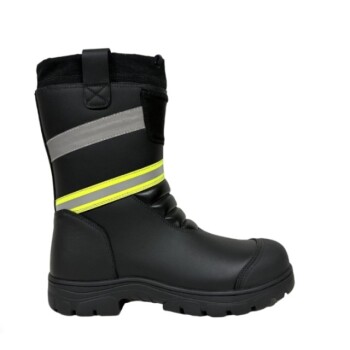
At their core, EMS boots are a highly specialized category of safety footwear engineered for the unique hazards faced by emergency medical professionals. The two most critical and defining features are certified puncture-resistant soles to protect against sharp objects at accident scenes and a bloodborne pathogen barrier to shield the wearer from hazardous fluids and chemicals.
EMS boots are not simply durable work boots; they are a critical piece of Personal Protective Equipment (PPE). They are designed as a complete system to provide protection, mobility, and support in the unpredictable and often dangerous environments of emergency response.

The Core Mandate: Protection Above All Else
The primary function of an EMS boot is to serve as a barrier between you and the scene. This goes far beyond the requirements of a typical work boot.
The Bloodborne Pathogen Barrier
This is arguably the most important feature distinguishing EMS boots from other types.
This specialized moisture-proof membrane prevents dangerous fluids, such as blood, and various chemicals from seeping through the boot's material. It is essential for protecting responders from exposure and contamination.
Puncture-Resistant Soles
Accident scenes are littered with unpredictable hazards like broken glass, metal shards, and other sharp debris.
A puncture-resistant plate, often made of a composite material, is embedded in the midsole to prevent these objects from penetrating the bottom of the boot and injuring your foot.
Safety Toe Construction
Protection from falling or rolling objects, such as medical equipment or vehicle wreckage, is crucial.
Most EMS boots feature a safety toe, which can be made of steel, aluminum, or lighter-weight composite materials. This reinforces the front of the boot to prevent crushing injuries.
Designed for the Demands of the Job
Beyond pure protection, EMS boots are built for the physical realities of long shifts that require constant movement, often under extreme pressure.
Agility and Secure Traction
First responders must move quickly and confidently over uncertain terrain, from wet asphalt to uneven ground.
The outsoles feature a deep, multi-directional lug pattern for superior grip and slip resistance, ensuring stable footing when every second counts.
Ankle Support and Stability
Lifting patients, carrying heavy gear, and navigating obstacles put immense strain on the ankles.
EMS boots typically have a height of 6 to 8 inches, providing essential support to prevent sprains and twists. This construction is vital for maintaining stability while in motion.
Durable, Easy-to-Clean Materials
The outer boot is typically constructed from full-grain leather or durable synthetic fabrics.
These materials are chosen for their ability to withstand abrasion and resist moisture while also being relatively easy to wipe down and decontaminate after a call.
Understanding the Trade-offs: EMS vs. Other Boots
Not all protective footwear is created equal. Understanding the differences is key to ensuring you have the right tool for the job.
EMS vs. Standard Work Boots
A general construction or work boot offers durability and often a safety toe, which is a good start.
However, they almost always lack a certified bloodborne pathogen barrier, leaving you vulnerable to the specific biological hazards of an emergency scene.
EMS vs. Tactical Boots
Tactical boots, favored by law enforcement, prioritize light weight and flexibility for agility and patrolling.
While excellent for mobility, they may not offer the same level of puncture resistance or the robust safety toe required for environments with heavy rescue equipment or vehicle wreckage.
Making the Right Choice for Your Role
Selecting the right boot requires matching its features to the specific demands of your day-to-day responsibilities.
- If your primary focus is responding to high-risk accident scenes: Prioritize a certified bloodborne pathogen barrier and a robust puncture-resistant sole above all else.
- If your primary focus involves frequent movement and long shifts: Look for a lightweight composite safety toe and a design known for its supportive, athletic-style cushioning.
- If you work in a hybrid role requiring station duties and response: Seek a balance of protection and comfort, ensuring the boot is easy to get on and off quickly, such as with a side-zipper.
Your boots are the foundation that carries you through the most challenging situations, so choosing the right protection is a critical investment in your own safety.
Summary Table:
| Key Feature | Purpose |
|---|---|
| Bloodborne Pathogen Barrier | Protects against hazardous fluids and chemicals. |
| Puncture-Resistant Sole | Shields feet from sharp debris like glass and metal. |
| Safety Toe (Steel/Composite) | Prevents crushing injuries from falling objects. |
| Slip-Resistant Outsole | Provides secure traction on wet or uneven surfaces. |
| Ankle Support (6-8 inch height) | Ensures stability when lifting patients and moving quickly. |
| Durable, Easy-Clean Materials | Withstands abrasion and allows for easy decontamination. |
Ensure your team is equipped with the right protection. As a large-scale manufacturer, 3515 produces a comprehensive range of professional footwear, including EMS boots built to the highest safety standards for distributors, brand owners, and bulk clients. Our production capabilities encompass all types of specialized safety shoes and boots. Contact us today to discuss your specific needs and get a quote for reliable, high-performance footwear.
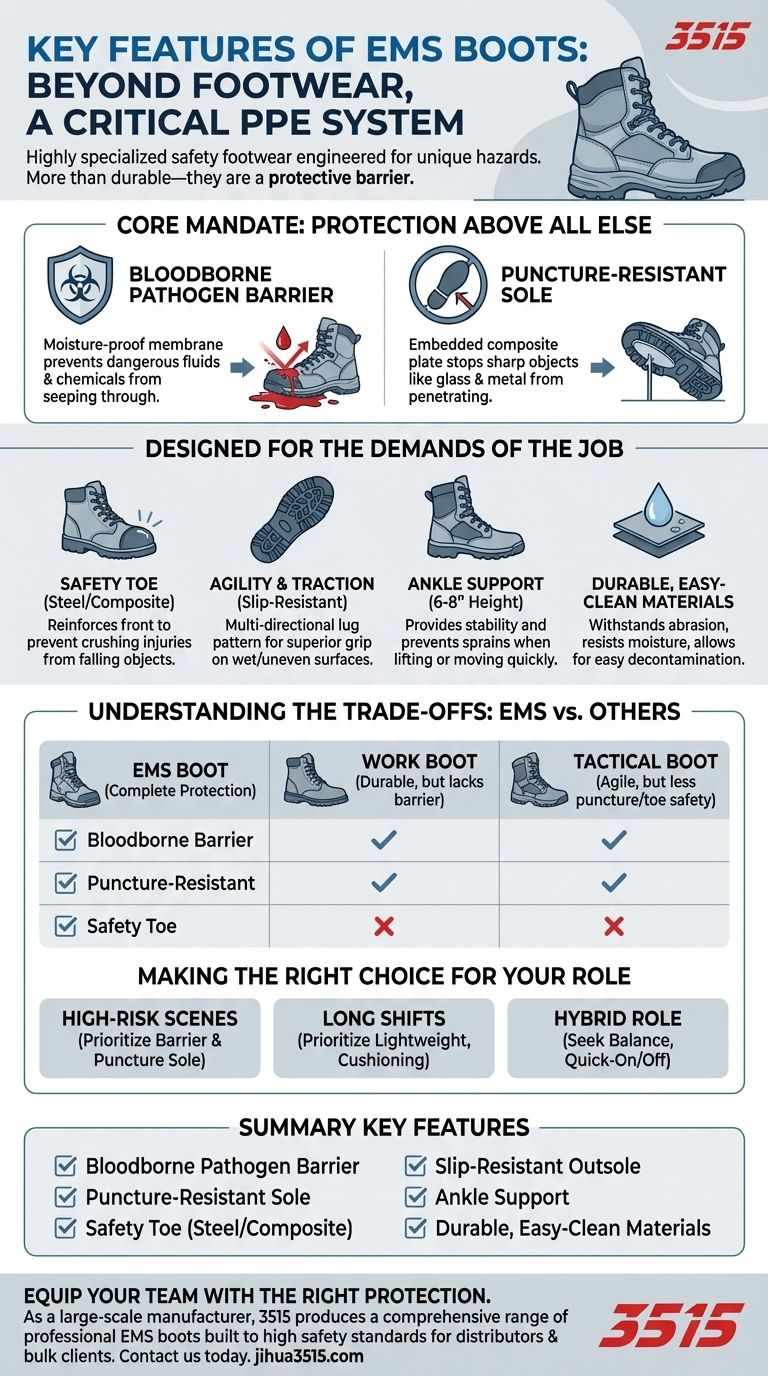
Visual Guide
Related Products
- Premium Wholesale Tactical Style Safety Shoes Boots with Quick Lacing
- High Performance Fire-Retardant Waterproof Safety Boots
- Premium Waterproof High-Cut Industrial Safety Boots for Wholesale and Bulk Orders
- Durable High-Ankle Tactical Boots for Wholesale & Custom Manufacturing
- Durable High-Ankle Tactical Boots Wholesale Manufacturer for Custom & Bulk Orders
People Also Ask
- How are gait analysis research findings applied to the functional design of safety shoes and tactical boots?
- How does anthropomorphic design influence material selection? Enhance Footwear Performance through Biological Alignment
- How do quality certification standards for safety shoes reduce perceived risk? Buy Online with Technical Certainty
- How can specialized footwear mitigate safety risks? High-Volume OEM/ODM Solutions since 1951
- Why is the synchronization of craftsmanship and UX development emphasized for bulk customization of safety shoes?