
Beyond simple strength, the defining characteristics of high-performance fabrics are their ability to manage moisture, regulate temperature, and provide environmental protection, all while maintaining exceptional durability and low weight. This unique combination allows gear to function as a second skin, enhancing the user's effectiveness and comfort in demanding conditions.
The best high-performance fabric isn't the strongest or the most waterproof; it's the one that achieves the optimal balance of competing properties—like breathability versus water resistance—for a specific activity and environment.
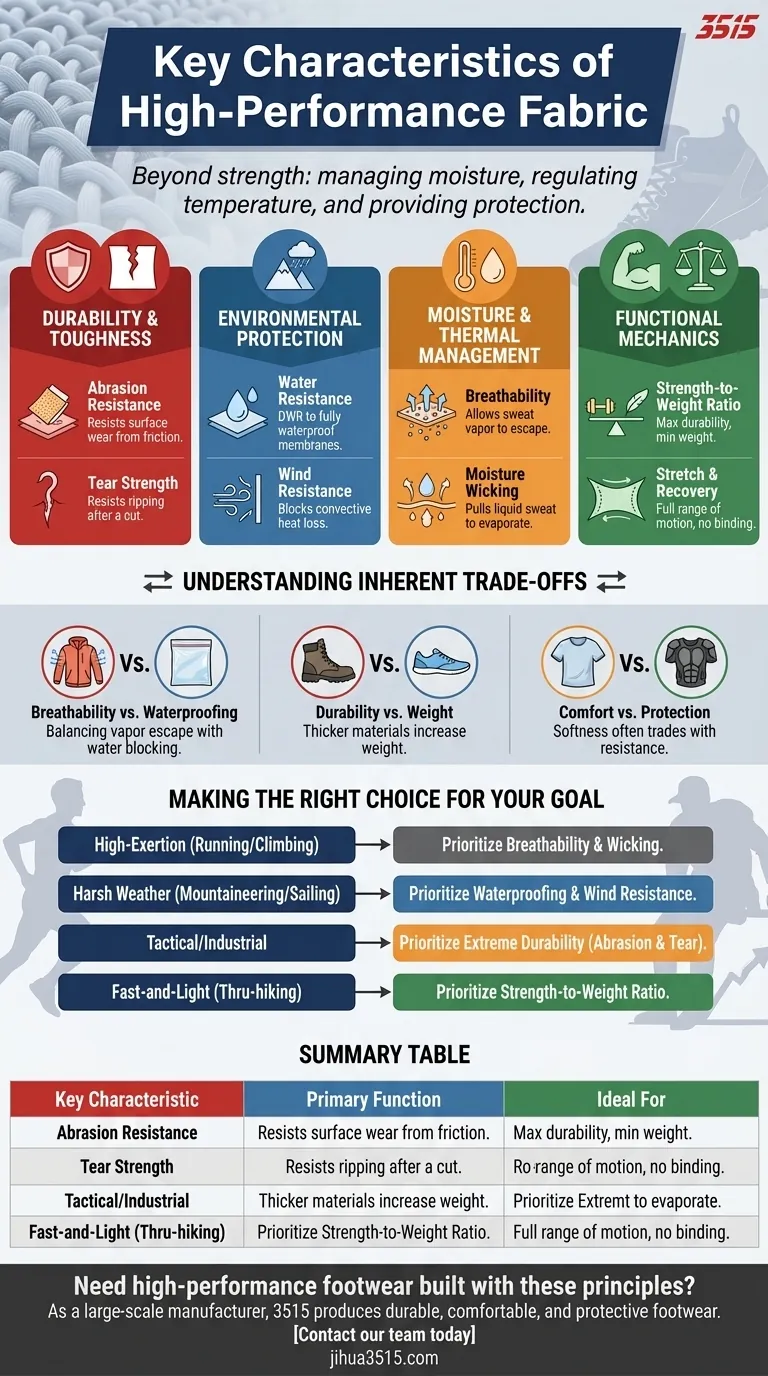
The Pillars of High-Performance Fabric
To truly understand what makes a fabric suitable for performance gear, we must look beyond a single feature and analyze how a system of properties works together. These characteristics define how the material interacts with both the user and the environment.
Durability and Toughness
This is the foundational characteristic for any gear expected to withstand harsh use. It’s not a single property, but a combination of factors.
Abrasion Resistance is the fabric's ability to resist surface wear from rubbing against rough surfaces. This is critical for areas like the shoulders and hips of a backpack, or the knees of tactical pants.
Tear Strength measures the fabric's resistance to ripping or tearing when a cut or puncture already exists. A high tear strength prevents small damages from becoming catastrophic failures in the field.
Environmental Protection
A primary role of performance apparel is to act as a shield between the user and the elements.
Water Resistance is the ability to prevent water from penetrating the fabric. This can range from water-repellent coatings (DWR) that shed light rain to fully waterproof membranes that block heavy, sustained downpours.
Wind Resistance is crucial for preventing convective heat loss. A fabric with a tight weave or a specialized membrane can block wind, which dramatically improves warmth and comfort in exposed conditions.
Moisture and Thermal Management
Managing the user's microclimate—the thin layer of air next to the skin—is arguably the most critical function for active use.
Breathability refers to a fabric's ability to allow water vapor (sweat) to escape. Without this, moisture gets trapped inside, leading to a clammy, cold feeling and significantly reduced performance.
Moisture Wicking is the process of pulling liquid sweat away from the skin and spreading it across the fabric's surface to evaporate quickly. This is essential for keeping the user dry from the inside.
Functional Mechanics
How the fabric feels and moves with the body directly impacts user effectiveness and comfort.
Strength-to-Weight Ratio is a key metric, especially for military and mountaineering applications. The goal is to achieve maximum durability with minimal weight penalty, reducing fatigue.
Stretch and Recovery allows for a full range of motion without the garment binding or restricting movement. This is often achieved by incorporating elastane fibers like Lycra or through a mechanical stretch in the weave itself.
Understanding the Inherent Trade-offs
There is no single "best" fabric because every design choice involves a compromise. Recognizing these trade-offs is the key to selecting the right material for the job.
Breathability vs. Waterproofing
This is the classic engineering challenge in outerwear. A completely waterproof material, like a plastic bag, has zero breathability. Advanced membranes create pores large enough for water vapor to escape but too small for liquid water droplets to enter, constantly balancing these two opposing needs.
Durability vs. Weight
Increasing durability almost always means using thicker yarns or denser weaves, which adds weight. Ultralight gear gains its performance by sacrificing some abrasion resistance and tear strength, making it less suitable for high-wear applications.
Comfort vs. Protection
Fabrics that offer the most protection, like rigid, heavy-duty nylons, are often stiff and less comfortable next to the skin. Softer, more comfortable materials typically offer less resistance to abrasion and weather.
Making the Right Choice for Your Goal
Your specific application dictates which characteristics should be prioritized.
- If your primary focus is high-exertion activity (running, climbing): Prioritize exceptional breathability and moisture-wicking to manage sweat and prevent overheating.
- If your primary focus is protection in harsh, wet weather (mountaineering, sailing): You need maximum waterproofing and wind resistance, accepting a potential trade-off in breathability.
- If your primary focus is tactical or industrial use (military, construction): Emphasize extreme durability, focusing on high abrasion resistance and tear strength above all else.
- If your primary focus is fast-and-light travel (thru-hiking, backpacking): The key metric is a superior strength-to-weight ratio, balancing durability with the need to minimize every gram.
Understanding these characteristics transforms your perspective, allowing you to choose gear not just for its features, but for its fundamental purpose.
Summary Table:
| Key Characteristic | Primary Function | Ideal For |
|---|---|---|
| Durability & Toughness | Resists abrasion and tearing | Tactical, industrial, high-wear use |
| Environmental Protection | Blocks water and wind | Mountaineering, sailing, harsh weather |
| Moisture & Thermal Management | Wicks sweat and allows vapor escape | Running, climbing, high-exertion activity |
| Functional Mechanics (Strength-to-Weight) | Maximizes durability with minimal weight | Fast-and-light travel, backpacking |
Need high-performance footwear built with these principles?
As a large-scale manufacturer, 3515 produces a comprehensive range of durable, comfortable, and protective footwear for distributors, brand owners, and bulk clients. Our expertise in balancing fabric characteristics ensures your gear meets the demands of any environment.
Contact our team today to discuss your custom footwear needs.
Visual Guide
Related Products
- High-Traction Suede Tactical Boots Wholesale & Custom Manufacturing
- Durable High-Traction Canvas Sneakers Wholesale & Custom Manufacturing
- Durable Leather High-Ankle Tactical Boots for Wholesale & Custom Manufacturing
- Wholesale Durable Camouflage Canvas Shoes with High-Traction Cleated Rubber Sole
- Wholesale Waterproof Tactical Boots Custom Suede & High-Traction Soles
People Also Ask
- Why is sequential analysis utilized to evaluate tactical boots? Master Dynamic Boot Development and Ergonomic Performance
- How does the material of tactical boots affect their performance? Choose the Right Material for Your Mission
- How do tactical boots differ from regular boots? Performance, Durability & Design Explained
- How do military uniforms and tactical boots impact the prediction of thermal risk? Essential Safety Insights
- What are the benefits of integrating FES and sEMG into tactical boots? Safety, Reliability & Field-Ready Performance














