
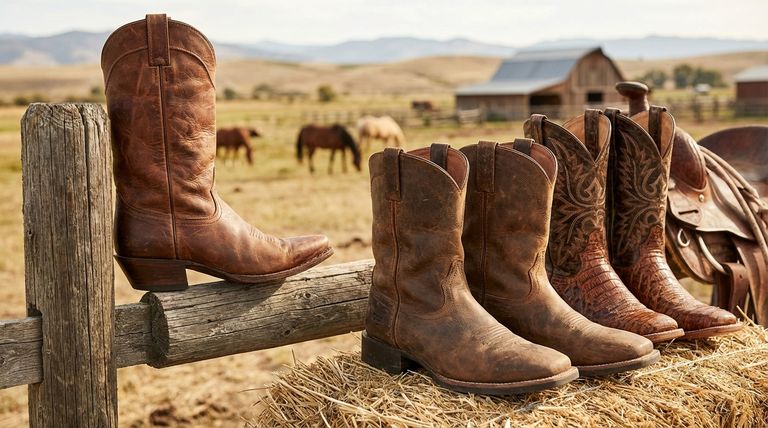
At their core, western boots are defined by a functional design originally engineered for horseback riding. Their most recognizable characteristics are a laceless, pull-on style with a high shaft, an angled heel of at least one inch, and a distinct toe shape, all traditionally crafted from durable leather.
The classic western boot is a masterclass in functional design. Every key feature—from the high heel to the smooth sole—evolved directly from the practical and safety-critical needs of a rider using a western saddle and stirrups.
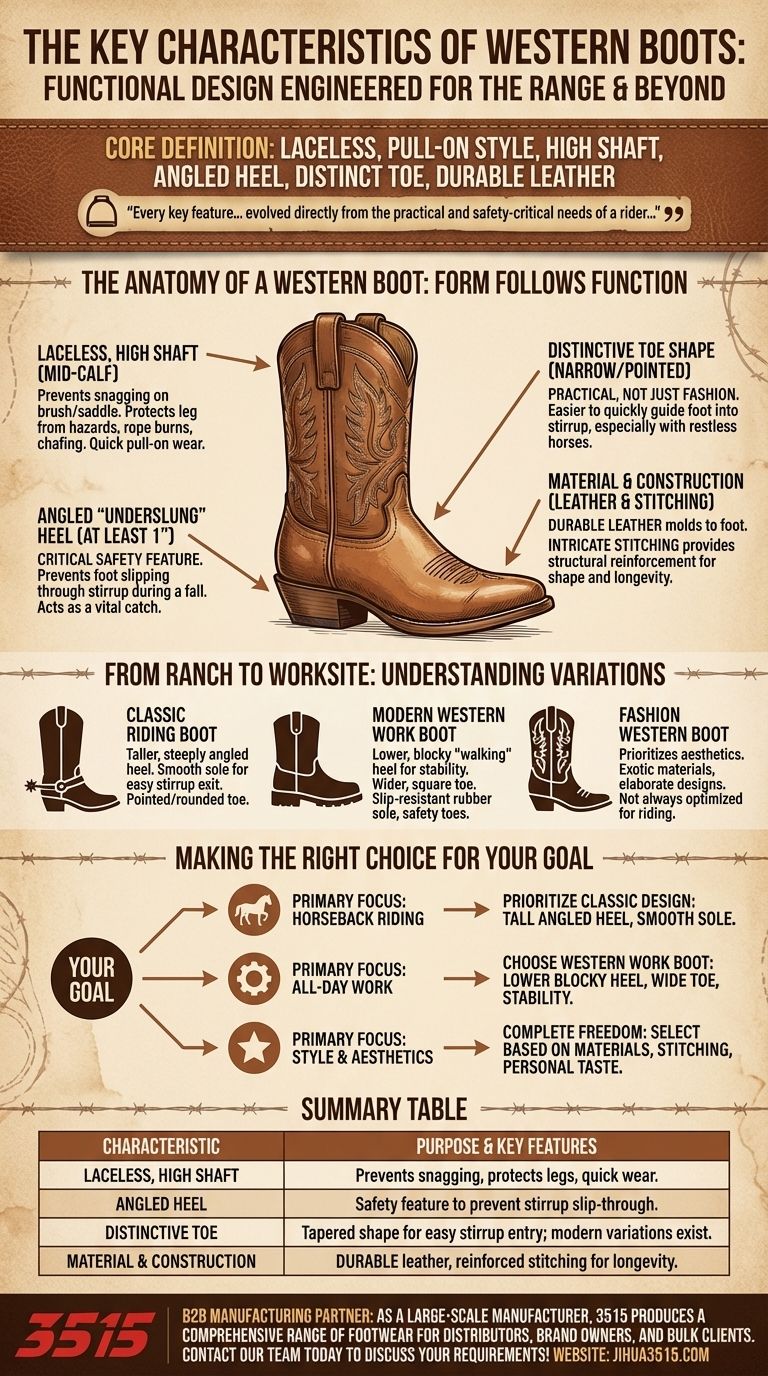
The Anatomy of a Western Boot: Form Follows Function
To understand a western boot, you must look at how each component serves a specific purpose. The design is not accidental; it is the result of centuries of refinement for performance and safety on the range.
The Laceless, High Shaft
The most immediate visual cue of a western boot is its lack of laces and tall shaft, which typically rises to at least mid-calf.
This design serves two primary functions: it prevents the boot from snagging on brush or saddle components, and it protects the rider's leg from trail hazards, rope burns, and chafing against the saddle. The pull-on style allows for quick and easy wear.
The Angled Heel
The heel is perhaps the most critical safety feature of a true riding boot. It is traditionally tall and angled forward, a design known as an "underslung" or "Cuban" heel.
This shape is engineered to prevent the rider's foot from accidentally slipping all the way through the stirrup. A foot caught in a stirrup during a fall is extremely dangerous, and the heel acts as a vital catch.
The Distinctive Toe Shape
Classic western boots feature a narrow, often pointed toe. This was not originally a fashion choice but a practical one.
A tapered toe makes it significantly easier for a rider to quickly guide their foot into the stirrup, especially when mounting a restless horse. While the pointed toe remains a classic, other shapes have since become popular for different uses.
Material and Construction
Durability is a non-negotiable trait. Western boots are overwhelmingly made from leather—ranging from common cowhide to exotic skins—because of its toughness and ability to mold to the wearer's foot.
The intricate stitching you often see is not just for decoration. It provides structural reinforcement, particularly around the ankle and up the shaft, helping the boot maintain its shape and withstand the rigors of ranch work.
From the Ranch to the Worksite: Understanding the Variations
While the classic design DNA remains, the western boot has evolved to meet modern needs, creating important distinctions between boots made for riding, work, and fashion.
The Classic Riding Boot
This style stays closest to the original design. It features a taller, more steeply angled heel and a smooth, often leather, sole to allow the foot to slide easily from the stirrup when needed. The toe is typically pointed or rounded.
The Modern Western Work Boot
As the boot moved from the saddle to the worksite, its design adapted for all-day comfort and safety on the ground.
These boots often feature a lower, blockier "walking" heel for better stability. The toe box is frequently wider and squared-off to give the toes more room. Many also incorporate features from traditional safety boots, like slip-resistant rubber soles and protective steel or composite toes.
The Fashion Western Boot
This category embraces the iconic silhouette but prioritizes aesthetics. While retaining the core shape, these boots may feature more exotic materials, elaborate stitching, and a wider variety of heel and toe shapes that are not always optimized for riding.
Making the Right Choice for Your Goal
Selecting the right western boot means matching its specific design features to your intended use.
- If your primary focus is horseback riding: Prioritize a classic design with a tall, angled heel and a smooth sole for optimal stirrup safety and function.
- If your primary focus is all-day work and walking: Choose a western work boot with a lower, blocky heel and a wider square or round toe for stability and comfort.
- If your primary focus is style and aesthetics: You have complete freedom to choose based on materials, stitching, and the iconic silhouette that best suits your personal taste.
Ultimately, the enduring appeal of the western boot lies in its authentic connection between purpose-built design and timeless style.
Summary Table:
| Characteristic | Purpose & Key Features |
|---|---|
| Laceless, High Shaft | Prevents snagging, protects legs from hazards, allows for quick wear. |
| Angled Heel | Safety feature to prevent foot from slipping through stirrups. |
| Distinctive Toe | Tapered shape for easy entry into stirrups; modern variations exist. |
| Material & Construction | Durable leather with reinforced stitching for shape and longevity. |
Looking for high-quality western boots tailored to your needs?
As a large-scale manufacturer, 3515 produces a comprehensive range of footwear for distributors, brand owners, and bulk clients. Our production capabilities encompass all types of western boots—from classic riding designs to modern work and fashion styles—ensuring durability, authentic construction, and style.
Let us help you find or create the perfect boot for your market. Contact our team today to discuss your requirements!
Visual Guide
Related Products
- Durable Goodyear Welt Leather Work Boots for Wholesale & Private Label
- High-Traction Suede Tactical Boots Wholesale & Custom Manufacturing
- Durable Leather Tactical Boots Wholesale & Custom Manufacturing for Brands
- Durable High-Ankle Tactical Boots for Wholesale & Custom Manufacturing
- Wholesale Safety Boots Manufacturer for Custom & Private Label Orders
People Also Ask
- What is the difference between full-grain and top-grain leather? Premium Material Guide for Boot Manufacturers
- What are the advantages of leather as an upper material for work boots? Unmatched Durability & Custom Comfort
- Why is it important to waterproof leather work boots? Protect Your Investment and Performance
- How should new leather work boots be broken in? A Guide to Comfort and Durability
- What are the advantages of leather uppers in work boots? Unmatched Durability & Protection
















