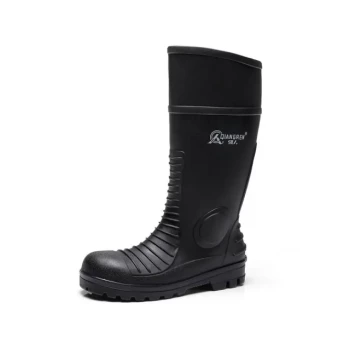
At its core, the durability of men's work shoes stems from the deliberate use of premium materials, robust construction methods, and job-specific reinforcements. Unlike standard footwear, every component is engineered with the primary goal of withstanding daily abuse in demanding environments while protecting the wearer.
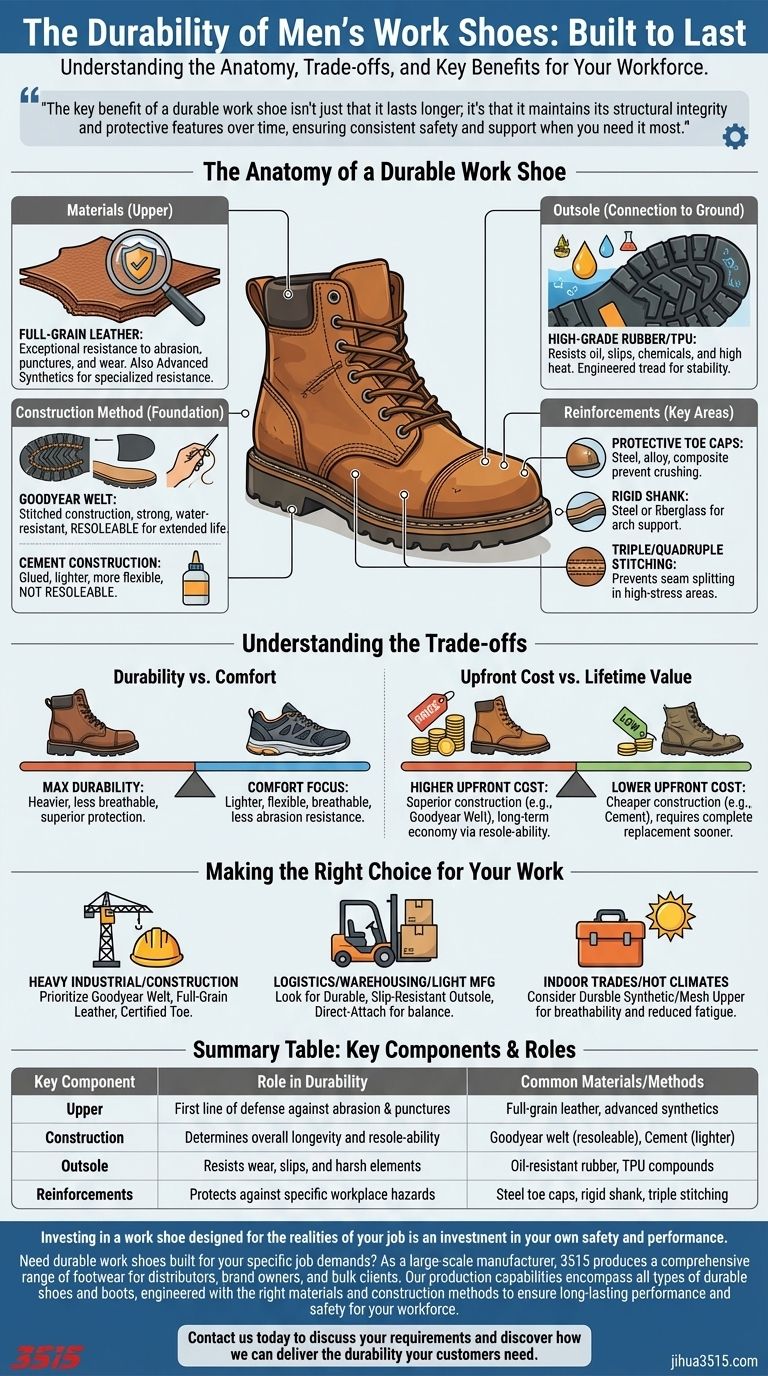
The key benefit of a durable work shoe isn't just that it lasts longer; it's that it maintains its structural integrity and protective features over time, ensuring consistent safety and support when you need it most.
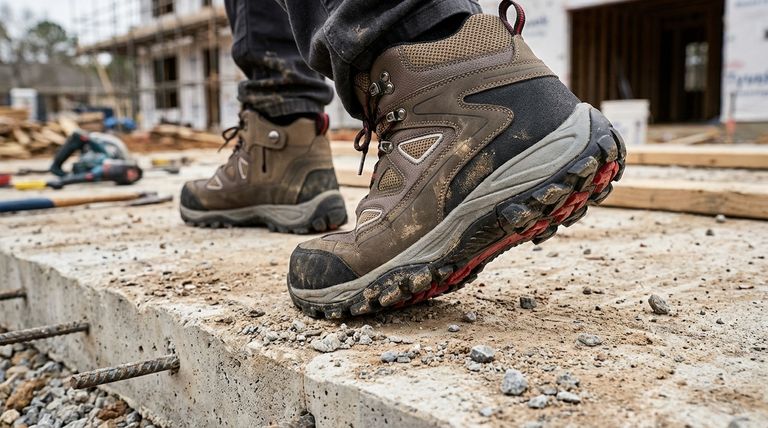
The Anatomy of a Durable Work Shoe
True durability is a system, not a single feature. It's the result of how high-quality components are chosen and assembled to resist wear, tear, and specific workplace hazards.
It Starts with the Materials
The primary material of the shoe's upper is the first line of defense. Full-grain leather is often considered the gold standard for its exceptional resistance to abrasion, punctures, and daily wear.
Synthetic materials and advanced textiles also play a role, offering lighter weight or specialized resistance to chemicals and water.
The Foundation: Construction Method
How the upper is attached to the sole is arguably the most critical factor in a shoe's longevity. The two most common methods have vastly different outcomes.
Goodyear welt construction is a time-tested method where a strip of leather (the welt) is stitched to both the upper and the sole. This creates an incredibly strong, water-resistant bond and allows the shoe to be resoled multiple times, dramatically extending its life.
Cement construction, where the sole is glued directly to the upper, is faster and cheaper. This results in a lighter, more flexible shoe, but the bond can break down over time and the shoe is typically not resoleable.
The Outsole: Your Connection to the Ground
The outsole must endure constant friction and exposure to harsh elements. Durable work shoes use high-grade rubber or TPU (Thermoplastic Polyurethane) compounds designed for specific properties.
These properties include resistance to oil, slips, chemicals, and high heat. The tread pattern is also engineered for stability and grip on uneven or slick surfaces.
Reinforcements That Matter
Beyond the main components, durability is enhanced by targeted reinforcements. Protective toe caps (steel, alloy, or composite) prevent crushing injuries.
A rigid shank, often made of steel or fiberglass, is embedded in the midsole to provide arch support and prevent the shoe from buckling. Finally, triple or quadruple stitching in high-stress areas prevents seams from splitting under strain.
Understanding the Trade-offs
Choosing the right work shoe involves balancing maximum durability with other essential factors. The most durable shoe is not always the best shoe for every job.
Durability vs. Comfort
The toughest materials, like thick leather, are often heavier and less breathable than alternatives like mesh. While a mesh work shoe offers superior flexibility and airflow for hot environments, it will not provide the same level of protection and abrasion resistance as a leather boot.
Upfront Cost vs. Lifetime Value
Shoes with superior construction, like a Goodyear welt, carry a higher initial price tag. However, their ability to be resoled can make them more economical in the long run compared to cheaper, cemented shoes that must be completely replaced.
Job-Specific Durability
Durability is not a universal concept. An ironworker's need for puncture resistance and heat protection is different from a warehouse worker's need for abrasion resistance from concrete floors. The most durable shoe is the one engineered to withstand the specific hazards you face every day.
Making the Right Choice for Your Work
Focus on the features that directly address the demands of your job.
- If your primary focus is heavy industrial or construction work: Prioritize Goodyear welt construction, full-grain leather uppers, and a certified protective toe.
- If your primary focus is logistics, warehousing, or light manufacturing: Look for a durable, slip-resistant outsole and consider direct-attach construction for a good balance of longevity and comfort.
- If your primary focus is indoor trades or work in hot climates: A shoe with a durable synthetic or mesh upper may provide "enough" durability while maximizing breathability and reducing fatigue.
Investing in a work shoe designed for the realities of your job is an investment in your own safety and performance.
Summary Table:
| Key Component | Role in Durability | Common Materials/Methods |
|---|---|---|
| Upper | First line of defense against abrasion & punctures | Full-grain leather, advanced synthetics |
| Construction | Determines overall longevity and resole-ability | Goodyear welt (resoleable), Cement (lighter) |
| Outsole | Resists wear, slips, and harsh elements | Oil-resistant rubber, TPU compounds |
| Reinforcements | Protects against specific workplace hazards | Steel toe caps, rigid shank, triple stitching |
Need durable work shoes built for your specific job demands?
As a large-scale manufacturer, 3515 produces a comprehensive range of footwear for distributors, brand owners, and bulk clients. Our production capabilities encompass all types of durable shoes and boots, engineered with the right materials and construction methods to ensure long-lasting performance and safety for your workforce.
Contact us today to discuss your requirements and discover how we can deliver the durability your customers need.
Visual Guide
Related Products
- Durable Canvas Work Shoes with Rubber Lug Sole | Wholesale Manufacturer
- Wholesale Leather Ankle Boots with Lug Soles for Custom Brand Manufacturing
- Durable Goodyear Welt Leather Work Boots for Wholesale & Private Label
- Durable Leather Work Boots for Wholesale & Custom Manufacturing
- Durable Leather Work Boots for Wholesale & Custom OEM Manufacturing
People Also Ask
- What are the properties of canvas as a shoe material? A Guide to Lightweight Comfort & Style
- Why is the selection of high-strength fabric materials necessary in the production of canvas shoes and training shoes?
- What types of jobs are canvas work boots suitable for? Ideal for Light-Duty, High-Mobility Roles
- Can canvas shoes be worn in rainy conditions? The Truth About Water Resistance
- What are the functional advantages of choosing rubber soles over leather soles for work boots? Superior Safety & Durability