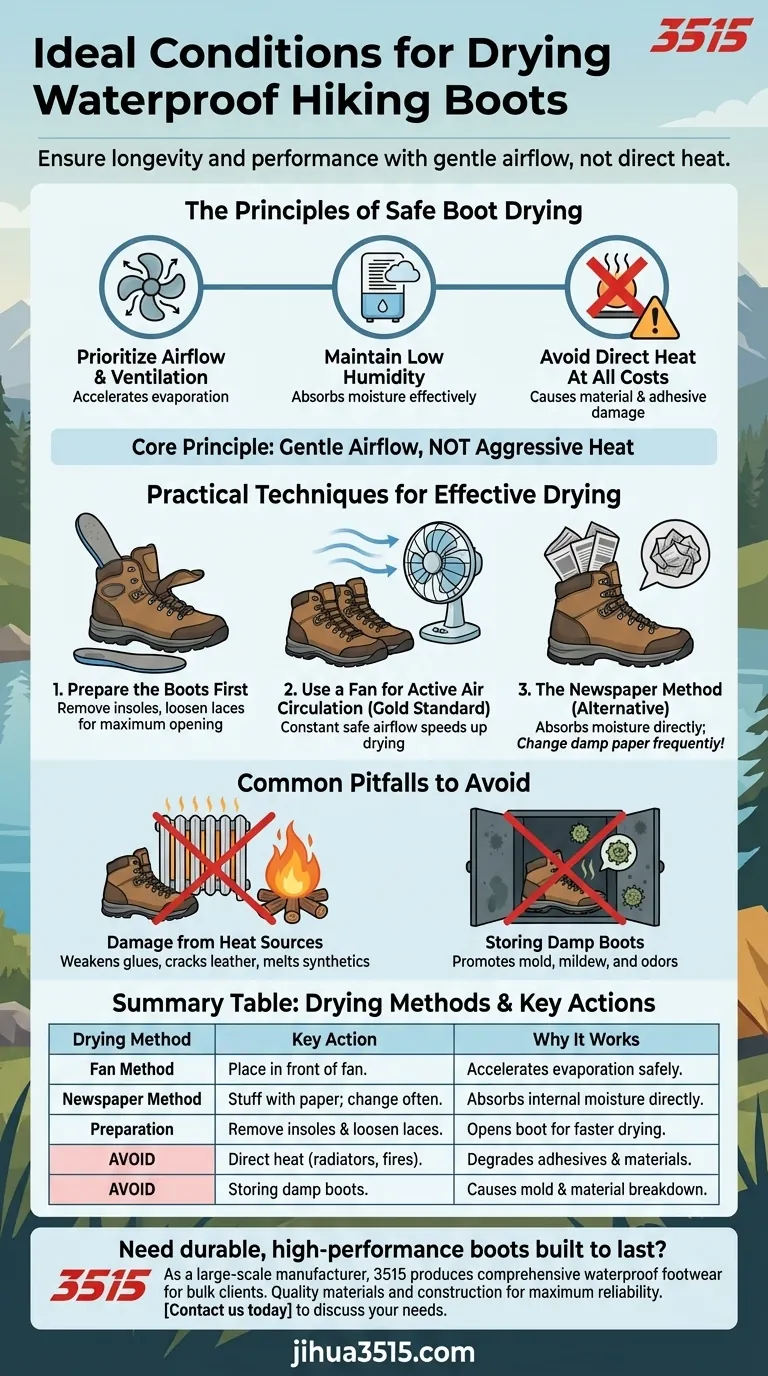
To dry waterproofed hiking boots effectively, place them in a well-ventilated area with low humidity and a stable, normal room temperature. The key is to use gentle airflow, not direct heat, to remove moisture. Preparing the boots by removing the insoles and loosening the laces will significantly speed up the process.
The core principle of drying waterproof boots is to remove moisture gently with airflow, not aggressively with heat. High heat is the enemy of modern hiking boots, as it degrades the adhesives and materials that ensure their structure and waterproof integrity.
The Principles of Safe Boot Drying
Properly drying your boots is a critical maintenance step that preserves their lifespan and performance. Understanding the "why" behind the ideal conditions helps prevent irreversible damage.
Prioritize Airflow and Ventilation
Moving air is the single most important factor in drying your boots. Good ventilation carries away the moist air evaporating from the boot's interior and exterior, allowing more moisture to be released.
Maintain Low Humidity
The surrounding air must be drier than the inside of your boot for evaporation to occur efficiently. A dry, low-humidity environment acts like a sponge, pulling moisture out of the boot's materials.
Avoid Direct Heat at All Costs
This is the most critical rule. External heat sources like the sun, a campfire, a radiator, or a hairdryer will cause significant damage. High heat weakens the glues and cements that hold the sole to the upper, leading to delamination. It can also cause leather to become brittle and crack prematurely.
Practical Techniques for Effective Drying
With the core principles in mind, you can use several techniques to dry your boots safely and efficiently.
Prepare the Boots First
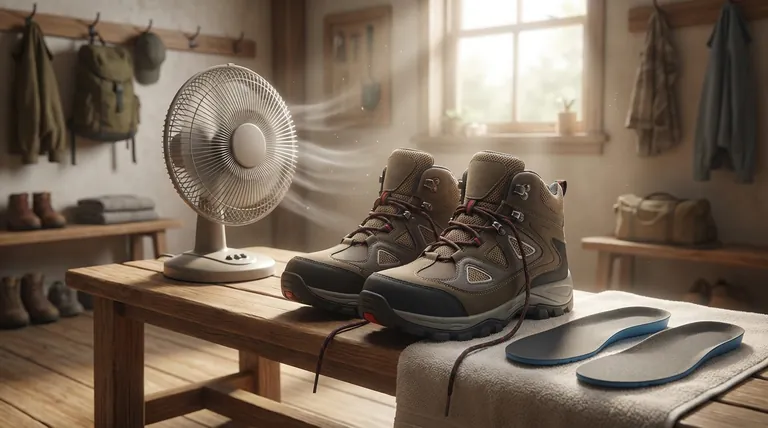
Before you do anything else, remove the insoles and pull the tongue forward to open the boot up as much as possible. Insoles are thick and hold a lot of moisture; drying them separately is essential for getting the boot's interior fully dry.
Use a Fan for Active Air Circulation
Placing your boots in front of a simple room fan is the most effective and safest method. The constant airflow dramatically accelerates evaporation without any risk of heat damage. This is the gold-standard technique.
The Newspaper Method
If you don't have a fan, stuffing your boots with crumpled newspaper is a classic, effective alternative. The paper absorbs moisture directly from the interior. For this to work well, you must change the newspaper every few hours as it becomes damp.
Common Pitfalls to Avoid
Mistakes made during the drying process are a primary cause of premature boot failure. Understanding these pitfalls is crucial for protecting your investment.
The Damage from Heat Sources
Never place boots near a direct heat source. This includes direct sunlight, which can weaken adhesives and fade materials, as well as active heaters or fires, which can melt synthetic components and destroy the boot's construction.
The Mistake of Storing Damp Boots
Never store your boots while they are still damp. This creates an ideal environment for mold and mildew to grow, which can produce unpleasant odors and begin to break down the boot's materials. Ensure they are completely dry before putting them away.
How to Apply This to Your Situation
Your approach to drying can be tailored to your specific circumstances and goals.
- If your primary focus is the fastest, safest drying at home: Remove the insoles and place the boots in front of a fan in a dry room.
- If your primary focus is drying boots in the field without power: Remove the insoles and use the newspaper method, ensuring you replace the damp paper frequently.
- If your primary focus is maximizing the lifespan of your boots: Always follow the core principles of using airflow instead of heat and ensure your boots are bone-dry before storing them.
Proper drying is not just about convenience; it's a vital maintenance step that ensures your boots are ready and reliable for your next adventure.
Summary Table:
| Drying Method | Key Action | Why It Works |
|---|---|---|
| Fan Method | Place boots in front of a room fan. | Accelerates evaporation with safe, gentle airflow. |
| Newspaper Method | Stuff boots with crumpled paper; replace every few hours. | Paper absorbs internal moisture directly. |
| Preparation | Remove insoles and loosen laces. | Opens up the boot structure for faster, thorough drying. |
| AVOID | Direct heat (radiators, fires, hairdryers). | Heat degrades adhesives and materials, causing delamination. |
Need durable, high-performance boots built to last? As a large-scale manufacturer, 3515 produces a comprehensive range of waterproof footwear for distributors, brand owners, and bulk clients. Our production capabilities ensure every pair is crafted with quality materials and construction designed to withstand the elements and proper care. Contact us today to discuss your footwear needs and discover how we can deliver reliability for your customers.
Visual Guide
Related Products
- High Performance Fire-Retardant Waterproof Safety Boots
- Premium Flame-Retardant Waterproof Safety Boots and Shoes
- Wholesale Waterproof Tactical Boots Custom Suede & High-Traction Soles
- Premium High-Cut Waterproof Safety Boots Manufacturing & Wholesale Solutions
- Durable Waterproof Rain Boots | Custom Manufacturer for Wholesale & Brands
People Also Ask
- Why are waterproof safety boots recommended for certain work environments? Essential Protection for Wet & Hazardous Jobs
- What roles do 3D vision systems and industrial robots play in the manufacturing of fire safety boots? Smart Automation
- How does boot construction affect waterproofing? The Science Behind Truly Dry Feet
- What materials make waterproof boots durable? The Ultimate Guide to Long-Lasting Footwear
- What should you look for to ensure boots are fully waterproof? The Essential 2-Part System