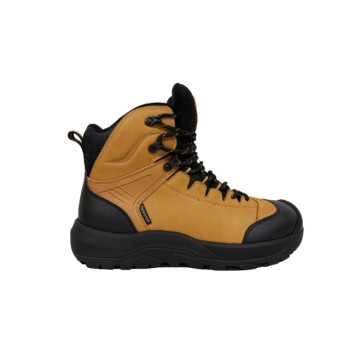
At its core, wearing warm winter shoes is a critical health and safety measure, not just a matter of comfort. They directly protect you from serious cold-related injuries like frostbite, maintain proper blood circulation, and prevent dangerous falls on icy surfaces by keeping your feet warm, dry, and stable.
The function of winter footwear extends far beyond simple warmth. It is a specialized tool designed to manage your body's thermoregulation, mitigate environmental hazards, and preserve your mobility and overall health in harsh conditions.
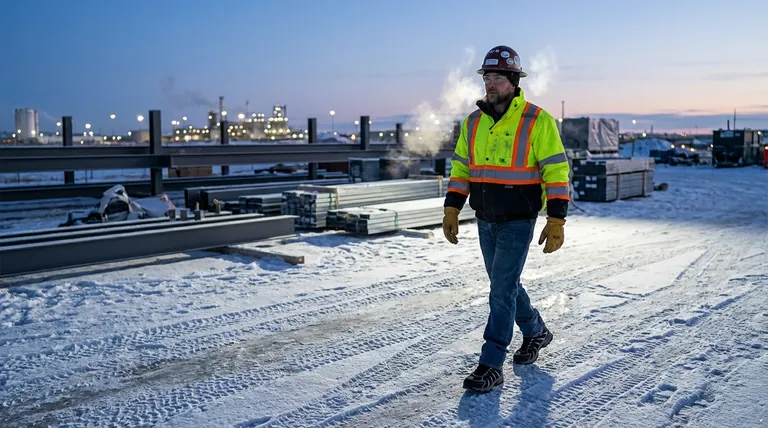
The Foundation: Why Foot Health is Body Health
Your body's response to cold often begins at its extremities. Protecting your feet is the first line of defense in maintaining your overall well-being during winter.
Maintaining Core Body Temperature
When your feet get cold, your body redirects blood flow away from them to protect your vital organs. This process can make you feel cold all over, even if you are otherwise bundled up.
Properly insulated shoes prevent this initial heat loss, helping your body maintain a stable core temperature with less effort.
Preventing Impaired Circulation
Cold temperatures cause blood vessels in your feet and toes to constrict. For individuals with pre-existing circulatory issues, this can be particularly dangerous, but it affects everyone to some degree.
Warm footwear ensures these blood vessels remain open, promoting healthy blood flow and preventing the numbness and pain associated with poor circulation.
Mitigating Direct Winter Threats
Beyond temperature regulation, winter shoes are engineered to protect you from specific, acute dangers present in cold and slippery environments.
The Primary Defense Against Frostbite
Frostbite is a severe injury caused by the freezing of skin and underlying tissues. Your toes, being extremities, are highly susceptible.
The combination of insulation to trap heat and waterproofing to keep feet dry is the most effective defense against this risk. Wet feet lose heat exponentially faster than dry feet, dramatically increasing the danger.
Ensuring Stability and Preventing Injury
Slips and falls on ice or snow can lead to everything from minor bruises to serious fractures and head injuries. This is a direct and immediate health risk.
Winter shoes with deep, patterned non-slip soles are designed to grip slippery surfaces, providing the traction necessary for confident and safe movement.
Understanding the Key Features and Trade-offs
Not all winter shoes are created equal. Understanding the technology helps you make an informed decision based on your specific needs, as a feature that is critical for one person may be unnecessary for another.
Insulation vs. Breathability
Insulation traps air, which your body then warms, creating a barrier against the cold. However, without breathability, your feet will sweat.
Sweat makes your feet wet, defeating the purpose of the insulation and making you feel colder. A quality winter shoe balances powerful insulation with breathable materials to allow moisture vapor to escape.
Waterproofing and Durability
Waterproofing is essential for keeping external moisture from snow and slush out. This is your primary defense against getting wet from the environment.
Durability, achieved through robust materials and construction, ensures the shoe can withstand salt, ice, and rough terrain. A durable boot not only saves you money but guarantees its protective features won't fail when you need them most.
Making the Right Choice for Your Goal
Selecting the right winter shoe is about matching its features to your intended activity and environment.
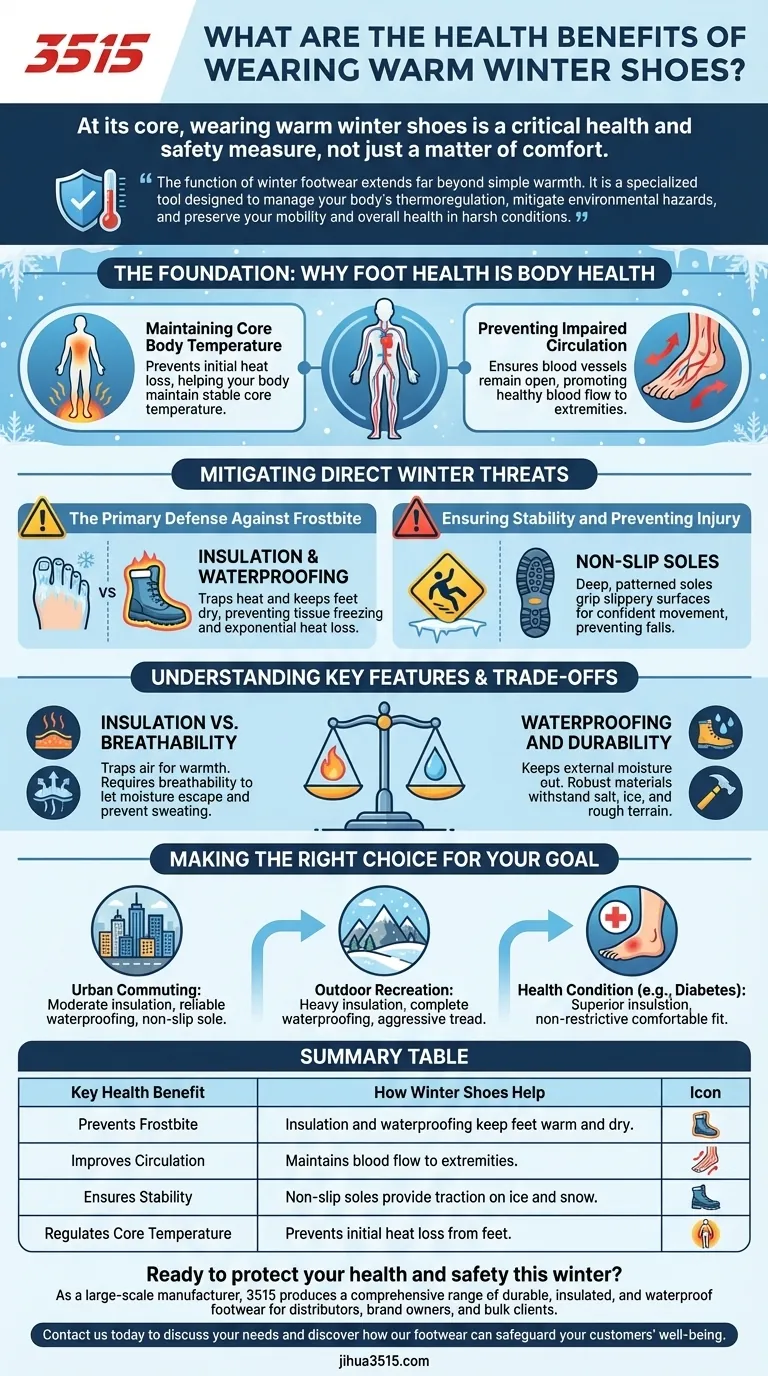
- If your primary focus is urban commuting: Look for a balance of moderate insulation, reliable waterproofing, and a non-slip sole that can handle cleared but potentially icy sidewalks.
- If your primary focus is outdoor recreation: Prioritize heavy insulation, complete waterproofing, aggressive tread for deep snow, and high durability for rough terrain.
- If your primary focus is managing a health condition like diabetes or poor circulation: Superior insulation and a non-restrictive, comfortable fit are paramount, but always consult your doctor for specific recommendations.
Investing in appropriate winter footwear is a direct investment in your health, safety, and mobility during the most challenging months of the year.
Summary Table:
| Key Health Benefit | How Winter Shoes Help |
|---|---|
| Prevents Frostbite | Insulation and waterproofing keep feet warm and dry, preventing tissue freezing. |
| Improves Circulation | Maintains blood flow to extremities by preventing blood vessel constriction. |
| Ensures Stability | Non-slip soles provide traction on ice and snow to prevent dangerous falls. |
| Regulates Core Temperature | Prevents initial heat loss from feet, helping the body stay warm overall. |
Ready to protect your health and safety this winter?
As a large-scale manufacturer, 3515 produces a comprehensive range of durable, insulated, and waterproof footwear for distributors, brand owners, and bulk clients. Whether you need reliable urban commuter boots or heavy-duty outdoor recreation footwear, our production capabilities cover all types of shoes and boots designed for ultimate winter protection.
Contact us today to discuss your needs and discover how our footwear can safeguard your customers' well-being.
Visual Guide
Related Products
- Premium Insulated Safety Boots and Shoes for Wholesale & Bulk Orders
- Wholesale Durable Camouflage Canvas Shoes with High-Traction Cleated Rubber Sole
- Durable Waterproof Rain Boots | Custom Manufacturer for Wholesale & Brands
- Factory Direct Wholesale Rain Boots Durable Waterproof & Fully Customizable
- Durable Rubber Sole Outdoor Shoes Wholesale & Custom Manufacturing
People Also Ask
- What are the recommended insulation ratings for mild winter conditions? A Guide for Active & Stationary Workers
- How does insulation thickness correlate with temperature ranges? A Guide to Choosing the Right Warmth
- What insulation level is needed for severe cold and stationary work? 1200g or Higher is Essential
- What safety advantages do insulated boots offer beyond warmth? Dielectric Protection & Superior Grip
- How does fleece lining contribute to the warmth of insulated boots? Trapping Air for Superior Cold Protection