
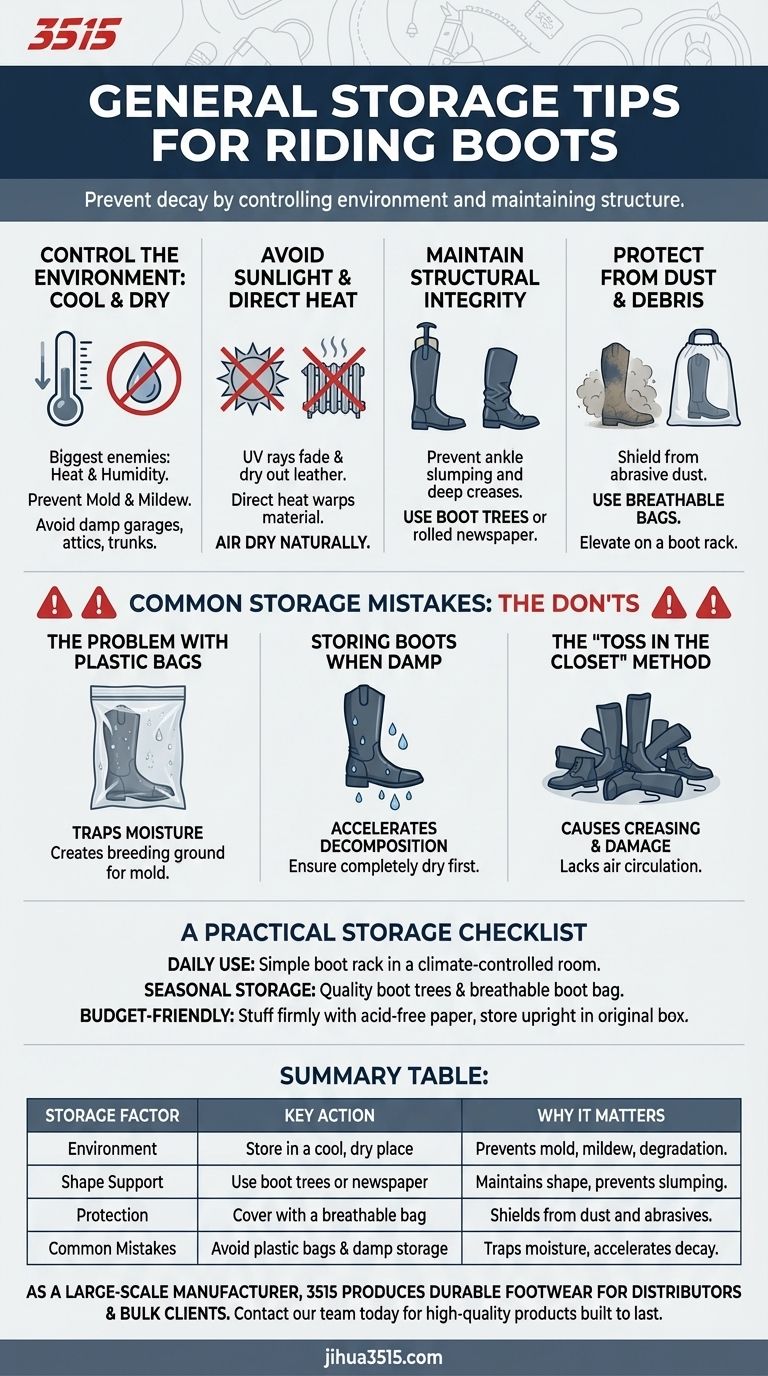
To properly store riding boots, you must keep them in a cool, dry location away from direct sunlight, use an internal support like a boot tree to maintain their shape, and shield them from dust with a breathable covering. These three actions work together to prevent material degradation, creasing, and premature aging.
The core principle of boot storage is not just about tidiness; it's about actively controlling the environment to halt the processes of decay. Proper storage is the single most effective way to protect your investment and maximize the lifespan of your boots.
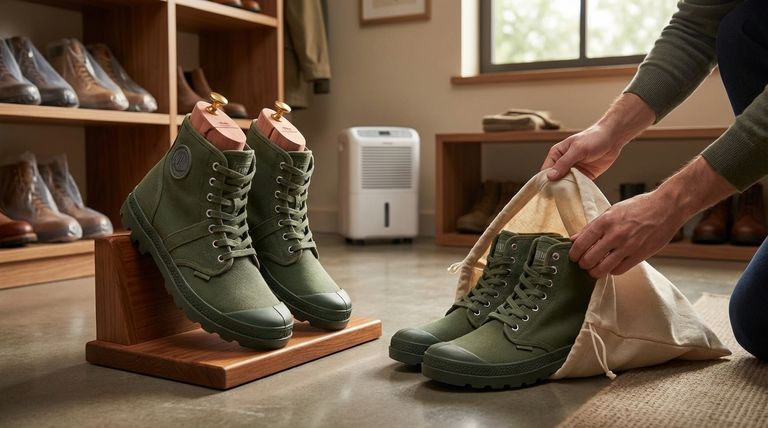
The Core Principles of Proper Boot Storage
Every aspect of proper storage is designed to combat a specific threat to your boots' materials, from leather and rubber to adhesives and stitching. Understanding these threats is key to preventing them.
Control the Environment: Cool and Dry
The biggest enemies to your boots are heat and humidity. Storing boots in damp or hot locations like garages, car trunks, or attics accelerates their natural aging process.
Excess moisture encourages the growth of mold and mildew, which can permanently stain and weaken leather. Extreme temperature fluctuations can cause materials to become brittle and adhesives to fail, leading to sole separation.
Avoid Sunlight and Direct Heat
Direct sunlight and heat sources like radiators are especially damaging. The UV rays from the sun can fade and dry out leather, causing it to crack.
Direct heat applied to wet boots in an attempt to dry them quickly will almost certainly cause irreversible damage by warping the material and compromising its structural integrity. Always air dry boots naturally.
Maintain Structural Integrity
Tall riding boots are prone to slumping at the ankle when left unsupported. Over time, this creates a permanent, deep crease that weakens the leather and spoils the boot's silhouette.
Using boot trees or even tightly rolled newspaper helps maintain the boot's intended shape. This internal support prevents creasing and ensures the boot fits properly and provides correct support when worn.
Protect from Dust and Debris
Allowing boots to sit out in the open exposes them to a constant buildup of dust. Dust particles can be abrasive and, over time, can work their way into the leather's finish.
A simple breathable boot bag or even the original box is sufficient to protect them. Keeping them on a boot rack also elevates them off the ground, away from ambient dirt and dust.
Understanding the Trade-offs: Common Storage Mistakes
Many well-intentioned boot owners make simple mistakes that inadvertently shorten the life of their equipment. Avoiding these common pitfalls is as important as following the correct procedures.
The Problem with Plastic Bags
Storing boots in a sealed plastic bag is a critical error. Plastic is non-breathable and traps any residual moisture, creating a perfect breeding ground for mold and mildew. Always opt for a fabric or other breathable storage bag.
Storing Boots When Damp
Never put boots away immediately after a ride, especially if they are damp from sweat or weather. Storing them wet is the fastest way to encourage material decomposition. Always ensure they are completely dry first.
The "Toss in the Closet" Method
Simply tossing boots into a pile on the closet floor is a recipe for damage. This leads to slumping, creasing, scuffs from other items, and a general lack of air circulation. Boots need their own dedicated, upright space.
Neglecting Long-Term Storage
If you plan to store your boots for an entire season or longer, they require extra attention. For very long periods, some experts recommend wearing them for a short time once or twice a month to keep the materials pliable and prevent them from becoming overly stiff.
A Practical Storage Checklist
Your storage method can be adapted based on how frequently you use your boots and your available resources.
- If your primary focus is daily or frequent use: A simple boot rack in a climate-controlled room is ideal for keeping boots upright, aired out, and ready to go.
- If your primary focus is seasonal or long-term storage: Invest in quality boot trees and a breathable boot bag to provide maximum protection.
- If your primary focus is a budget-friendly solution: Stuff boots firmly with acid-free paper or newspaper and store them upright in their original box, away from heat and humidity.
By treating storage as an essential part of your boot care routine, you ensure your equipment remains supportive, functional, and pristine for years to come.
Summary Table:
| Storage Factor | Key Action | Why It Matters |
|---|---|---|
| Environment | Store in a cool, dry place | Prevents mold, mildew, and material degradation |
| Shape Support | Use boot trees or newspaper | Maintains boot shape and prevents ankle slumping |
| Protection | Cover with a breathable bag | Shields from dust and abrasive particles |
| Common Mistakes | Avoid plastic bags and damp storage | Traps moisture and accelerates decay |
As a large-scale manufacturer, 3515 produces a comprehensive range of durable footwear for distributors, brand owners, and bulk clients. Our expertise in crafting all types of boots, including riding boots, ensures you receive products built to last with proper care. Let us help you equip your customers with high-quality footwear. Contact our team today to discuss your manufacturing needs and discover the 3515 advantage.
Visual Guide
Related Products
- Premium Wholesale Tactical Style Safety Shoes Boots with Quick Lacing
- Wholesale High-Traction Camo Boots - Custom Manufacturer for Brands
- Durable Goodyear Welt Leather Work Boots for Wholesale & Private Label
- Wholesale Tactical Boots High-Traction & Reflective for Bulk & Brand Orders
- Puncture-Resistant Velcro Safety Boots for Wholesale & Custom Manufacturing
People Also Ask
- How are gait analysis research findings applied to the functional design of safety shoes and tactical boots?
- Why is the synchronization of craftsmanship and UX development emphasized for bulk customization of safety shoes?
- How can specialized footwear mitigate safety risks? High-Volume OEM/ODM Solutions since 1951
- How does anthropomorphic design influence material selection? Enhance Footwear Performance through Biological Alignment
- How do quality certification standards for safety shoes reduce perceived risk? Buy Online with Technical Certainty



















