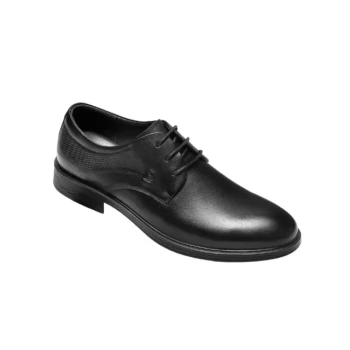
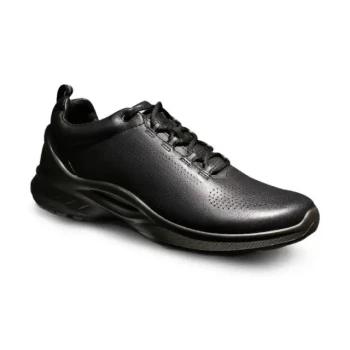
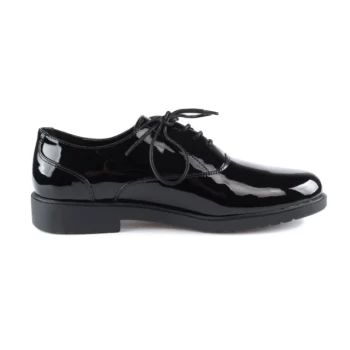
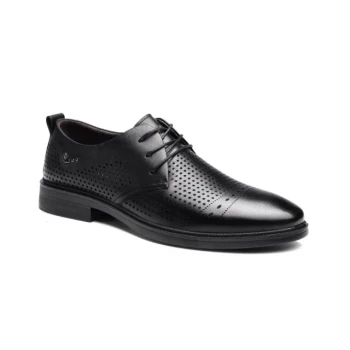
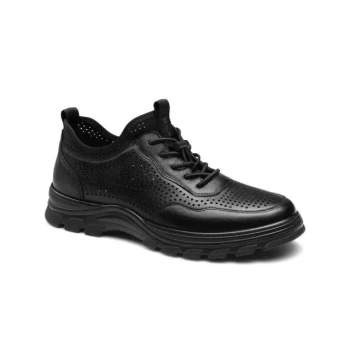
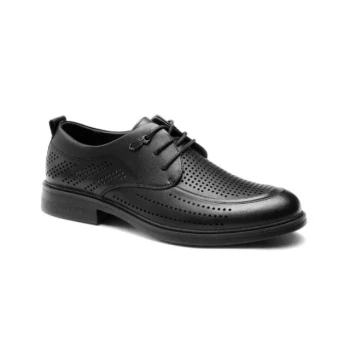
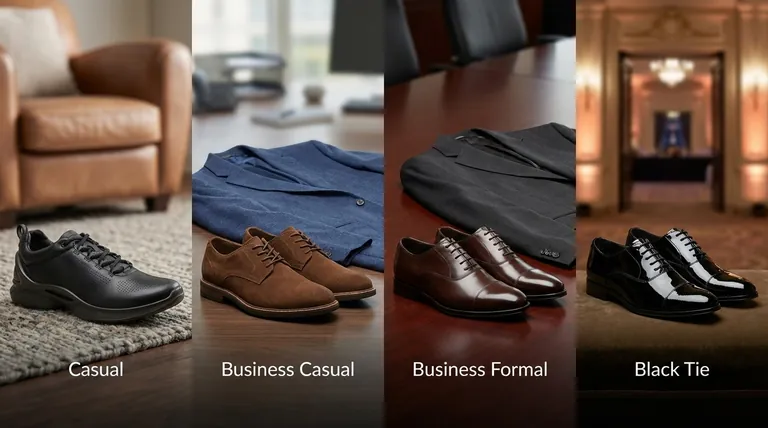
The four primary levels of formality in dress shoes are Casual, Business Casual, Business Formal, and Black Tie. Each level corresponds to specific occasions and dictates the appropriate style, material, and color of the shoe, ensuring your footwear aligns perfectly with the event's expectations.
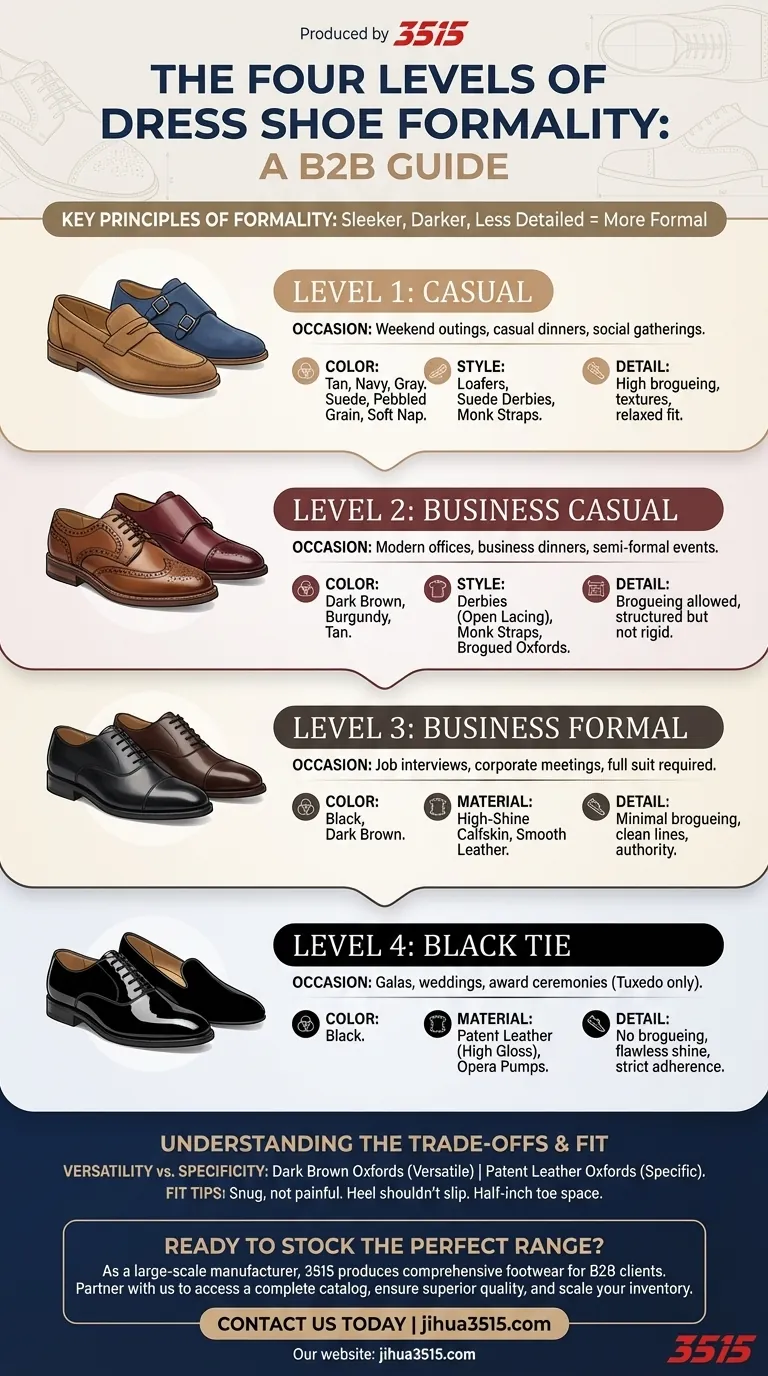
Understanding dress shoe formality isn't about memorizing rigid rules, but about recognizing a spectrum. The core principle is simple: the sleeker, darker, and less detailed a shoe is, the more formal it becomes.
The Anatomy of Formality: What to Look For
To navigate the levels of formality, you first need to understand the key characteristics that define a shoe's place on the spectrum. These elements, not arbitrary rules, are your guide.
### Color: The Foundation of Formality
The most immediate signal of a shoe's formality is its color. The rule is straightforward: darker is more formal.
Black is the undisputed king of formality, required for black-tie events and the most conservative business environments. Dark brown and burgundy are highly versatile and appropriate for most business settings. Lighter shades like tan or walnut are inherently more casual.
### Material: From High Gloss to Soft Nap
The material directly impacts the shoe's sleekness. A smoother, shinier surface is always more formal than a textured one.
Patent leather is the most formal material, reserved exclusively for black-tie events. Polished calfskin is the standard for business formal and business casual. Suede or pebbled grain leathers have a softer, textured appearance, placing them firmly in the casual category.
### Style: Open Lacing vs. Closed Lacing
The construction of the shoe is a critical distinction. The key difference is between "closed" lacing (Oxfords) and "open" lacing (Derbies).
An Oxford has its lacing eyelets stitched underneath the vamp (the top part of the shoe), creating a clean, closed appearance. This makes it the more formal style. A Derby has the eyelets stitched on top, creating visible flaps, which gives it a more relaxed and casual look.
### Detailing: The Role of Brogueing
Brogueing refers to the decorative perforations along the shoe's seams. Originally designed to drain water from shoes in soggy Irish bogs, these details now serve a purely aesthetic purpose.
The more brogueing a shoe has, the less formal it is. A plain-toe or cap-toe oxford with no brogueing is highly formal. A full brogue (or "wingtip") is considered much more casual and is better suited for business casual settings.
Deconstructing the Four Levels
With those principles in mind, we can now clearly define the four levels of formality and the specific shoes that belong in each.
### Level 1: Casual
This level is for relaxed social gatherings like weekend outings or a casual dinner. Comfort and personality are key.
Appropriate styles include loafers, suede derbies, or monk straps in lighter colors like tan, navy, or gray. These pair well with jeans, chinos, and casual button-down shirts.
### Level 2: Business Casual
This is the modern professional standard for many offices and semi-formal events like business dinners.
This is the domain of the Derby, the monk strap, and the brogued Oxford. Dark brown, burgundy, and tan are all excellent choices. These shoes bridge the gap between relaxed and formal, pairing perfectly with sport coats and smart trousers.
### Level 3: Business Formal
This level is for job interviews, important meetings, and conservative corporate environments where a full suit is required.
The undisputed choice here is a black or dark brown cap-toe Oxford. Its clean lines, dark color, and high-shine calfskin project authority and professionalism.
### Level 4: Black Tie
This is the pinnacle of formality, reserved for galas, weddings, and award ceremonies where a tuxedo is worn. The rules are strict and specific.
The only acceptable footwear is a black patent leather Oxford or, for the more traditional, an opera pump. There is no room for deviation here; the high-gloss shine is an essential part of the formal ensemble.
Understanding the Trade-offs
Selecting the right shoe involves balancing formality with practicality. Being aware of common pitfalls will ensure your investment serves you well.
### Versatility vs. Specificity
A dark brown cap-toe oxford is incredibly versatile, capable of handling most business casual and business formal situations. In contrast, a black patent leather oxford is highly specific and would look out of place anywhere but a black-tie event.
### The "Breaking In" Myth
A quality dress shoe should feel snug but comfortable from the first wear. While the leather will soften over time, it should not cause pain. Significant discomfort in the store is a sign of a poor fit, not a shoe that needs breaking in.
### Overlooking Proper Fit
Even the most formal shoe looks sloppy if it fits poorly. Ensure your heel doesn't slip and there is about a half-inch of space between your longest toe and the end of the shoe. The shoe should be snug across its widest point without pinching.
Making the Right Choice for Your Wardrobe
Your personal needs should guide your purchasing decisions. Focus on acquiring the right shoe for the occasions you most frequently encounter.
- If your primary focus is building a versatile foundation: Start with a dark brown or black cap-toe oxford, as it will cover the widest range of professional and formal needs.
- If your primary focus is mastering business casual: Invest in a quality pair of brown derbies or monk straps to add character and style to your daily professional wear.
- If your primary focus is preparing for formal events: A dedicated pair of black patent leather oxfords is a non-negotiable component of proper black-tie attire.
By understanding these core principles of color, material, and style, you can confidently select the right shoe for any occasion.
Summary Table:
| Level | Occasion | Key Shoe Styles | Key Colors |
|---|---|---|---|
| Casual | Weekend outings, casual dinners | Loafers, Suede Derbies | Tan, Navy, Gray |
| Business Casual | Modern offices, business dinners | Derbies, Monk Straps, Brogued Oxfords | Dark Brown, Burgundy, Tan |
| Business Formal | Job interviews, corporate meetings | Cap-toe Oxfords | Black, Dark Brown |
| Black Tie | Galas, weddings (with tuxedo) | Patent Leather Oxfords | Black (Patent Leather) |
Ready to Stock the Perfect Range of Dress Shoes?
As a large-scale manufacturer, 3515 produces a comprehensive range of footwear for distributors, brand owners, and bulk clients. Whether you need versatile Oxfords for business formal, stylish Derbies for business casual, or specialized patent leather for black-tie events, our production capabilities encompass all types of shoes and boots.
Partner with us to:
- Access a complete catalog tailored to every level of formality.
- Ensure superior quality and precise fit for your customers.
- Scale your inventory efficiently with our bulk manufacturing expertise.
Contact us today to discuss your specific needs and elevate your footwear offerings.
Visual Guide
Related Products
- Classic Leather Derby Dress Shoes Wholesale & Custom Manufacturing
- Wholesale Comfort Dress Shoes with Dial Closure for Custom Manufacturing
- Wholesale Leather Derby Dress Shoes Custom Manufacturer for Brands
- Wholesale Perforated Comfort Dress Shoes | Custom Derby Shoe Manufacturer
- Wholesale Patent Oxford Dress Shoes | Custom & Bulk Manufacturing
People Also Ask
- How often should leather dress shoes be cleaned and polished? A 3-Tier Care Guide for Longevity
- How can you remove salt stains from leather dress shoes? Save Your Shoes with a Simple Vinegar Solution
- What are the basic steps to clean leather dress shoes? A Guide to Preserving Your Investment
- How should you dry wet leather dress shoes? A Step-by-Step Guide to Save Your Investment
- What historical figure is associated with the Derby shoe? The Earl of Derby's Comfort Revolution