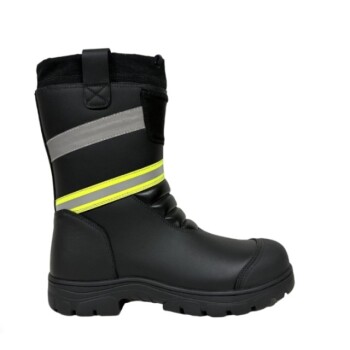
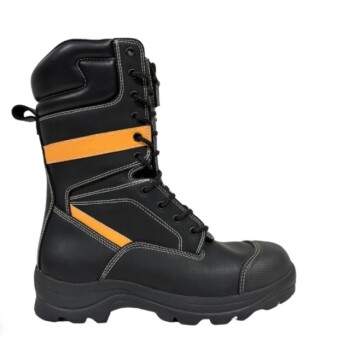
At their core, fire boots must provide five essential features: comprehensive heat and flame resistance, puncture and impact protection for the toes and soles, high-traction and slip-resistant outsoles, waterproofing combined with chemical resistance, and a design that offers both ankle support and functional flexibility. These elements work in concert to protect a firefighter from the multitude of hazards they face on the job.
Firefighting boots are not merely footwear; they are a critical piece of personal protective equipment (PPE). Every feature is a direct countermeasure to a specific, life-threatening risk, from collapsing structures and electrified water to hazardous materials and treacherous terrain.
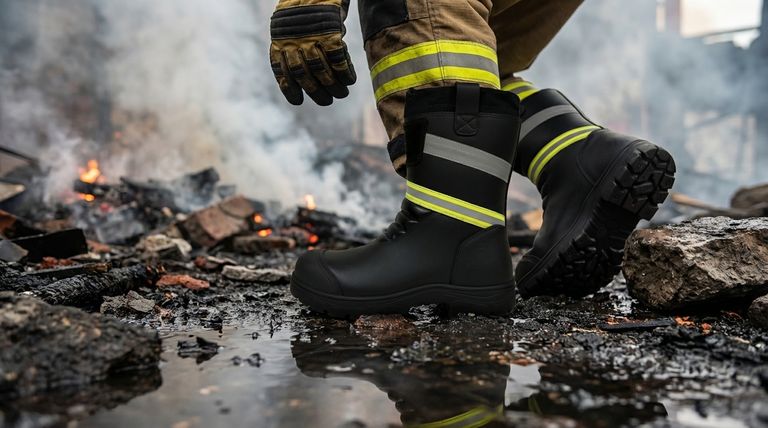
The Foundation: Protection from Extreme Hazards
The most fundamental purpose of a fire boot is to create an impenetrable barrier between the firefighter and the environment. This protection extends far beyond just heat.
Heat and Flame Resistance
This is the non-negotiable, primary feature. Boots must be constructed from durable, flame-resistant materials like full-grain leather or specialized textiles that will not melt, ignite, or degrade when exposed to extreme temperatures.
Puncture and Impact Protection
Fire scenes are littered with sharp objects like nails, glass, and rebar. A puncture-resistant plate in the midsole is essential to protect the bottom of the foot.
Likewise, safety toes (made of steel, composite, or alloy) are required to shield against crushing injuries from falling debris or heavy equipment.
Waterproofing and Chemical Resistance
Firefighters constantly work in wet conditions. A waterproof barrier is crucial not only for comfort but to prevent steam burns and to protect against waterborne contaminants.
This barrier must also resist degradation from common chemicals, fuels, and oils encountered during emergency calls.
Electrical Hazard (EH) Protection
For urban and structural firefighters, EH protection is critical. This feature insulates the wearer from accidental contact with live electrical circuits, a frequent and deadly hazard in flooded or damaged buildings.
Performance on Unpredictable Ground
Beyond simple protection, a boot must enable a firefighter to move with confidence and stability in chaotic environments.
Slip-Resistant Outsoles
Surfaces at an emergency scene are often wet, oily, or covered in debris. A specially designed outsole with deep, aggressive lugs provides maximum traction to prevent slips and falls, which are a leading cause of injury.
Ankle Support and Stability
Moving quickly over uneven or shifting ground requires robust ankle support. A tall boot shaft, typically 7 inches or more, helps prevent twists and sprains, providing the stability needed to carry heavy gear and perform rescues.
The Overlooked Essentials: Fit and Mobility
Protection is useless if the firefighter cannot move effectively. The best boots balance robust defense with ergonomic design.
The Critical Role of Comfort
Comfort is not a luxury; it is a safety feature. Firefighters spend long, grueling hours on their feet. A well-fitting boot that prevents blisters and reduces fatigue allows them to stay focused and perform their duties effectively.
Flexibility for Agility
A boot must protect without being a cast. Modern fire boots are designed with flex points that allow for natural movement, enabling firefighters to climb ladders, kneel, and navigate tight spaces without restriction.
Understanding the Trade-offs
No single boot is perfect for every scenario. Understanding the key design differences is vital for selecting the right tool for the job.
Leather vs. Rubber Boots
Leather boots offer excellent durability, breathability, and will conform to the user's foot over time for a more custom fit.
Rubber boots provide superior, inherent protection against water and chemicals, making them a common choice for hazardous materials response.
Pull-on (Bunker) vs. Lace-up Boots
Pull-on boots are designed for speed, allowing firefighters to don their gear in seconds. This is the standard for most structural firefighting roles.
Lace-up boots, often used in wildland and technical rescue, offer a more secure, customized fit. This provides greater ankle support for walking long distances on uneven terrain.
Making the Right Choice for Your Role
Selecting a boot means matching its features to the most probable hazards you will face.
- If your primary focus is structural firefighting: Prioritize EH protection, superior waterproofing, and the rapid donning of a pull-on bunker boot.
- If your primary focus is wildland firefighting: Prioritize a lighter weight for endurance, aggressive tread for natural terrain, and a secure lace-up fit for long hikes.
- If your primary focus is technical rescue or a varied role: Seek a versatile lace-up boot that balances robust protection with the flexibility and support needed for diverse environments.
Ultimately, the right fire boot is the foundation upon which every safe and effective action is built.
Summary Table:
| Essential Feature | Key Benefit |
|---|---|
| Heat & Flame Resistance | Protects against extreme temperatures with non-melting materials. |
| Puncture & Impact Protection | Shields feet from sharp objects and crushing debris. |
| Slip-Resistant Outsoles | Provides maximum traction on wet, oily, and unstable surfaces. |
| Waterproof & Chemical Resistant | Keeps feet dry and protected from contaminants and fuels. |
| Ankle Support & Flexibility | Enables stable, agile movement in high-risk environments. |
Equip Your Team with Boots Built for the Mission
As a large-scale manufacturer, 3515 produces a comprehensive range of high-performance fire boots for distributors, brand owners, and bulk clients. Our production capabilities ensure every pair meets the highest standards for protection, durability, and comfort—whether for structural firefighting, wildland response, or technical rescue.
Let us help you source the right footwear to protect your first responders. Contact our expert team today for a consultation and to discuss your specific requirements.
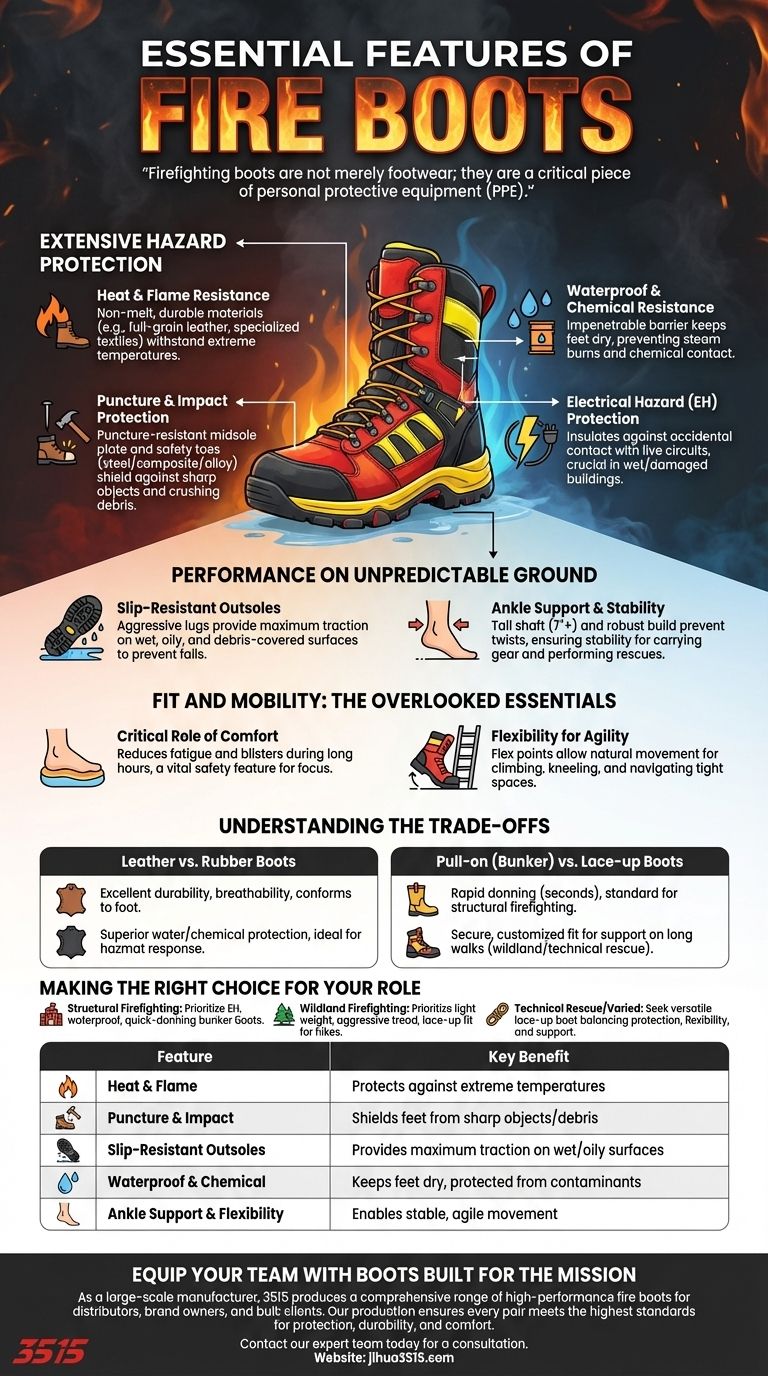
Visual Guide
Related Products
- High Performance Fire-Retardant Waterproof Safety Boots
- Premium Flame-Retardant Waterproof Safety Boots and Shoes
- Wholesale Lightweight Tactical Boots Custom Manufacturer for Desert & Combat Use
- High-Traction Suede Tactical Boots Wholesale & Custom Manufacturing
- Wholesale Waterproof Tactical Boots Custom Suede & High-Traction Soles
People Also Ask
- Why are waterproof safety boots recommended for certain work environments? Essential Protection for Wet & Hazardous Jobs
- What roles do 3D vision systems and industrial robots play in the manufacturing of fire safety boots? Smart Automation
- How should you maintain waterproof boots? A Simple 3-Step Guide to Long-Lasting Performance
- What materials make waterproof boots durable? The Ultimate Guide to Long-Lasting Footwear
- What's the difference between waterproof and water-resistant boots? Choose the Right Footwear for Your Environment