
The essential features of any quality food service shoe are a combination of non-negotiable safety and critical ergonomic support. The core requirements are a highly effective slip-resistant outsole, a protective closed-toe design, and a comfortable, supportive structure to combat foot fatigue during long shifts. These features are not optional; they are the foundation for your safety and well-being.
The right restaurant shoe is a piece of professional safety equipment. It’s a system designed to protect you from the specific, predictable hazards of a food service environment, from slick floors to the physical toll of standing for hours on end.
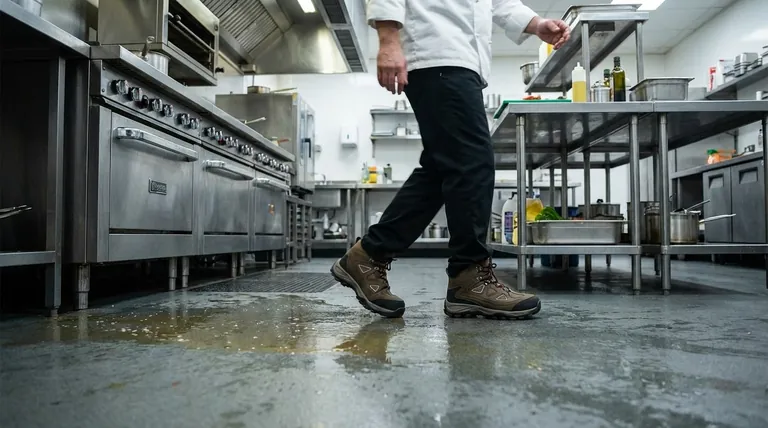
The Foundation: Non-Negotiable Safety
Your first priority when selecting a work shoe must be mitigating the immediate risks of your workplace. In a kitchen or dining room, this primarily involves preventing slips and protecting your feet from spills and impacts.
Non-Slip Outsoles: Your First Line of Defense
This is the single most critical feature. Slip-resistant outsoles are specifically engineered with tread patterns designed to channel liquids like water, grease, and oil away from the bottom of your foot.
This design maximizes the surface area of the shoe that is in contact with the floor, providing essential traction in unpredictable conditions. Many quality outsoles are also non-marking, which prevents scuffs on polished dining room floors.
Closed-Toe Protection: A Shield Against Hazards
An open-toed shoe has no place in a professional kitchen or service environment. A closed-toe design is mandatory to shield your feet from a range of common hazards.
This includes protection from hot liquid or grease spills, dropped utensils, and the general impact of moving quickly in a crowded space. It is a fundamental requirement for workplace safety.
The Core of Comfort: Surviving the Shift
Safety features prevent accidents, but comfort and support are what allow you to perform your job effectively without long-term physical strain. Standing and walking for 8-12 hours on hard floors takes a significant toll.
All-Day Cushioning and Support
Lasting comfort comes from a shoe’s internal structure. Look for shoes with supportive insoles and cushioned midsoles designed to absorb impact and reduce pressure on your feet, ankles, and lower back.
This support is crucial for alleviating the foot fatigue that builds up over a long shift, helping to prevent chronic pain and discomfort.
Stability for Constant Movement
Food service professionals are constantly in motion—pivoting, balancing trays, and carrying loads. A good work shoe provides a stable platform that supports your foot through this dynamic movement.
This stability helps prevent ankle rolls and provides the balance needed to move confidently and safely, whether you're in a busy kitchen or a fast-paced dining room.
Understanding the Trade-offs
Choosing the right shoe involves balancing several factors. Understanding the common trade-offs will help you make a more informed decision based on your specific role.
Durability vs. Immediate Comfort
The most durable shoes, often made with leather or robust synthetic materials, may require a short break-in period. Conversely, a shoe that feels incredibly soft out of the box may use materials that wear down faster under the heavy use of daily shifts.
Style vs. Pure Functionality
For front-of-house staff like servers and waiters, a professional appearance is important. While it's possible to find stylish shoes that meet safety standards, you must never sacrifice core features like slip resistance for aesthetics. The most critical safety functions are non-negotiable.
Making the Right Choice for Your Role
Your specific job dictates which features to prioritize. Use your daily tasks as the primary guide for your decision.
- If your primary focus is back-of-house (Chef, Cook, Dishwasher): Prioritize maximum slip resistance and robust, easy-to-clean protection above all else.
- If your primary focus is front-of-house (Server, Waiter, Host): Balance certified non-slip functionality with all-day comfort for walking and a professional style that matches your uniform.
Ultimately, investing in the right footwear is a direct investment in your daily safety and long-term health.
Summary Table:
| Essential Feature | Key Benefit |
|---|---|
| Non-Slip Outsoles | Provides critical traction on wet, greasy floors to prevent slips and falls. |
| Closed-Toe Design | Protects feet from spills, dropped items, and impacts in a busy environment. |
| All-Day Cushioning & Support | Reduces foot fatigue and strain from long hours on hard floors. |
| Stable Platform | Enhances balance and support for constant movement, pivoting, and carrying. |
Equip your team with the right footwear for safety and performance. As a large-scale manufacturer, 3515 produces a comprehensive range of slip-resistant, comfortable, and durable work shoes and boots for restaurants, catering services, and food processing facilities. We provide reliable footwear solutions for distributors, brand owners, and bulk clients. Contact us today to discuss your needs and request a quote!
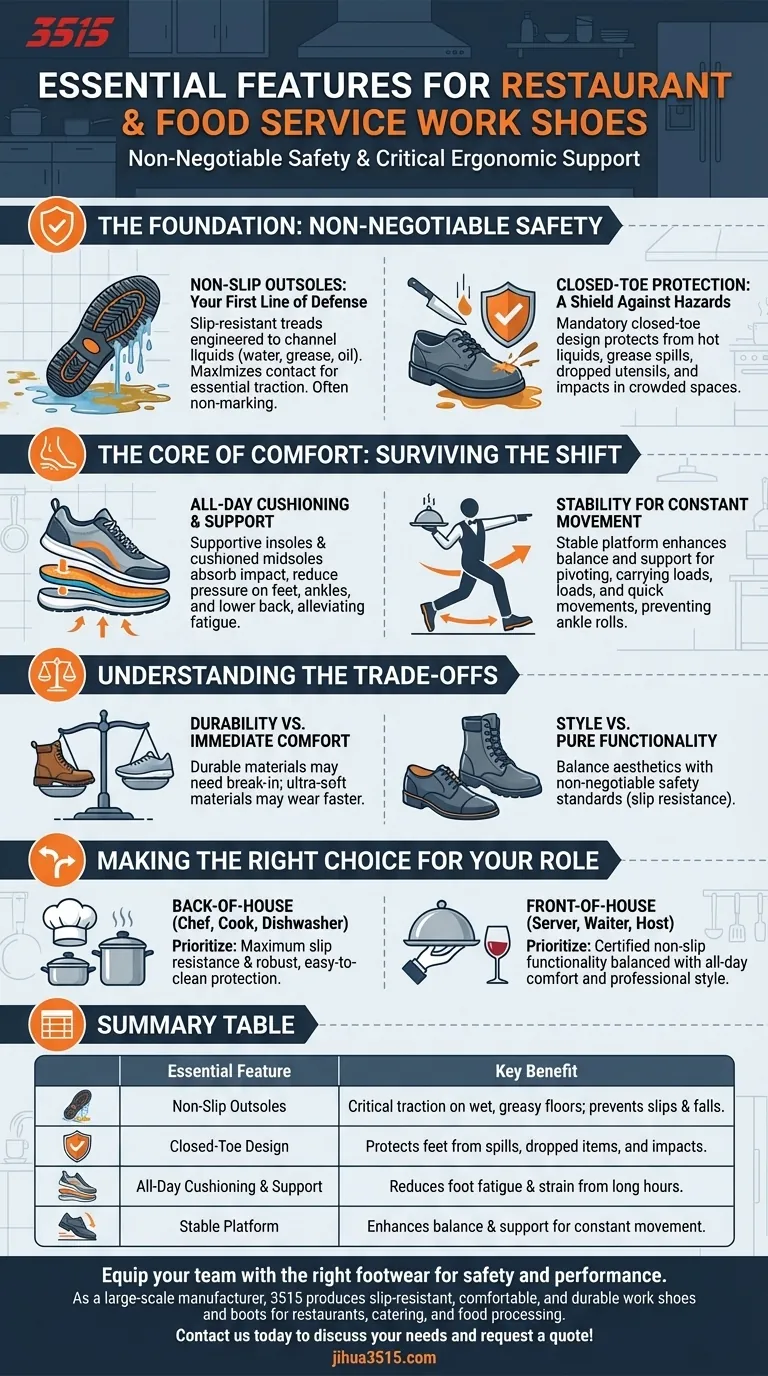
Visual Guide
Related Products
- Premium Lightweight Safety Shoes for Wholesale & Bulk Orders
- Wholesale Modern Business Shoes with Dial Closure System for Bulk Orders
- Wholesale Durable Camo Canvas Shoes with High-Traction Rubber Soles
- Wholesale Comfortable Business Casual Shoes Custom Manufacturing
- Custom Safety Shoe Manufacturer for Wholesale & OEM Brands
People Also Ask
- What workplace hazards indicate the need for safety shoes? Identify risks to protect your workforce.
- How is the absence of PPE (safety shoes & helmets) categorized in construction motion data labeling? Unlock Real-Time Safety Insights!
- What is a recommended alternative to using hairspray for slip resistance? Ditch Unreliable Hacks for Real Safety
- What role does blockchain play in footwear supply chain transparency? Enhance Safety Shoe Traceability and Verification
- What role do specialized safety shoes play in preventing falls? Engineering Stability in Industrial Environments








