While excellent for scent control and waterproofing, rubber hunting boots come with significant disadvantages, primarily centered around their lack of breathability. This fundamental flaw leads to poor temperature regulation, making them too hot in mild weather and too cold in the late season, while also creating discomfort and potential for blisters on long treks.
The core trade-off of a rubber boot is simple: you gain complete waterproofing and scent containment at the direct expense of breathability, long-distance comfort, and thermal regulation. Understanding this compromise is the key to choosing the right footwear.
The Core Problem: Lack of Breathability
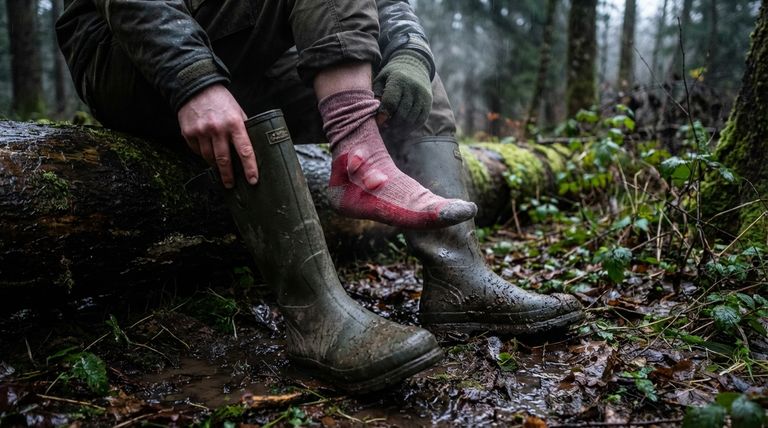
Rubber is a non-porous material, which is why it's so effective at keeping water out. However, this also means it keeps moisture in.
The Sweat Trap Effect
Your feet produce a significant amount of sweat, especially when you're active. In a leather or synthetic boot with a waterproof membrane, this moisture vapor can escape.
In a rubber boot, that sweat has nowhere to go. It becomes trapped against your skin and socks, creating a damp, uncomfortable environment inside the boot, regardless of the external conditions.
Discomfort and Blisters
Consistently damp skin becomes soft and is far more susceptible to friction. This dramatically increases the risk of developing painful hot spots and blisters, especially on hunts that require covering significant ground.
Poor Temperature Regulation
The trapped moisture inside a rubber boot directly undermines its ability to keep your feet at a stable temperature.
Overheating in Early Seasons
During warmer, early-season hunts, the lack of ventilation quickly turns the boot into a sauna. Your feet will become excessively hot and sweaty, leading to significant discomfort.
Becoming Cold in a Freeze
This issue is even more dangerous in cold weather. While many rubber boots come with insulation, that insulation becomes compromised once it gets damp from your own sweat.
Wet socks and insulation lose their thermal properties, drawing heat away from your feet. This is why hunters often complain of their insulated rubber boots feeling warm for the first hour, only to leave them with freezing cold feet for the rest of a stationary sit.
Structural and Support Limitations
Compared to traditional hunting boots, rubber boots often fall short in providing the structure needed for challenging terrain.
Reduced Ankle Support
Most rubber boots are built with a flexible shaft that offers minimal ankle support. This can be a liability when navigating steep hillsides, rocky ground, or uneven terrain where ankle rolls are a concern.
Comfort on Long Treks
Rubber boots typically lack the sophisticated midsole and insole construction of high-quality hiking or leather hunting boots. This results in less cushioning and shock absorption, leading to foot fatigue on hunts that involve more walking than sitting.
Understanding the Trade-offs
Choosing a rubber boot is about accepting its weaknesses to gain its specific strengths. They are not inherently bad; they are a specialized tool.
The Noise Factor
Rubber can squeak, especially when rubbing against a metal treestand or saddle platform. Footfalls also tend to be louder on dry leaves or frozen ground compared to the softer sole of a leather boot.
Unbeatable Waterproofing
For crossing creeks, sitting in flooded timber, or navigating swamps and marshes, nothing beats the 100% watertight nature of a rubber boot. This is their primary and most valuable feature.
Superior Scent Control
Rubber does not absorb and retain odors like leather or fabric boots do. For hunters who place a premium on scent control, particularly whitetail hunters walking to a nearby stand, this is a decisive advantage.
Making the Right Choice for Your Hunt
Your decision should be based on your specific hunting style and environment, not on a one-boot-fits-all mentality.
- If your primary focus is short walks to a stationary position (like a treestand or blind) in wet or scent-critical areas: Rubber boots are an excellent choice, as their waterproofing and scent control are paramount.
- If your primary focus is active, high-mileage hunting over varied or steep terrain: A leather or synthetic boot is a far better option, providing the necessary breathability, support, and long-distance comfort.
- If your primary focus is hunting in conditions with fluctuating temperatures: A breathable boot paired with a quality sock system offers superior temperature regulation and will keep your feet drier and more comfortable.
Matching your boot's strengths to your hunt's demands is the most critical step in ensuring comfort and effectiveness in the field.
Summary Table:
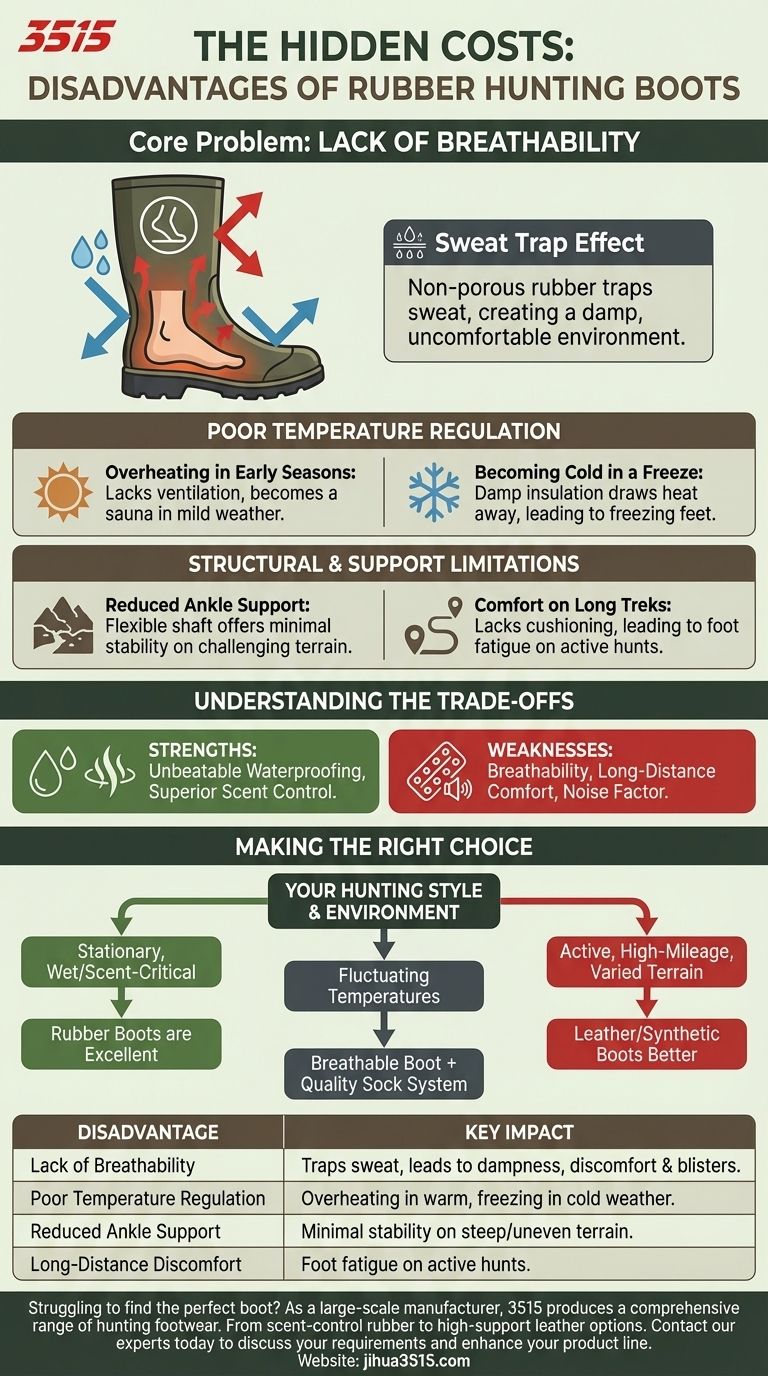
| Disadvantage | Key Impact |
|---|---|
| Lack of Breathability | Traps sweat, leading to dampness, discomfort, and blisters. |
| Poor Temperature Regulation | Feet overheat in warm weather; insulation fails when damp in cold weather. |
| Reduced Ankle Support | Flexible shaft offers minimal support on steep or uneven terrain. |
| Long-Distance Discomfort | Less cushioning leads to foot fatigue on active hunts. |
Struggling to find the perfect boot for your specific hunt? As a large-scale manufacturer, 3515 produces a comprehensive range of hunting footwear for distributors, brand owners, and bulk clients. Our production capabilities encompass all types of boots, from scent-control rubber models to high-support leather options for demanding terrain. Let us help you match the right boot technology to your hunters' needs. Contact our experts today to discuss your requirements and discover how we can enhance your product line.
Visual Guide
Related Products
- Durable Spiked Camouflage Boots Wholesale & Factory Production
- Durable Rubber Sole Outdoor Shoes Wholesale & Custom Manufacturing
- Factory Direct Wholesale Rain Boots Durable Waterproof & Fully Customizable
- Wholesale Durable Camouflage Canvas Shoes with High-Traction Cleated Rubber Sole
- High-Traction Suede Tactical Boots Wholesale & Custom Manufacturing
People Also Ask
- How does boot height affect waterproofing? Choose the Right Height for Ultimate Protection
- What are the best types of shoes for different gardening conditions? Find Your Perfect Match.
- What role does camouflage play in hunting boots? It's More Than Just a Pattern
- What should you look for to ensure boots are fully waterproof? The Essential 2-Part System
- How does boot construction affect waterproofing? The Science Behind Truly Dry Feet