
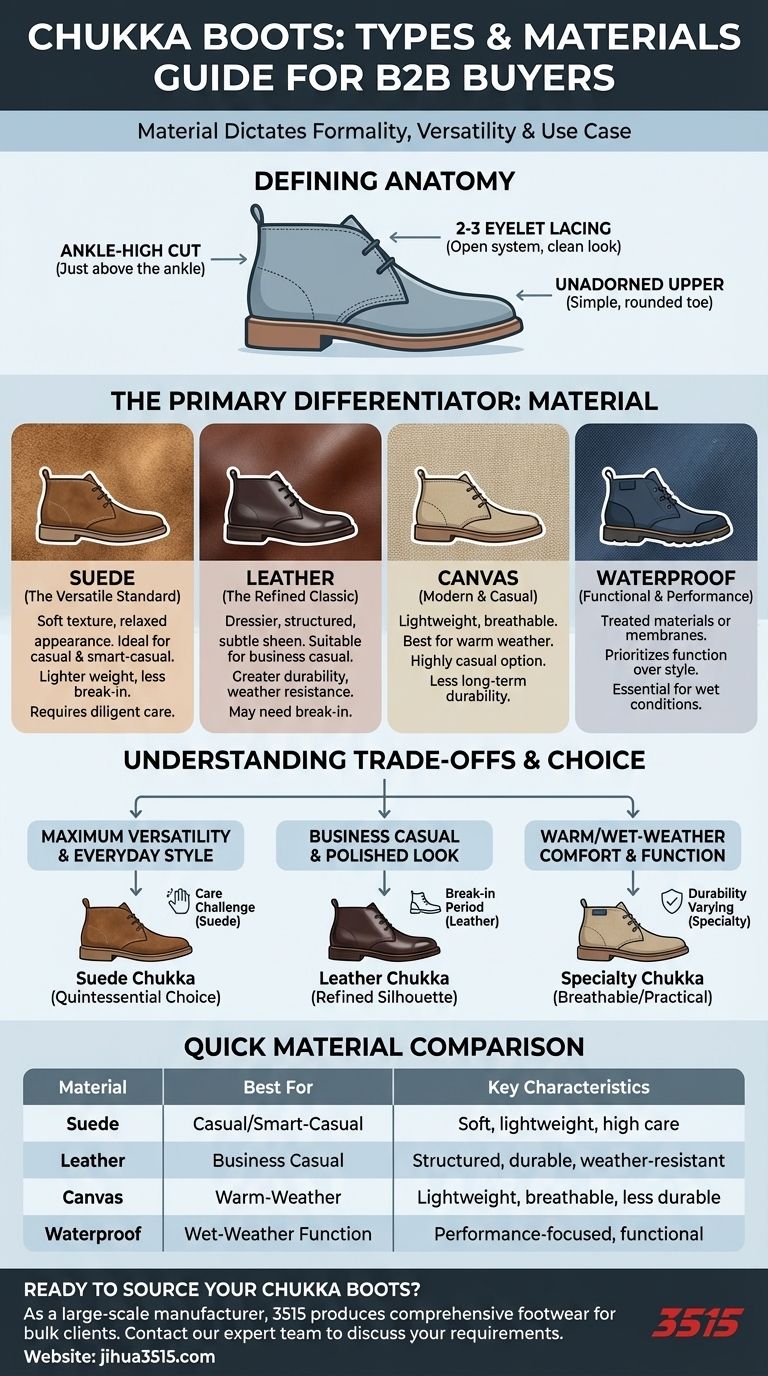
While there are no official "types" of chukka boots, they are primarily categorized by the material used for their construction. The most common variations you will find are traditional smooth leather, versatile suede, casual canvas, and functional waterproof designs, all sharing the same ankle-high profile with two or three lacing eyelets.
The core insight is that choosing a chukka boot isn't about picking a named "type." It's about understanding how the choice of material—primarily suede versus leather—dictates the boot's formality, versatility, and ideal use case.
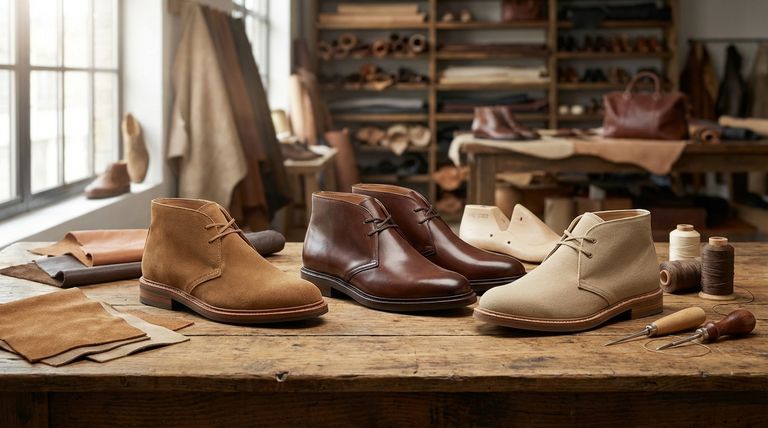
The Defining Anatomy of a Chukka
Before exploring the variations, it's crucial to understand the simple, consistent features that make a chukka a chukka. This minimalist design is the source of its versatility.
The Ankle-High Cut
All chukka boots end at or just above the ankle. This height provides more coverage than a shoe but is less imposing than a full-sized boot.
The 2-3 Eyelet Lacing System
The most distinct feature is the open lacing system with only two or three pairs of eyelets. This creates a clean, uncluttered look across the top of the foot.
The Unadorned Upper
Chukkas are defined by their simplicity. They typically feature a rounded toe and are made from just a few pieces of leather or suede without decorative elements like broguing or toe caps.
The Primary Differentiator: Material
The material of the upper is the single most important factor that determines the boot's character, level of formality, and required care.
Suede Chukkas (The Versatile Standard)
Suede is the most common material for chukkas, prized for its soft texture and relaxed appearance. It makes the boot exceptionally versatile for casual and smart-casual settings.
These boots are often lighter and require less break-in time than their leather counterparts, making them an ideal choice for comfortable, year-round wear, especially in spring and summer.
Leather Chukkas (The Refined Classic)
Chukkas made from smooth leather present a dressier, more structured alternative. The clean lines of the boot are amplified by the subtle sheen of polished leather.
This makes them suitable for business casual environments or for pairing with more refined outfits. They offer greater durability and weather resistance than suede.
Specialty Chukkas (Modern & Functional)
Less common but equally valid are chukkas made from other materials for specific purposes.
Canvas chukkas are a lightweight, breathable, and highly casual option for warm weather. Waterproof versions often use treated leather or synthetic membranes for performance in wet conditions, prioritizing function over classic style.
Understanding the Trade-offs
Each material brings its own set of advantages and disadvantages. Objectively weighing these is key to making the right choice.
The Challenge of Suede Care
Suede's napped texture makes it highly susceptible to water damage, stains, and dirt. It requires diligent care with protectant sprays and specialized brushes to maintain its appearance.
The Break-in Period for Leather
Smooth leather boots are often stiffer out of the box. They may require a break-in period to soften and conform to your foot for maximum comfort.
The Durability of Specialty Materials
While practical for specific situations, materials like canvas generally offer less long-term durability and support compared to high-quality suede or leather.
Making the Right Choice for Your Goal
Your primary use case should guide your selection.
- If your primary focus is maximum versatility and everyday style: A brown suede chukka is the quintessential choice that pairs with almost any casual or smart-casual outfit.
- If your primary focus is a business casual or a more polished look: A dark brown or black leather chukka provides a refined silhouette that works well with chinos, trousers, and blazers.
- If your primary focus is warm-weather comfort or wet-weather function: Consider a specialty material like canvas for breathability or a dedicated waterproof model for practicality.
Ultimately, the best chukka boot is the one that seamlessly integrates into your existing wardrobe and environment.
Summary Table:
| Material | Best For | Key Characteristics |
|---|---|---|
| Suede | Maximum versatility, casual/smart-casual wear | Soft, relaxed look, lightweight, requires careful maintenance |
| Leather | Business casual, a polished look | Structured, durable, more weather-resistant, may need breaking in |
| Canvas | Warm-weather comfort, highly casual | Lightweight, breathable, less durable |
| Waterproof | Wet-weather function, practicality | Treated materials, performance-focused, less classic style |
Ready to find the perfect chukka boot for your needs?
As a large-scale manufacturer, 3515 produces a comprehensive range of footwear for distributors, brand owners, and bulk clients. Our production capabilities encompass all types of shoes and boots, including high-quality chukkas in various materials. We can help you source or develop the ideal boot for your market.
Contact our expert team today to discuss your chukka boot requirements and discover how we can add value to your business.
Visual Guide
Related Products
- Durable Leather High-Ankle Tactical Boots for Wholesale & Custom Manufacturing
- High-Traction Suede Tactical Boots Wholesale & Custom Manufacturing
- Durable Leather Tactical Boots Wholesale & Custom Manufacturing for Brands
- Premium Wholesale Tactical Style Safety Shoes Boots with Quick Lacing
- Factory Direct Wholesale Rain Boots Durable Waterproof & Fully Customizable
People Also Ask
- How do military uniforms and tactical boots impact the prediction of thermal risk? Essential Safety Insights
- How does the material of tactical boots affect their performance? Choose the Right Material for Your Mission
- Why is sequential analysis utilized to evaluate tactical boots? Master Dynamic Boot Development and Ergonomic Performance
- How do tactical boots differ from regular boots? Performance, Durability & Design Explained
- What are the primary differences between tactical boots and combat boots? Choose the Right Boot for Your Mission

















