
The right cleaning method is dictated entirely by your boot's material. Delicate materials like suede require dry methods and special tools, while durable synthetics and rubber can be easily cleaned with mild soap and water. Using the wrong approach can cause irreversible damage, such as staining, stiffening, or discoloration.
The core principle of boot care is to match the intensity of your cleaning method to the durability of the material. Gentle, natural materials demand minimal moisture and soft tools, while robust, synthetic materials can withstand more direct cleaning with water and detergents.
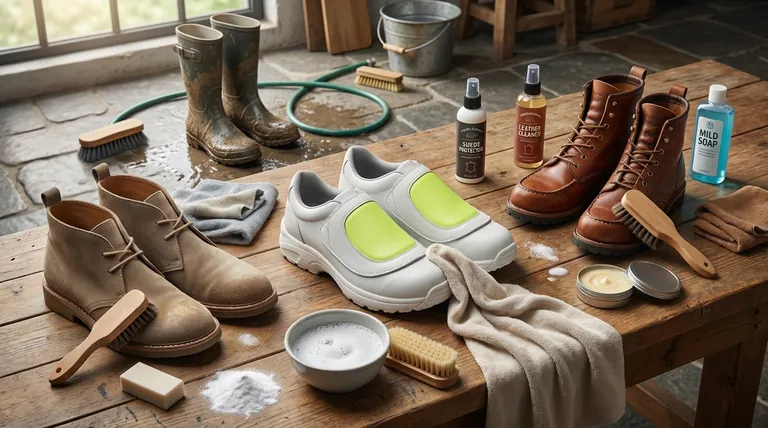
Cleaning Methods by Boot Material
The most common mistake is treating all boots the same. Each material has a unique structure and finish that requires a specific approach to preserve its integrity and appearance.
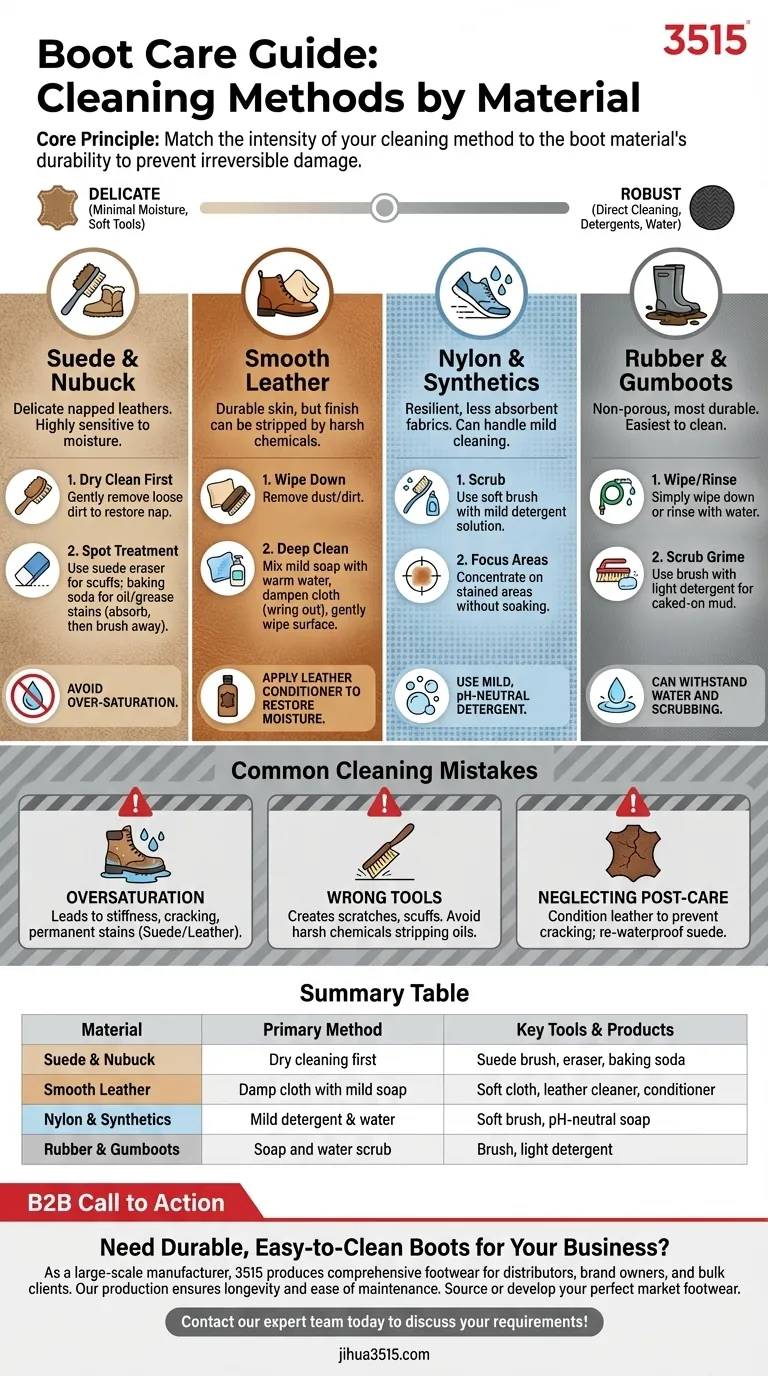
For Suede & Nubuck
These are napped leathers, meaning they have a soft, fuzzy texture that is highly sensitive to moisture and staining.
Always start with a dry cleaning method. Use a dedicated suede brush or a soft-bristled brush to gently remove loose dirt and restore the material's texture (the nap).
For stubborn scuffs, you can use a suede eraser. For tough oil or grease stains, apply a small amount of baking soda directly to the spot, let it sit to absorb the oil, and then gently brush it away.
For Smooth Leather
Leather is a durable skin, but its finish can be stripped by harsh chemicals or excessive water.
Begin by wiping away dust and dirt with a soft cloth or a horsehair brush.
For a deeper clean, mix a small amount of mild soap or a specialized leather cleaner with warm water. Dampen a soft cloth in the solution, wring it out completely, and gently wipe the entire surface of the boot.
For Nylon & Synthetics
Materials like nylon, canvas, and other synthetic fabrics are generally more resilient and less absorbent than leather.
You can safely use a soft-bristled brush and a solution of mild detergent and water to scrub away dirt. Focus on stained areas without completely soaking the fabric.
For Rubber & Gumboots
Rubber is non-porous and the most durable boot material, making it the easiest to clean.
These can be simply wiped down or rinsed with water. For caked-on mud or grime, use a brush with a bit of soap or light detergent to scrub the surface clean.
Understanding the Trade-offs: Common Cleaning Mistakes
Knowing what not to do is as important as knowing the correct method. Most damage comes from using a one-size-fits-all approach that fails to respect the material's properties.
The Danger of Oversaturation
Never soak your boots, especially leather or suede. Excessive water can penetrate the material, altering its structure as it dries.
This can lead to stiffness, cracking in smooth leather, and permanent water stains or matting on suede and nubuck.
Using the Wrong Tools or Cleaners
Using a stiff-bristled brush on suede or smooth leather can create permanent scratches and scuffs on the surface.
Avoid harsh household chemicals, which can strip the natural oils from leather or cause discoloration in synthetic fabrics. Always stick to mild, pH-neutral soaps or dedicated footwear cleaners.
Neglecting a Post-Clean Routine
Cleaning is only the first step. Leather boots, for example, often need a conditioner applied after cleaning to restore moisture and prevent cracking. Suede can benefit from a waterproofing spray to help repel future stains.
Making the Right Choice for Your Material
Your goal should be to clean effectively while preserving the boot's original condition for as long as possible. Always test a new cleaning product on a small, inconspicuous area first.
- If your primary focus is on Suede or Nubuck boots: Prioritize dry brushing as your main tool and use water-based solutions only for targeted spot-cleaning as a last resort.
- If your primary focus is on Leather boots: Use minimal moisture with a gentle cleaner and always plan to apply a leather conditioner afterward.
- If your primary focus is on Synthetic or Rubber boots: You can confidently use mild soap and water, as these materials are designed for durability and weather resistance.
Proper cleaning is the simplest way to protect your investment and extend the life of your boots.
Summary Table:
| Material | Primary Cleaning Method | Key Tools & Products |
|---|---|---|
| Suede & Nubuck | Dry cleaning first | Suede brush, eraser, baking soda |
| Smooth Leather | Damp cloth with mild soap | Soft cloth, leather cleaner, conditioner |
| Nylon & Synthetics | Mild detergent & water | Soft brush, pH-neutral soap |
| Rubber & Gumboots | Soap and water scrub | Brush, light detergent |
Need Durable, Easy-to-Clean Boots for Your Business?
As a large-scale manufacturer, 3515 produces a comprehensive range of footwear for distributors, brand owners, and bulk clients. Our production capabilities encompass all types of shoes and boots, designed for longevity and ease of maintenance. Let us help you source or develop the perfect footwear for your market.
Contact our expert team today to discuss your requirements!
Visual Guide
Related Products
- High-Traction Suede Tactical Boots Wholesale & Custom Manufacturing
- Durable Leather Work Boots Wholesale Manufacturer & Custom Factory
- Durable Leather Work Boots for Wholesale & Custom Manufacturing
- Durable Leather Work Boots for Wholesale & Custom OEM Manufacturing
- Durable Leather Tactical Boots Wholesale & Custom Manufacturing for Brands
People Also Ask
- Why is sequential analysis utilized to evaluate tactical boots? Master Dynamic Boot Development and Ergonomic Performance
- How does the material of tactical boots affect their performance? Choose the Right Material for Your Mission
- How do tactical boots differ from regular boots? Performance, Durability & Design Explained
- How do military uniforms and tactical boots impact the prediction of thermal risk? Essential Safety Insights
- What are the benefits of integrating FES and sEMG into tactical boots? Safety, Reliability & Field-Ready Performance


















