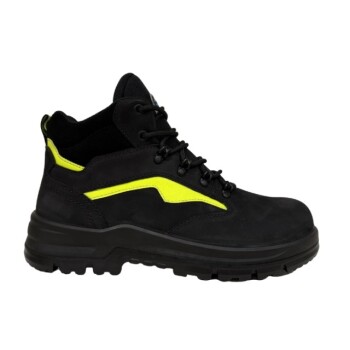
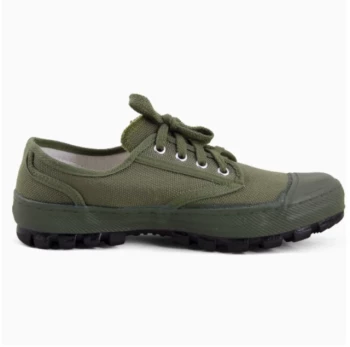
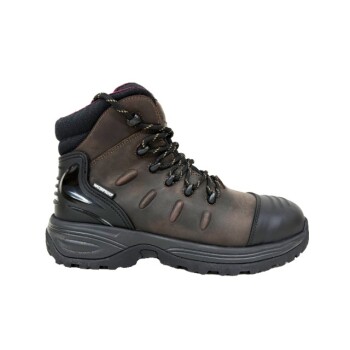
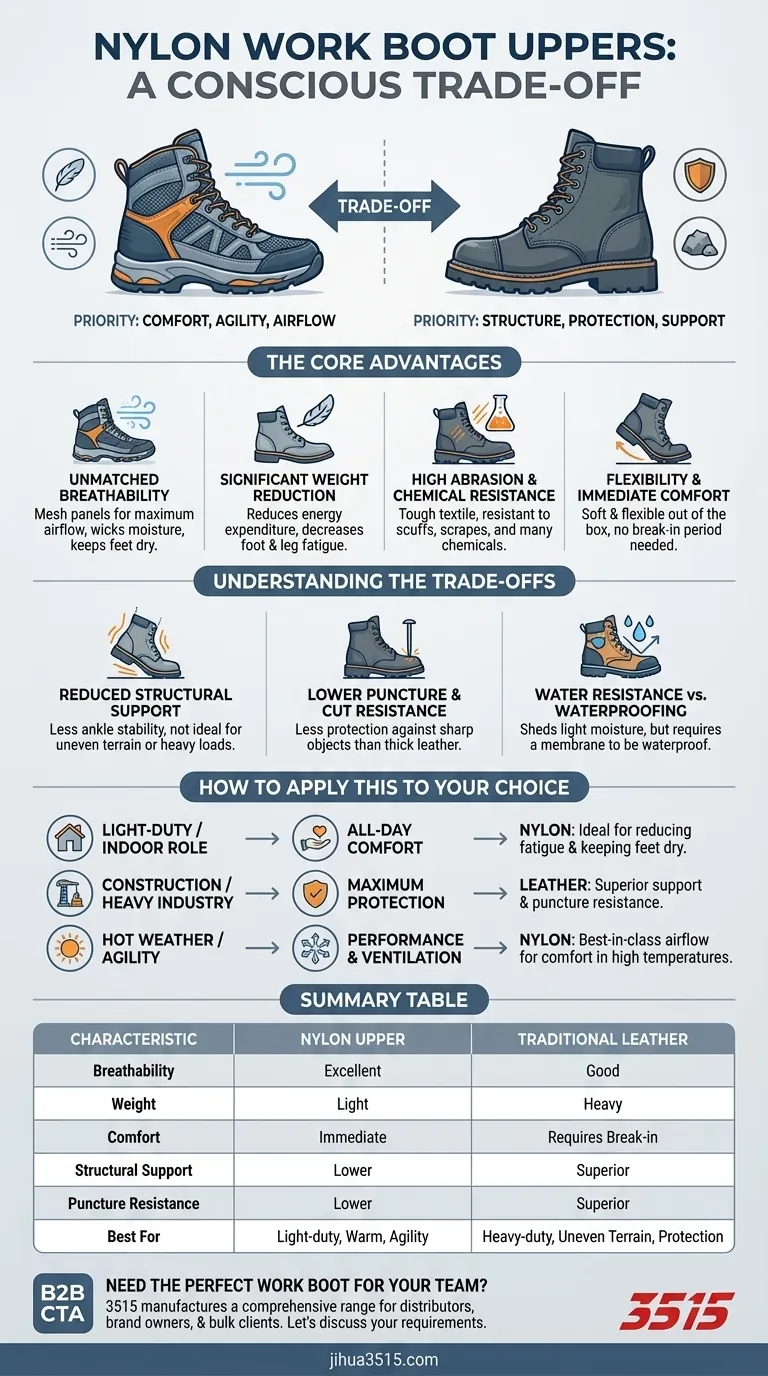
At its core, nylon is chosen as a work boot upper for its exceptional breathability and light weight, offering a modern alternative to traditional leather. It excels in keeping feet dry and reducing fatigue but achieves this by trading the uncompromising rigidity and puncture resistance that heavy leather provides.
The decision to choose a nylon work boot is a conscious trade-off. You are prioritizing athletic-level comfort, reduced weight, and superior airflow over the maximum structural support and rugged protection offered by traditional all-leather construction.
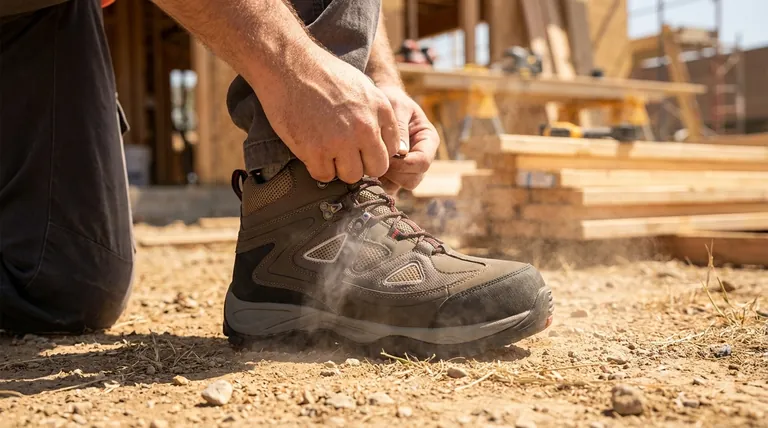
The Core Advantages of Nylon Uppers
Nylon, a synthetic polyamide fiber, offers a unique set of properties that make it highly suitable for specific work environments and roles, particularly those where agility and comfort are paramount.
Unmatched Breathability and Airflow
Nylon is significantly more breathable than full-grain leather. Boot designs frequently incorporate nylon mesh panels to maximize airflow.
This ventilation is critical for wicking moisture and sweat away from the foot, helping to keep your feet dry and more comfortable during long shifts, especially in warm conditions.
Significant Weight Reduction
One of the most noticeable benefits of nylon is its light weight. A lighter boot reduces the energy you expend with every step.
Over the course of a day, this reduction in weight can lead to a significant decrease in foot and leg fatigue.
High Abrasion and Chemical Resistance
For a textile, nylon is remarkably tough. It possesses high tensile strength and is known for its excellent abrasion resistance, meaning it holds up well against scuffs and scrapes.
It is also inherently resistant to corrosion and many chemicals, adding a layer of durability in specific work environments.
Flexibility and Immediate Comfort
Unlike stiff leather boots that often require a "break-in" period, nylon uppers are soft and flexible right out of the box. This provides immediate comfort and reduces the chance of hot spots or blisters.
Understanding the Trade-offs
While nylon has clear benefits, it's crucial to understand its limitations. These trade-offs are the deciding factor when choosing the right boot for a demanding job.
Reduced Structural Support
The primary drawback of nylon is its lack of rigidity. A flexible nylon upper provides less ankle support than a sturdy leather boot.
This makes it less suitable for work on uneven terrain or tasks that involve carrying heavy loads, where ankle stability is critical.
Lower Puncture and Cut Resistance
While resistant to abrasion, nylon does not offer the same level of protection against punctures or cuts from sharp objects as a thick leather hide.
For environments with significant hazards from sharp debris, such as construction or demolition sites, leather remains the superior protective choice.
Water Resistance vs. Waterproofing
Nylon fibers themselves have poor water absorption, meaning they will shed light moisture and dry quickly.
However, a standard nylon weave is not waterproof. To achieve this, boots must incorporate a separate waterproof membrane, whereas properly treated leather can offer a higher degree of natural water resistance.
How to Apply This to Your Choice
Your work environment and daily tasks should be the ultimate guide in your decision.
- If your primary focus is all-day comfort in a light-duty or indoor role: Nylon's lightweight and breathable nature makes it an exceptional choice for reducing fatigue and keeping feet dry.
- If your primary focus is maximum protection in construction or heavy industry: The superior support and puncture resistance of a full-grain leather boot is the more appropriate and safer option.
- If your primary focus is agility and performance in hot weather: Nylon is the clear winner, offering the best-in-class ventilation needed to maintain comfort in high temperatures.
Ultimately, choosing the right boot upper is about matching the material's inherent strengths to the specific demands of your workday.
Summary Table:
| Characteristic | Nylon Upper | Traditional Leather |
|---|---|---|
| Breathability | Excellent | Good |
| Weight | Light | Heavy |
| Comfort | Immediate, no break-in | Requires break-in |
| Structural Support | Lower | Superior |
| Puncture Resistance | Lower | Superior |
| Best For | Light-duty, warm environments, agility | Heavy-duty, uneven terrain, maximum protection |
Need the Perfect Work Boot for Your Team?
Understanding the trade-offs between materials like nylon and leather is key to outfitting your workforce with safe, comfortable, and durable footwear. As a large-scale manufacturer, 3515 produces a comprehensive range of work boots for distributors, brand owners, and bulk clients.
We can help you select or custom-manufacture the ideal boot for your specific industry needs, ensuring optimal performance and protection.
Let's discuss your requirements: Contact our expert team today to get a quote or learn more about our production capabilities for all types of shoes and boots.
Visual Guide
Related Products
- Durable Leather Moc Toe Work Boots for Wholesale & Custom Manufacturing
- Durable Goodyear Welt Leather Work Boots for Wholesale & Private Label
- Durable Moc-Toe Wedge Work Boots | Wholesale Manufacturing for Brands
- Durable Leather Work Boots for Wholesale & Custom OEM Manufacturing
- Wholesale Leather Work Boots with Customizable Wedge Sole for Brands
People Also Ask
- What are moc toe work boots designed for? Superior Comfort and Mobility for Tradespeople
- What are the key features to look for when purchasing moc toe boots? A Guide to Durability & Fit
- How did moc toe boots originate? A Legacy of Workwear Durability and Style
- What clothing items complement the Outdoorsman/Heritage Look with moc toe boots? Build a Timeless, Rugged Wardrobe
- What types of outfits can moc toe boots be worn with? Versatile Style Guide