
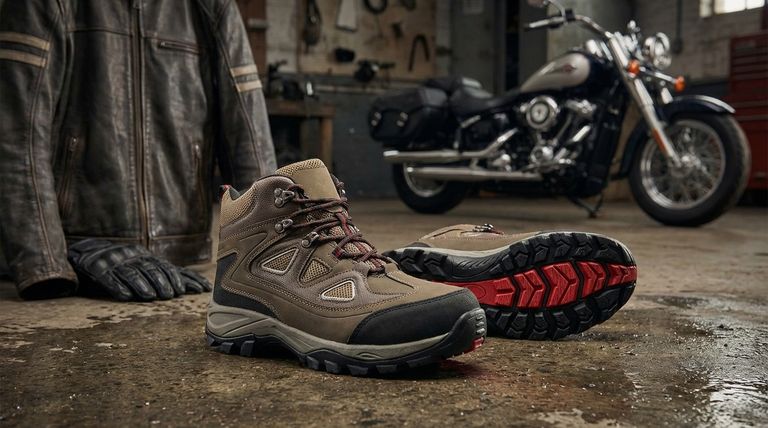
In essence, motorcycle combat boots are a hybrid style of footwear blending the rugged, high-ankled aesthetic of military combat boots with features for everyday wear. They are characterized by durable materials like leather, aggressive outsoles for traction, and a high-cut design for ankle stability. While they offer more robustness than typical shoes, they often lack the specific, certified protection required for serious motorcycle riding.
The term "motorcycle combat boot" is often used to describe a fashion style rather than a piece of certified protective equipment. The key is to distinguish between boots that simply look the part and those engineered with specific safety features for riding.
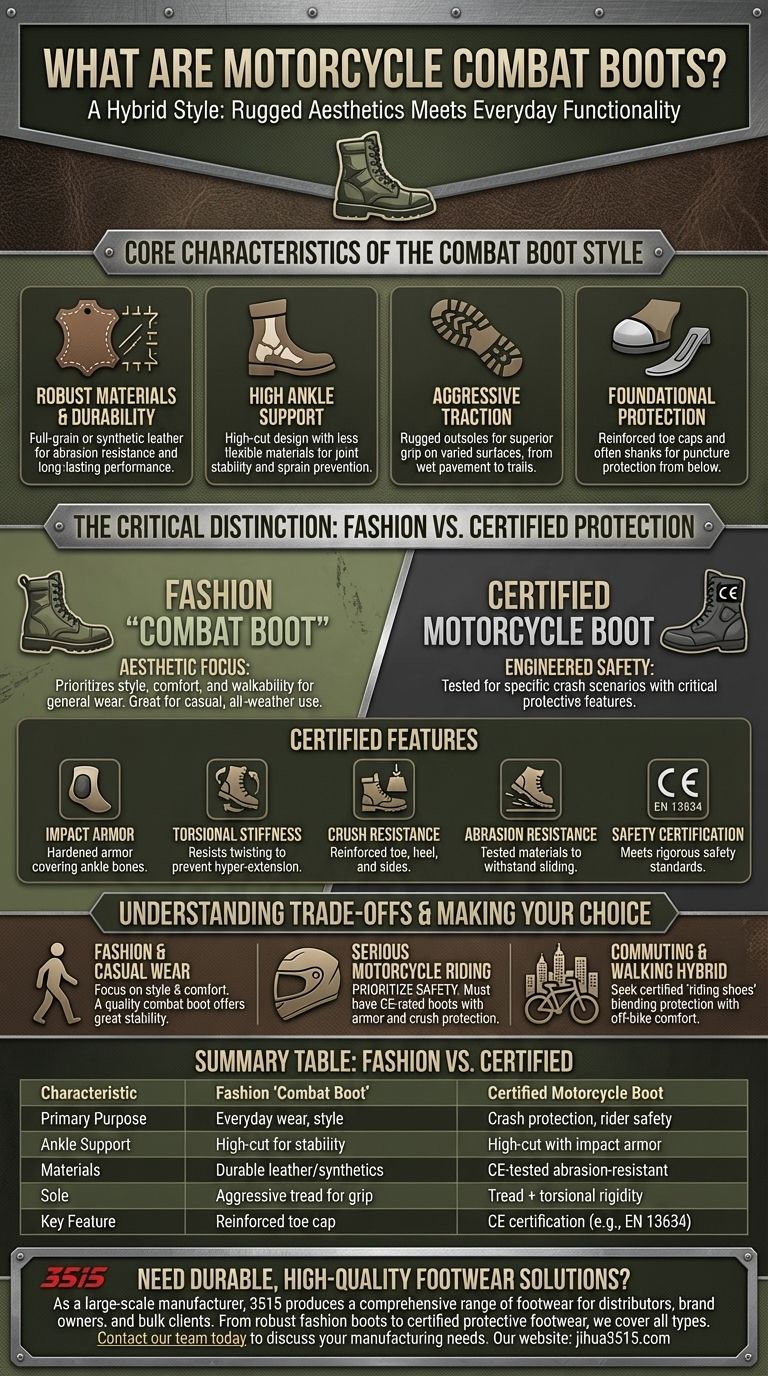
The Core Characteristics of the Combat Boot Style
The "combat boot" design, whether for military or civilian use, is defined by a consistent set of functional features. These form the foundation of the "motorcycle combat boot" aesthetic.
Robust Materials and Durability
Most combat boots are made from high-quality full-grain or synthetic leather. This construction is chosen for its ability to withstand harsh conditions, abrasion, and repeated use, ensuring long-lasting performance.
High Ankle Support
The signature high-cut design is not just for looks. It provides crucial ankle support, using less flexible materials to stabilize the joint and help prevent sprains and injuries on uneven terrain.
Aggressive Traction and Stability
These boots feature thick, rugged outsoles with deep, aggressive tread patterns. This design provides a superior grip across varied surfaces, from wet pavement to difficult trails, ensuring stability for the wearer.
Foundational Protective Elements
At a minimum, combat boots typically include reinforced toe caps to guard against impacts. Many also incorporate shanks—a rigid piece in the sole—to protect the foot from punctures from below.
The Critical Distinction: Fashion vs. Certified Protection
This is the most important factor to understand. A boot's appearance can be deceiving, and the features that protect a soldier in the field are not the same as those that protect a rider in a crash.
The "Combat Boot" Aesthetic
Many boots on the market adopt the combat boot look because it is fashionable, functional for general use, and projects a sense of durability. They are excellent for casual wear, especially in wet or cold conditions.
What Defines a True Motorcycle Boot
Certified protective motorcycle boots are engineered and tested for specific crash scenarios. They possess critical features that standard combat boots lack:
- Impact Armor: Hardened pucks or integrated armor specifically covering the ankle bones.
- Torsional Stiffness: Resistance to twisting forces to prevent hyper-extension of the ankle.
- Crush Resistance: Reinforced structure in the toe, heel, and sides to protect from the weight of the bike.
- Abrasion Resistance: Materials and construction tested to withstand sliding on pavement.
- Safety Certification: A label (e.g., CE EN 13634) indicating it meets rigorous, standardized safety tests for motorcycle footwear.
Understanding the Trade-offs
Choosing between a fashion-focused boot and a dedicated riding boot involves clear compromises.
Prioritizing Walkability and Style
A non-certified "motorcycle combat boot" is generally more flexible and comfortable for walking than a highly protective riding boot. Their classic style makes them versatile for wear in a variety of non-riding environments.
The Compromise on Rider Safety
Without certified armor, torsional rigidity, and crush protection, a standard combat boot offers minimal defense against the most common and severe motorcycle foot and ankle injuries. Their heavy-duty appearance does not equate to crash-tested safety.
How to Apply This to Your Purchase
Your final choice must be guided by your primary activity.
- If your primary focus is fashion and all-weather casual wear: A high-quality combat boot is an excellent, durable choice that provides great stability and style.
- If your primary focus is serious motorcycle riding: You must prioritize boots with a CE safety rating that explicitly includes features like ankle armor, crush protection, and abrasion resistance.
- If you need a hybrid for commuting and walking: Seek out certified "riding shoes" or touring boots that are specifically designed to blend verified protection with off-bike comfort.
Ultimately, understanding the difference between a boot's style and its certified function is the key to choosing footwear that truly keeps you safe.
Summary Table:
| Characteristic | Fashion 'Combat Boot' | Certified Motorcycle Boot |
|---|---|---|
| Primary Purpose | Everyday wear, style | Crash protection, rider safety |
| Ankle Support | High-cut for stability | High-cut with impact armor |
| Materials | Durable leather/synthetics | CE-tested abrasion-resistant materials |
| Sole | Aggressive tread for grip | Tread + torsional rigidity for crash safety |
| Key Feature | Reinforced toe cap | CE certification (e.g., EN 13634), crush protection |
Need Durable, High-Quality Footwear Solutions?
As a large-scale manufacturer, 3515 produces a comprehensive range of footwear for distributors, brand owners, and bulk clients. Whether you need robust fashion boots or are exploring certified protective footwear, our production capabilities encompass all types of shoes and boots. We can help you bring the right product to your market.
Contact our team today to discuss your manufacturing needs and get a quote.
Visual Guide
Related Products
- Durable Leather Tactical Boots Wholesale & Custom Manufacturing for Brands
- Wholesale Lightweight Tactical Boots Custom Manufacturer for Desert & Combat Use
- High-Traction Suede Tactical Boots Wholesale & Custom Manufacturing
- Durable Military Combat Boots with Water Drainage for Wholesale & OEM
- Wholesale Tactical Boots High-Traction & Reflective for Bulk & Brand Orders
People Also Ask
- What specialized protections do tactical boots offer? Maximize Endurance with High-Performance Footwear
- What features should law enforcement officers look for in tactical boots? Essential Guide for Safety & Performance
- Importance of Professional Tactical Boots in Loess Gully Regions: Ensure Safety and Precision for Field Monitoring
- What is rucking, and why are tactical boots suitable for it? Discover the Ultimate Footwear for Heavy Loads
- What makes the traction of tactical boots superior? Unlock the Science of Unbeatable Grip


















