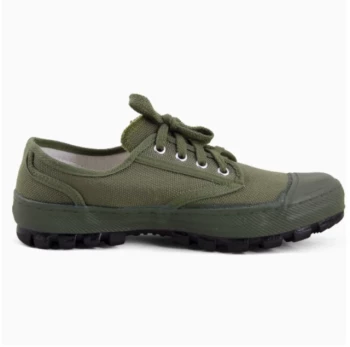
For those on their feet all day, the best shoes masterfully blend exceptional cushioning and unwavering support. While a highly-cushioned trainer like the Hoka Clifton 9 is a leading choice for its shock absorption, the ideal shoe ultimately depends on your specific environment and foot needs.
The "best" shoe is not a single model, but a system. It's a combination of three critical elements: foundational support for alignment, responsive cushioning for impact, and a precise fit that accommodates the natural changes in your feet throughout the day.
The Three Pillars of All-Day Foot Comfort
Understanding the core principles of a supportive shoe empowers you to look beyond brand names and choose a shoe that genuinely works for you. These three pillars are non-negotiable for preventing pain and fatigue.
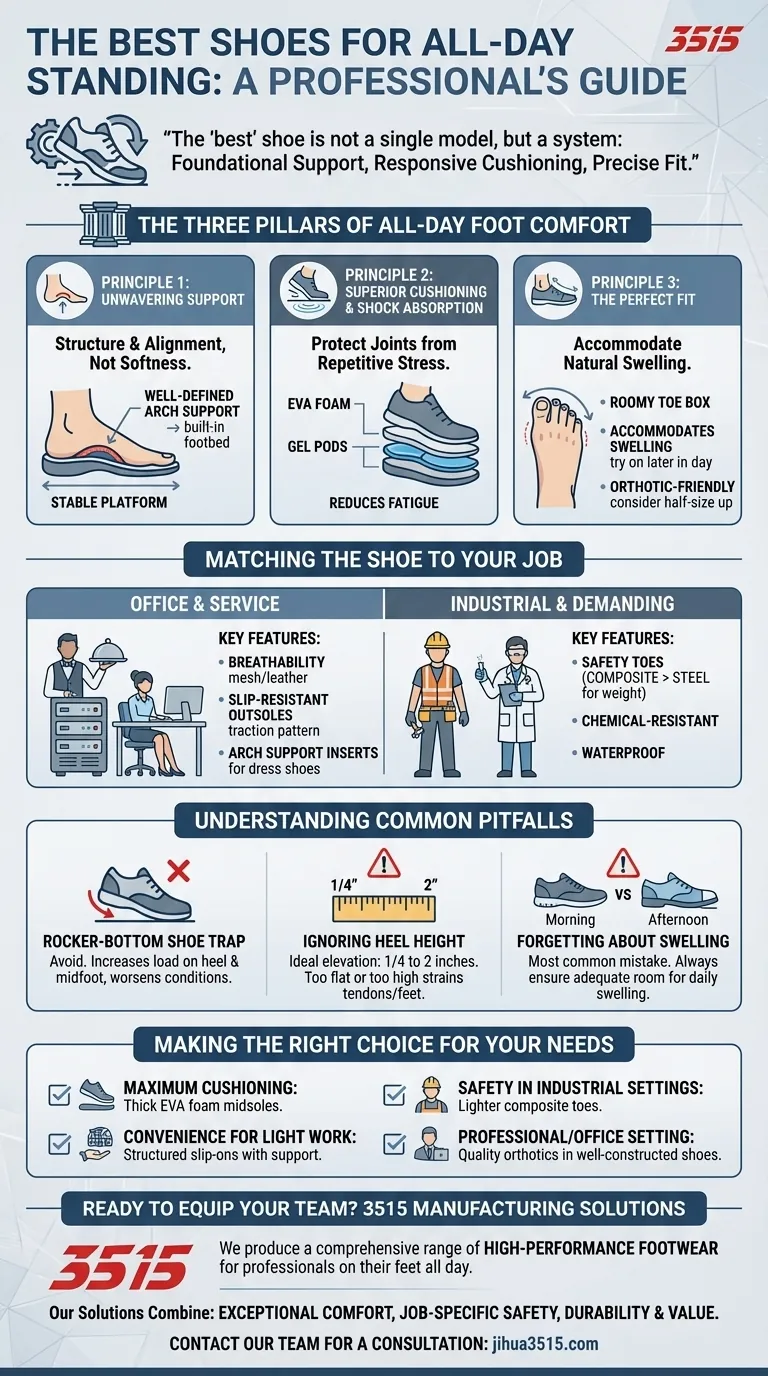
Principle 1: Unwavering Support
Support is about structure and alignment, not softness. It ensures your foot maintains a healthy posture, which prevents strain from traveling up your legs, back, and neck.
Look for shoes with well-defined arch support built into the footbed. This helps distribute pressure evenly across your foot instead of concentrating it in one area.
A stable platform with adequate width is also crucial. The shoe should prevent your foot from rolling inward or outward, providing a secure base for every step.
Principle 2: Superior Cushioning & Shock Absorption
Cushioning is what absorbs the impact of walking or standing on hard surfaces, protecting your joints from repetitive stress.
Modern shoes often use advanced materials like EVA (ethylene vinyl acetate) foam or gel pods. These materials are engineered to be lightweight while providing significant shock absorption.
The right amount of cushioning provides a buffer between you and the ground, reducing the fatigue that builds up over a long day.
Principle 3: The Perfect Fit
An incorrect fit can undermine even the most well-designed shoe. Your feet naturally swell throughout the day, so a shoe that feels perfect in the morning can become restrictive and painful by the afternoon.
Ensure there is sufficient room in the toe box for your toes to spread out naturally. A tight fit can restrict circulation and cause discomfort.
For an optimal fit, try on shoes later in the day when your feet are at their largest. If you plan to use custom orthotics, consider going up a half-size to accommodate them without crowding your foot.
Beyond Comfort: Matching the Shoe to Your Job
While the three pillars are universal, your work environment dictates specific functional needs. A great hospital shoe is not a great construction site shoe.
For Office and Service Environments
In these roles, breathability is key to keeping feet cool and dry. Look for uppers made from materials like mesh or high-quality full-grain leather.
Slip-resistant outsoles are also essential for safety on potentially slick or wet floors, which are common in restaurant and healthcare settings.
Even in dress shoes, don't sacrifice comfort. If a preferred style lacks built-in support, it can often be vastly improved by adding a quality arch support insert or orthotic.
For Industrial and Demanding Work
Safety is the top priority in industrial jobs. Job-specific footwear is often required to protect against unique hazards.
Safety toes are a common feature. For all-day wear, composite toes are often recommended over steel toes because they are significantly lighter, reducing fatigue.
Other specialized features may include chemical-resistant materials for lab work or waterproof construction for electrical workers.
Understanding the Common Pitfalls
Choosing the wrong shoe can be worse than simply uncomfortable; it can lead to or aggravate foot conditions.
The Rocker-Bottom Shoe Trap
Rocker-bottom shoes, which have a curved, thick sole, are generally not recommended for all-day standing or walking.
These shoes can increase the load on the heel and midfoot, potentially worsening conditions like plantar fasciitis or issues related to flat feet.
Ignoring Heel Height
The ideal work shoe should have a slight elevation in the heel, between 1/4 inch and 2 inches. A completely flat shoe can strain the Achilles tendon, while a heel that's too high creates pressure on the ball of the foot.
Forgetting About Swelling
The most common mistake is buying a shoe that fits snugly in the morning. Always account for foot swelling by ensuring there is adequate room, especially if you'll be on your feet for 8-12 hours.
Making the Right Choice for Your Needs
Your personal goal should guide your final decision. Use these points as a final checklist.
- If your primary focus is maximum cushioning for hard surfaces: Seek out shoes with thick EVA foam midsoles designed for shock absorption.
- If your primary focus is convenience for light, active work: Look for well-structured slip-on styles that don't sacrifice essential arch support.
- If your primary focus is safety in an industrial setting: Prioritize job-specific features like lighter composite toes for comfort during long shifts.
- If your primary focus is a professional or office setting: Choose well-constructed shoes and add high-quality orthotics to ensure proper arch support.
Investing in footwear that properly supports you is a direct investment in your daily well-being and long-term health.
Summary Table:
| Key Principle | What to Look For | Example Features |
|---|---|---|
| Unwavering Support | Well-defined arch support, stable platform | Structured footbed, adequate width |
| Superior Cushioning | Shock-absorbing materials | EVA foam midsoles, gel pods |
| The Perfect Fit | Roomy toe box, accommodates swelling | Try on shoes in the afternoon, half-size up for orthotics |
Ready to Equip Your Team with Superior Footwear?
As a large-scale manufacturer, 3515 produces a comprehensive range of high-performance footwear for distributors, brand owners, and bulk clients. Our production capabilities encompass all types of shoes and boots designed specifically for professionals who are on their feet all day.
We can help you provide footwear that combines:
- Exceptional Comfort: Built with the three pillars of support, cushioning, and fit.
- Job-Specific Safety: Features like composite safety toes and slip-resistant soles.
- Durability & Value: Reliable performance that stands up to demanding work environments.
Let's discuss how we can support your business with quality footwear solutions. Contact our team today for a consultation.
Visual Guide
Related Products
- Durable Canvas Work Shoes with Rubber Lug Sole | Wholesale Manufacturer
- Durable Goodyear Welt Leather Work Boots for Wholesale & Private Label
- Durable Leather Work Boots for Wholesale & Custom OEM Manufacturing
- Durable Leather Work Boots for Wholesale & Custom Manufacturing
- Durable Leather Safety Boots for Wholesale & Custom OEM Manufacturing
People Also Ask
- What are the properties of canvas as a shoe material? A Guide to Lightweight Comfort & Style
- Why is the selection of high-strength fabric materials necessary in the production of canvas shoes and training shoes?
- What types of jobs are canvas work boots suitable for? Ideal for Light-Duty, High-Mobility Roles
- Can canvas shoes be worn in rainy conditions? The Truth About Water Resistance
- What are the functional advantages of choosing rubber soles over leather soles for work boots? Superior Safety & Durability