
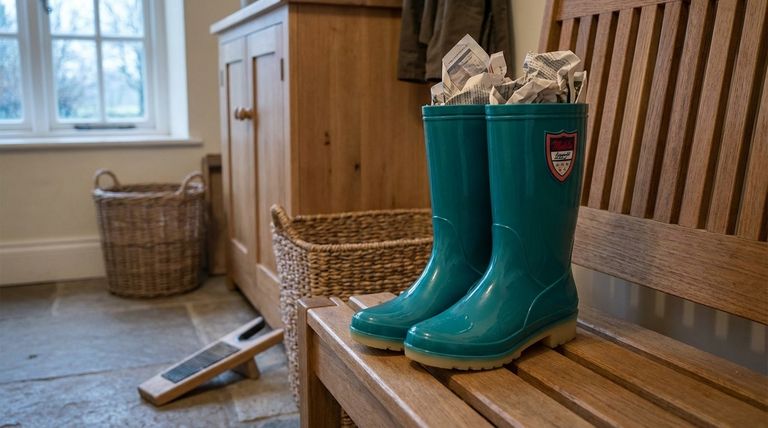
To properly store rubber boots, you must keep them upright in a cool, dry, and well-ventilated area away from direct sunlight or sources of artificial heat. Avoid folding or creasing the boots, as this creates weak points. Using crumpled newspaper or boot shapers inside will help them maintain their form and prevent the ankle area from collapsing.
The core principle behind proper boot storage is protecting the rubber from its three main enemies: UV light, extreme temperatures, and physical stress. Treating your boots like an investment and controlling their environment is the key to preventing the material from becoming brittle and cracked over time.
Why Rubber Boots Degrade
To protect your boots effectively, you first need to understand what causes them to break down. Rubber, even modern synthetic versions, is susceptible to environmental damage that compromises its flexibility and waterproofing.
The Primary Threat: UV Radiation and Heat
Sunlight is the single most destructive element for rubber boots. The ultraviolet (UV) radiation breaks down the chemical bonds in the rubber, causing it to lose elasticity, become brittle, and eventually develop cracks.
Direct heat from sources like radiators, floor vents, or furnaces has a similar effect. It accelerates the aging process of the material, drying it out and making it prone to splitting.
The Problem with Trapped Moisture
While the outside of your boots is waterproof, the inside is not. If you store boots while they are still damp inside from sweat or from water getting over the top, you create a perfect environment for mildew and bacteria.
This not only leads to unpleasant odors but can also degrade the boot's inner lining over time. This is why a dry and well-ventilated storage space is critical.
The Danger of Physical Stress
Consistently folding or creasing rubber boots, especially at the ankle, creates a permanent weak point in the material. All the flexing and stress concentrates on that one line.
Over time, this crease will almost certainly be the first place a crack appears. Storing boots upright eliminates this focused stress point.
The Pillars of Proper Boot Storage
A successful storage strategy is built on a few simple, non-negotiable rules that address the threats of light, heat, moisture, and stress.
Pillar 1: A Cool, Dark, and Dry Location
Your ideal storage spot is a closet, mudroom, or a temperate corner of a garage. The key is to avoid direct sunlight from windows and proximity to any heat source.
Never leave your boots on a back porch, deck, or next to a heating vent.
Pillar 2: Maintaining Vertical Shape
Always store your boots standing upright. If the boot shafts are soft and tend to flop over, stuff them with crumpled newspaper or use commercial boot shapers.
This simple step prevents the ankle from creasing under the boot's own weight, dramatically extending its life.
Pillar 3: Cleaning Before Storing
Before putting your boots away, especially for a longer period, give them a quick rinse to remove mud and dirt.
Certain soils, chemicals, or salts can slowly eat away at the rubber. Ensuring they are clean and completely dry prevents this and stops moisture from being trapped against the material.
Common Pitfalls and Related Care
Avoiding a few common mistakes is just as important as following the right procedures. These errors are the most frequent causes of premature boot failure.
Mistake: Leaving Them by the Door
The most common storage spot—on a mat inside or outside the door—is often the worst. These locations typically expose boots to direct sunlight, temperature swings, and foot traffic.
Mistake: Tossing Them in a Bin
Tossing boots into a storage bin or box almost always results in them being bent, folded, and creased. This is a surefire way to create weak spots that will fail.
Beyond Storage: The Boot Jack
How you take your boots off matters. Repeatedly prying one boot off with the heel of the other puts immense stress on the heel cap, often causing it to split.
Using a simple tool called a boot jack allows you to slide your foot out smoothly, distributing the pressure and protecting the boot's construction.
A Simple Routine for Maximum Boot Longevity
Integrate these practices into a simple routine to ensure your boots last for years.
- For daily or frequent use: After each wear, rinse off any mud, give them a quick wipe, and place them upright in a cool, dark corner to dry.
- For long-term seasonal storage: Clean the boots thoroughly inside and out, ensure they are completely dry, stuff them with newspaper to hold their shape, and store them upright in a closet or storage box where they won't be crushed.
By actively protecting your boots from the environment, you ensure they remain reliable and ready for the next downpour.
Summary Table:
| Key Practice | Why It Matters |
|---|---|
| Store Upright | Prevents creasing and material stress |
| Keep in a Cool, Dark Place | Protects from UV damage and heat |
| Ensure Boots are Clean & Dry | Prevents mildew and material degradation |
| Use Boot Shapers/Newspaper | Maintains shape and prevents collapse |
Need a reliable source for durable rubber boots?
As a large-scale manufacturer, 3515 produces a comprehensive range of high-quality footwear for distributors, brand owners, and bulk clients. Our production capabilities encompass all types of durable shoes and boots designed to last when stored correctly.
Contact us today to discuss your needs and discover how our expertise can benefit your business.
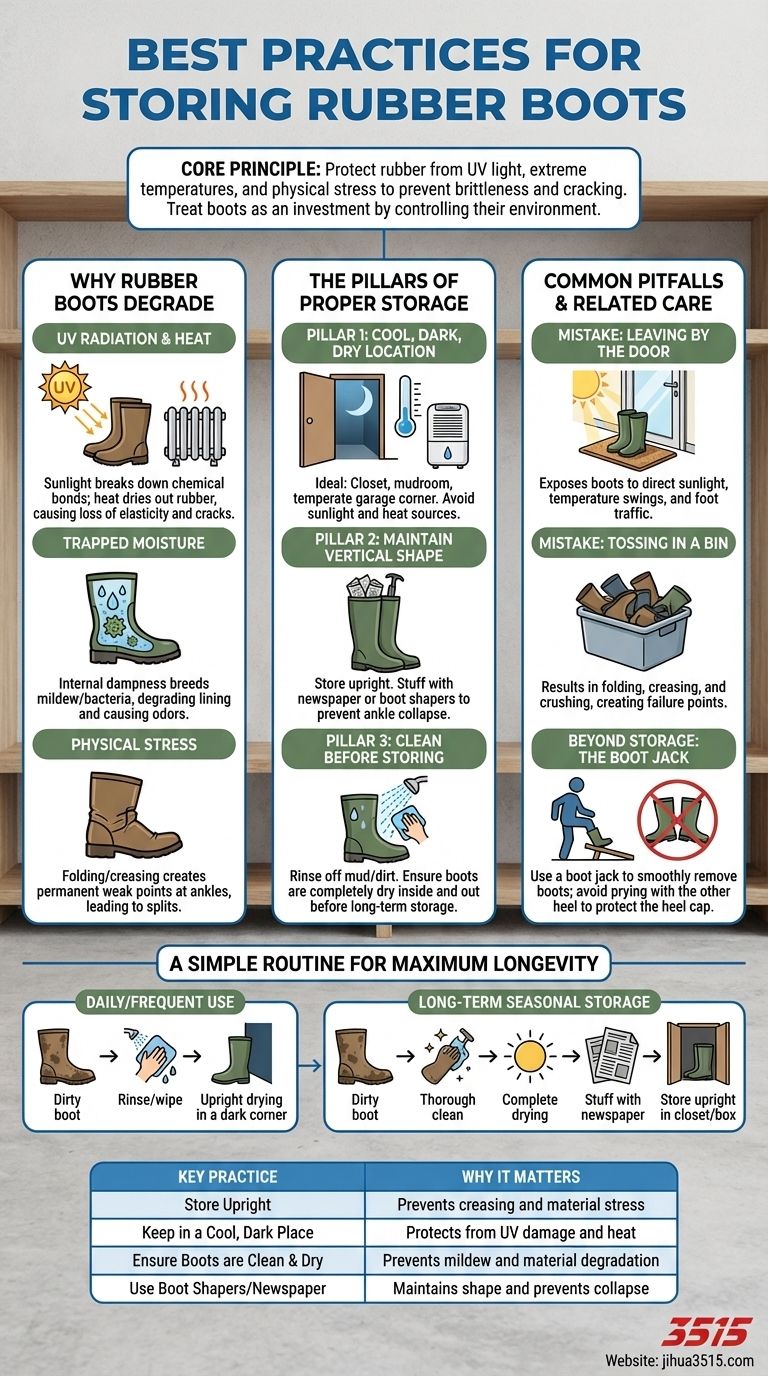
Visual Guide
Related Products
- Factory Direct Wholesale Rain Boots Durable Waterproof & Fully Customizable
- Durable Rubber Sole Outdoor Shoes Wholesale & Custom Manufacturing
- Wholesale Durable Camouflage Canvas Shoes with High-Traction Cleated Rubber Sole
- Wholesale Durable Leather Work Boots | 8-Inch Goodyear Welt Manufacturer
- Durable Goodyear Welt Leather Work Boots for Wholesale & Private Label
People Also Ask
- What are the characteristics of rain boots? A Guide to Waterproof Footwear for Every Need
- What factors should be considered when choosing rain boots? Find the Perfect Boot for Your Needs
- What are the main differences between rain boots and snow boots? Choose the Right Boot for Your Climate
- How should one decide between PVC and rubber for rain boots? A Guide to Choosing the Right Material
- Why are rain boots more flexible and comfortable than snow boots? The Key Differences Explained
















