
At their core, both garden boots and rain boots are designed to solve one primary problem: keeping your feet completely dry. They both use waterproof materials like rubber or PVC to provide a reliable barrier against moisture. The key benefits diverge based on their intended use, with garden boots prioritizing flexibility for active work and rain boots prioritizing height for maximum splash protection.
The choice between garden boots and rain boots is not about which is better, but which is right for the task. Garden boots are specialized for mobility and comfort during active work, while rain boots offer broader protection for navigating wet environments.
The Core Benefit: Absolute Waterproofing
Keeping Feet Dry and Clean
Both boot types are constructed from inherently waterproof materials, most commonly rubber. This non-porous shield is your first line of defense against wet grass, mud, and puddles.
This ensures your feet and socks remain dry, which is critical for comfort and preventing blisters during extended wear.
Protecting Your Everyday Shoes
A secondary benefit is the preservation of your other footwear. Exposing leather or fabric shoes to excessive mud and water can cause permanent damage, stains, and deterioration.
Using a dedicated waterproof boot for wet conditions extends the life of your more expensive daily shoes.
Garden Boots: Designed for Activity
Prioritizing Flexibility and Mobility
Garden boots are typically shorter, often reaching just above the ankle. This lower cut is a deliberate design choice.
It provides significantly more ankle flexibility, making it easier and more comfortable to kneel, squat, and move around while performing gardening duties.
Comfort for Warmer Weather
Many garden boots are designed with warmer conditions in mind. They often feature interior linings that help manage heat and may include removable insoles for a customized fit.
The use of materials like neoprene can also make them more flexible and comfortable than the rigid rubber of a traditional rain boot.
Support on Uneven Ground
Gardening involves walking on soft soil, mulch, and uneven terrain. Garden boots feature thick, supportive soles designed to provide stability and protect your feet from sharp objects like rocks or tools.
Rain Boots: Designed for Transit
The Advantage of Height
The most obvious feature of a rain boot is its height, which commonly extends to the mid-calf or even higher.
This design offers superior protection from deep puddles, heavy downpours, and splashes from passing vehicles, keeping not just your feet but also your lower legs dry.
Versatility for General Use
Rain boots are the quintessential choice for navigating any wet environment outside of specialized work.
They are ideal for rainy day commutes, walking the dog, or attending outdoor events where the ground is saturated.
Understanding the Trade-offs
Garden Boots: Limited Splash Protection
The primary strength of the garden boot—its low cut—is also its main weakness. The shorter height offers minimal protection against deep puddles or significant splashes.
Rain Boots: Reduced Agility
The tall shaft of a rain boot, while protective, can be cumbersome. The rigid material and height can restrict ankle movement, making activities like squatting or climbing ladders feel awkward.
The Universal Breathability Challenge
Most traditional rain and garden boots are made of non-breathable rubber. While this makes them completely waterproof from the outside, it also means they can trap sweat.
In warmer weather, this can lead to damp, uncomfortable feet even without any external water getting in.
Making the Right Choice for Your Needs
Choosing the correct boot comes down to honestly assessing your most common activity.
- If your primary focus is active gardening or yard work: Choose shorter garden boots for their superior flexibility and comfort while kneeling and squatting.
- If your primary focus is navigating rainy city streets or deep puddles: Opt for taller rain boots to maximize splash protection and keep your pants dry.
- If you need a single, versatile option for varied wet-weather tasks: A mid-calf rain boot offers a functional compromise between protection and mobility.
Ultimately, selecting the right boot for the environment empowers you to focus on your activity, not on your feet.
Summary Table:
| Feature | Garden Boots | Rain Boots |
|---|---|---|
| Primary Use | Active Gardening & Yard Work | Navigating Rain & Puddles |
| Key Benefit | Ankle Flexibility & Comfort | Maximum Splash Protection |
| Typical Height | Ankle-High | Mid-Calf or Higher |
| Best For | Kneeling, Squatting, Warm Weather | Deep Puddles, Rainy Commutes |
Ready to equip your customers with the perfect waterproof footwear?
As a large-scale manufacturer, 3515 produces a comprehensive range of durable garden and rain boots for distributors, brand owners, and bulk clients. Our production capabilities encompass all types of waterproof footwear, ensuring quality, reliability, and volume to meet your market needs.
Contact our team today to discuss your bulk footwear requirements and explore our catalog.
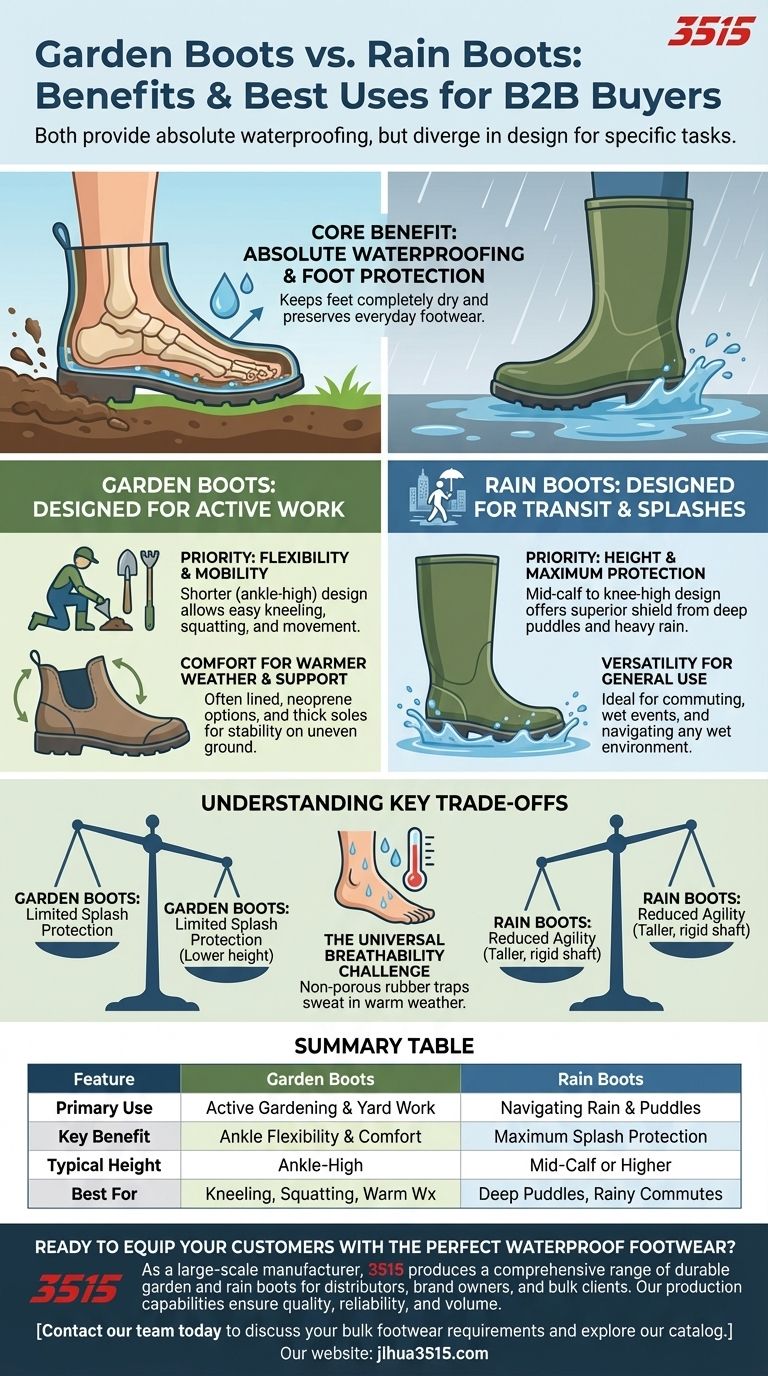
Visual Guide
Related Products
- Factory Direct Wholesale Rain Boots Durable Waterproof & Fully Customizable
- Durable Goodyear Welt Leather Work Boots for Wholesale & Private Label
- Durable Rubber Sole Outdoor Shoes Wholesale & Custom Manufacturing
- Wholesale Safety Boots Manufacturer for Custom & Private Label Orders
- Wholesale High-Traction Camo Boots - Custom Manufacturer for Brands
People Also Ask
- What are the characteristics of rain boots? A Guide to Waterproof Footwear for Every Need
- What factors should be considered when choosing rain boots? Find the Perfect Boot for Your Needs
- What are the main differences between rain boots and snow boots? Choose the Right Boot for Your Climate
- How should one decide between PVC and rubber for rain boots? A Guide to Choosing the Right Material
- Why are rain boots more flexible and comfortable than snow boots? The Key Differences Explained



















