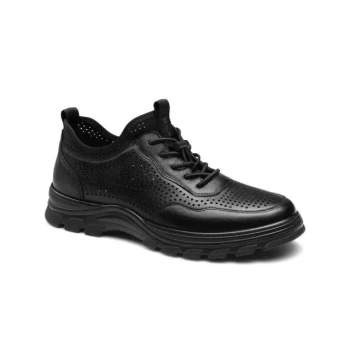
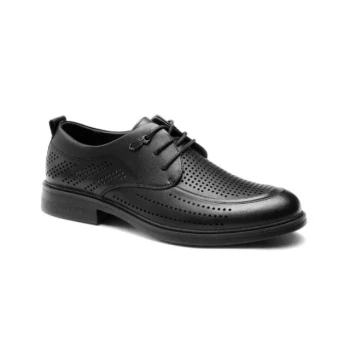
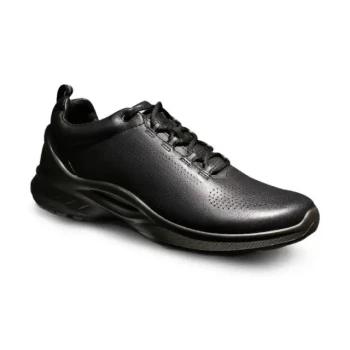
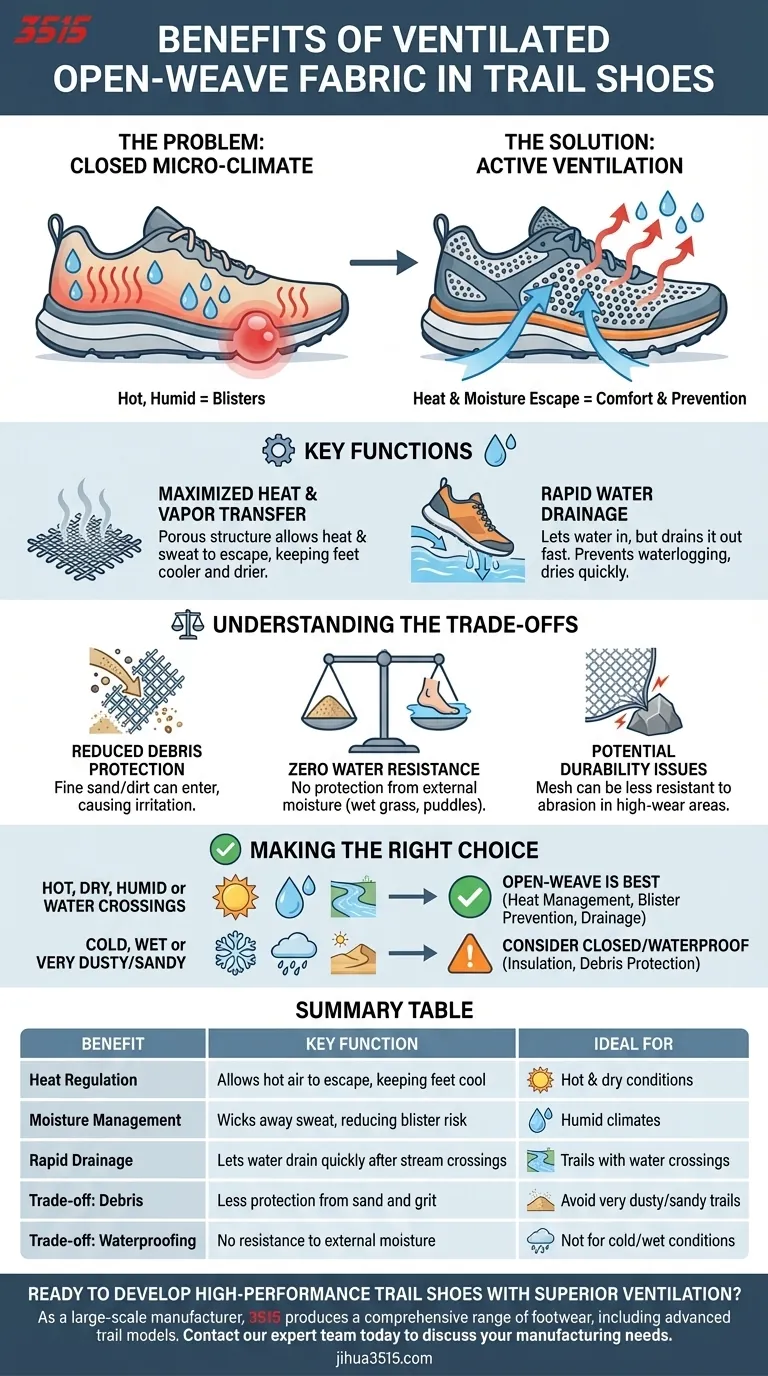
At its core, a ventilated, open-weave upper in a trail shoe serves one primary purpose: to regulate the environment inside your shoe. This design allows excess heat and moisture (sweat) to escape, which significantly increases comfort and is the most effective way to reduce the formation of painful blisters during long efforts.
The greatest benefit of an open-weave upper is not just comfort, but performance preservation. By actively managing heat and moisture, it prevents the two most common issues that can derail a trail run: overheating and blisters.
The Problem: The Shoe as a Micro-Climate
Your foot is a high-output engine. During a trail run, it generates significant heat and, in response, a lot of sweat. When trapped inside a shoe, this creates a hot, humid micro-climate that directly undermines both comfort and foot health.
How Heat and Moisture Degrade Performance
Heat build-up leads to swelling and discomfort. The body's natural response is to sweat, but when that moisture has nowhere to go, it saturates your sock and skin.
The Direct Link to Blisters
Water-logged skin is soft, weak, and far more susceptible to damage. This softening, combined with the inevitable friction of running, is the perfect recipe for developing debilitating blisters.
The Solution: Active Environmental Regulation
An open-weave upper acts as a high-performance ventilation system. It continuously exchanges the hot, humid air inside the shoe with cooler, drier air from the outside.
Maximizing Heat and Vapor Transfer
The porous structure of an open-weave mesh creates a direct pathway for heat and water vapor to escape. This keeps your foot cooler and, more importantly, drier than it would be in a less breathable shoe.
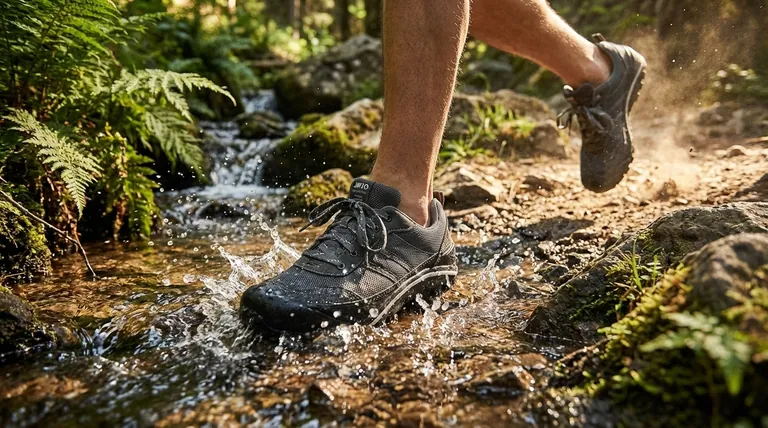
Enabling Rapid Water Drainage
On the trail, you will encounter stream crossings, puddles, or rain. While a ventilated shoe lets water in instantly, its key benefit is that it also lets it drain out just as fast. This prevents the shoe from holding water, which keeps it lighter and allows your foot and sock to begin drying immediately.
Understanding the Trade-offs
While highly effective for heat and moisture, the open-weave design is not without its compromises. Acknowledging them is key to choosing the right tool for the job.
Reduced Debris Protection
The same pores that let air and water move freely can also allow fine sand, grit, and dirt to enter the shoe. Over a long run, this can become a significant source of irritation and abrasion.
Zero Water Resistance
These shoes offer no protection from external moisture. If you run through wet grass or a light puddle, your feet will get wet. They are the opposite of waterproof footwear like a Gore-Tex shoe.
Potential Durability Issues
Highly ventilated mesh can sometimes be less resistant to abrasion from rocks, roots, and scrapes than thicker, more robust upper materials. High-wear areas are typically reinforced, but the open sections remain a potential weak point.
Making the Right Choice for Your Goal
Select your shoe's upper based on the conditions you expect to face most often.
- If your primary focus is running in hot, dry, or humid conditions: A ventilated, open-weave upper is your best choice for heat management and blister prevention.
- If your primary focus is running on trails with frequent river crossings: The rapid-draining capability of an open-weave shoe is a decisive advantage over waterproof options.
- If your primary focus is running in cold, wet, or very dusty/sandy conditions: You may be better served by a more closed, protective, or even waterproof upper that prioritizes insulation and debris protection.
Ultimately, choosing a shoe with a ventilated upper is a strategic decision to prioritize active climate control over insulation and debris resistance.
Summary Table:
| Benefit | Key Function | Ideal For |
|---|---|---|
| Heat Regulation | Allows hot air to escape, keeping feet cool | Hot & dry conditions |
| Moisture Management | Wicks away sweat, reducing blister risk | Humid climates |
| Rapid Drainage | Lets water drain quickly after stream crossings | Trails with water crossings |
| Trade-off: Debris | Less protection from sand and grit | Avoid very dusty/sandy trails |
| Trade-off: Waterproofing | No resistance to external moisture | Not for cold/wet conditions |
Ready to develop high-performance trail shoes with superior ventilation?
As a large-scale manufacturer, 3515 produces a comprehensive range of footwear for distributors, brand owners, and bulk clients. Our production capabilities encompass all types of shoes and boots, including advanced trail running models with open-weave uppers designed for optimal breathability and comfort.
We can help you create the perfect trail shoe for your target market. Contact our expert team today to discuss your manufacturing needs and bring your vision to life.
Visual Guide
Related Products
- Durable Rubber Sole Outdoor Shoes Wholesale & Custom Manufacturing
- Wholesale Durable Camouflage Canvas Shoes with High-Traction Cleated Rubber Sole
- Wholesale Modern Perforated Leather Derby Shoes with Chunky Sole for Custom Branding
- Wholesale Breathable Perforated Leather Derby Shoes with Modern Comfort Sole
- Custom Breathable Perforated Leather Derby Shoes for Wholesale & Brands
People Also Ask
- What is the function of the sole in outdoor shoes? Find the Perfect Grip and Support
- What role do outdoor shoes and sneakers play in navigating external terrains? Engineered Stability for Every Surface
- How is AI utilized in the design of outdoor and safety footwear? Harnessing Big Data for Market-Driven Shoe Innovation
- Why is durability important when selecting outdoor shoes? A Guide to Safety & Long-Term Value
- What are the key components of outdoor shoes that affect comfort and sturdiness? A Guide to Durable, High-Performance Footwear